



Simply buying electric vehicles is the easy part. Making sure the vehicles are the correct models and are being used for the right routes is a far more complex task.
To help fleets of all types and sizes better understand the intricacies of electric vehicles, Geotab has released electric vehicle suitability assessment (EVSA) and electric vehicle battery degradation tools for the North American market.
The Toronto-based company made the announcements during last week’s Geotab Connect 2020 event in San Diego. Geotab’s reach extends to more than 130 countries, and it captures nearly 3 million charging events a year from electric vehicles.
The EVSA helps determine electric vehicle suitability by analyzing a fleet’s existing telematics data, and creates an electrification recommendation based on each vehicle’s distinctive driving patterns. The tool was initially debuted in Europe during the fourth quarter of 2019 and is available as a free add-in on the Geotab Marketplace.
“The EVSA is a practical step in speeding up the commercial adoption of EVs and is going to help change the lives of fleet managers who are interested in the effective electrification of their fleets,” said Geotab CEO Neil Cawse.
 “The EVSA is a practical step in speeding up the commercial adoption of EVs,” says Geotab CEO Neil Cawse.Photo: Neil Abt/Fleet Owner
The goal is to identify which electric vehicles meet range requirements, make the most financial sense and help make the transition as seamless as possible.
“The EVSA provides all of the information required to help ensure you are putting the best-fit electric vehicles into your fleet — so you don’t end up adopting a vehicle that does not work for you,” said Matt Stevens, Geotab’s vice president of electric vehicles.
Stevens said that after initial skepticism, he is increasingly confident that all classes of vehicles can adopt a percentage of battery-electric vehicles, even Class 8 trucks.
Passenger bus fleets are having success with high-density charging and local utilities are preparing to handle the additional burden on the electric grid, Stevens said.
Geotab’s tool evaluates the performance and routes of a fleet’s gasoline or diesel vehicles and recommends where electric vehicles would succeed. Fleets can receive a report which provides lifetime cost and financial analysis, range assurance with best fit analysis and an environmental impact analysis.
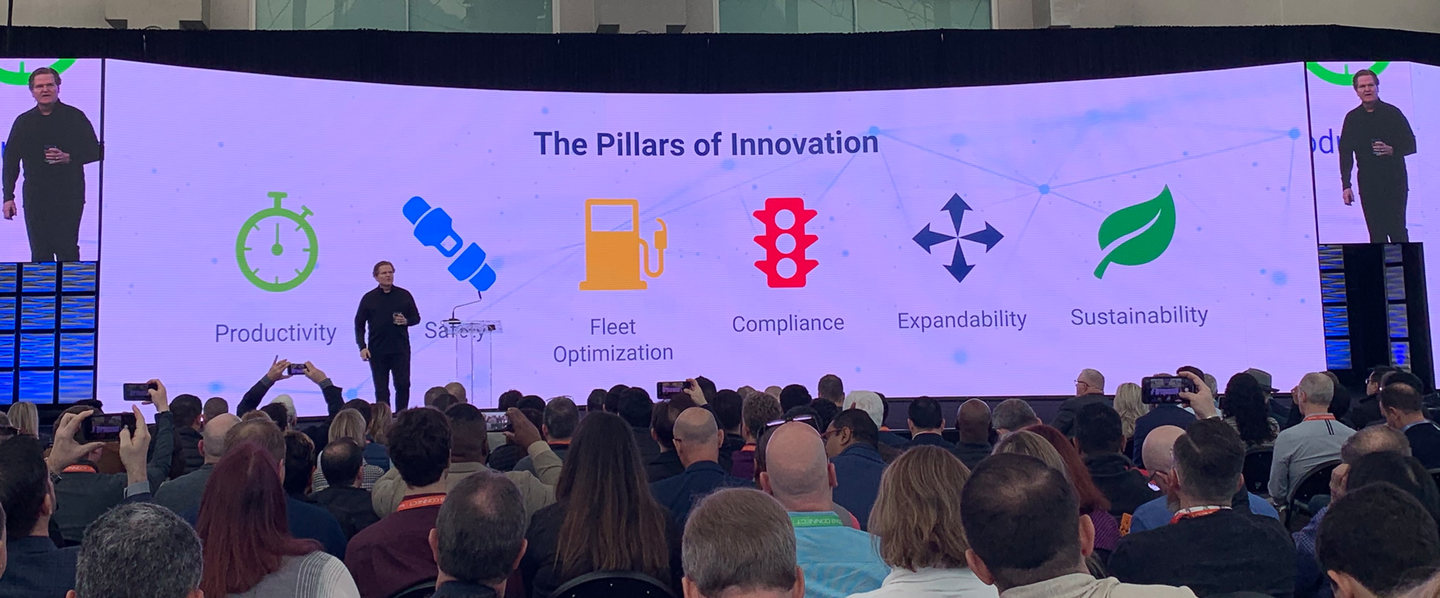 Colin Sutherland, executive vice president of sales and marketing, discusses Geotab’s pillars of innovation.Photo: Neil Abt/Fleet Owner
Jean Pilon-Bignell, Geotab’s associate vice president, government and smart city, said a project with California could become a blueprint for other agencies and businesses. Last May, Geotab was awarded an agreement to supply the state of California and participating local government agencies with a fully integrated telematics solution. CalTrans has about 17,000 vehicles, from trucks to street sweepers and off-road equipment.
Besides using the data to help optimize operations and overall efficiency, this is helping state and local officials better determine whether electric vehicles would make sense in trying to meet “green” targets.
Meanwhile, Geotab’s battery degradation tool incorporates aggregated data collected from 6,300 electric vehicles and already represents 64 makes, models and years. Stevens noted battery health is the most expensive component in an electric vehicle.
The company’s findings suggest that if degradation rates remain constant, most batteries will outlast the usable life of the vehicle and go on to provide additional energy storage. Additionally, it has found the average decline in energy storage is 2.3% per year. For a 150-mile electric vehicle, owners are likely to lose 17 miles of accessible range after five years.
Additionally, Geotab has concluded higher vehicle use does not necessarily equal higher battery degradation, though the use of direct-current (DC) fast-chargers appears to speed up the process of degradation.
As the Geotab Connect event kicked off, Colin Sutherland, executive vice president of sales and marketing, told the 1,500 attendees that sustainability has officially become the company’s sixth innovation pillar, joining productivity, safety, fleet optimization, compliance and expandability.
He noted Geotab was planning several new sustainability initiatives, including one timed with Earth Day this April.
Recent Comments