

This burden falls heaviest on low-income individuals and families. It’s one reason financial illiteracy is a key cause of inequality, some studies have shown.
“There absolutely is an inequality to this. There’s no fairness to the situation at all, and we must do a better job helping everyone become more financially savvy,” emphasized Eileen Freiburger, a partner and certified financial planner with Abacus Wealth Partners in Sebastopol.
The Sonoma County Civil Grand Jury zeroed in on this challenge in its 2020 report, issued in August. It noted the county had the largest population of homeless youth in the United States, compared to similar-sized communities, and suggested the solutions include more programs that teach financial literacy in schools.
“Young people often lack the basic financial literacy and life skills that would help them navigate and thrive in this economy,” the Grand Jury concluded.
Steve Herrington, Sonoma County’s schools superintendent, supported financial training in a written reply to the grand jury.
“We encourage financial literacy for students!” he wrote with emphasis. “This is an important life skill for all students, to include students who are currently experiencing homelessness.”
In a follow-up email to The Press Democrat, Herrington said, “By including in-depth sections on financial literacy in 12th grade economics, a course required for graduation, the state’s intent is that schools should be covering this topic in economics classes. It is also included in the state’s social studies and math framework for all state textbooks. While there is no mechanism to enforce this currently, the intent is clear.”
State Sen. Mike McGuire and Assemblymen Jim Wood and Marc Levine, who represent Sonoma County in Sacramento, did not reply when asked why the Legislature doesn’t require public school students to study personal finance in order to graduate from high school.
But McGuire and Levine did say they believe financial education is critical. McGuire serves on the Senate Education Committee, which takes the lead on education policy in the upper house of the Legislature.
“Absolutely, financial literacy is critical to the long term success of young people. Financial literacy programs in high school help young adults secure a long-term career, manage their household income, save for a house and manage or pay off debt,” McGuire, D-Healdsburg, said in an email.
“While the state gives significant authority and control to local school districts on educational programs, I do believe financial literacy should be at the top of every district’s list. These programs help teens and adults thrive in today’s world,” McGuire said.
Levine, D-San Rafael, agreed.
“California’s public education system empowers school districts to make decisions that best meet the needs of their students,” he said. “Financial literacy is important, which is why parents and guardians across the state should engage their local school boards to demand that financial literacy programs be made available to all students.”
Teaching teachers
One step Sonoma County is taking to improve financial education in the public schools is occurring at Sonoma State University, where education students are now being trained how to teach personal finance, thanks to a $25,000 grant from Redwood Credit Union.
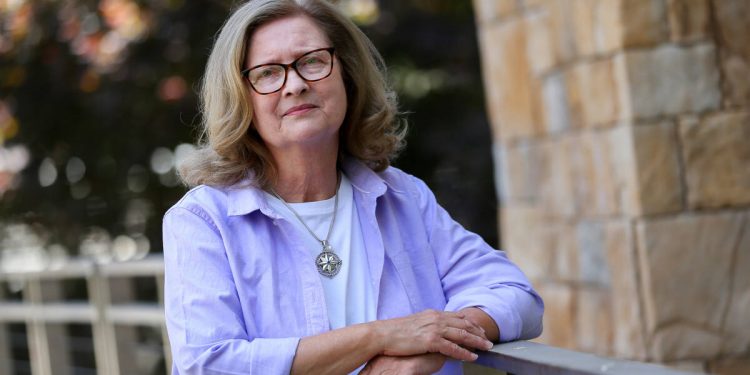
“We have a tremendous amount of financial confusion, and teachers really want to have the resources to teach students in fun and engaging ways, but it hasn’t been worked into the curriculum,” said Campbell at Sonoma State.
Campbell is developing a curriculum and began teaching it to elementary school teachers in the 2019-2020 school year. The high school curriculum is in the planning phase. Eventually the university also plans to evolve the curriculum into a personal finance course for its own students who did not learn about money in high school.
“We believe money management is an essential life skill for young people to learn, which is why we’ve been offering financial education programs to students for more than a decade,” Redwood Credit CEO Brett Martinez said. “Because financial education isn’t a standardized graduation requirement, providing educators the tools to teach basic money management skills helps them set students up for real-world success.”
Teaching about money is not easy. Many Americans don’t like to talk about it, families often don’t discuss it, and in some ways it has become more taboo than sex, said several financial advisers.
But for Campbell it’s a familiar topic that she embraces. A lifelong educator, she spent four years in the 1980s working her way up from novice to floor broker at the Pacific Coast Stock Exchange in San Francisco. “I went back to education. I was disillusioned. All anybody talked about was money,” she said with a smile.
One main way high school students in Sonoma County learn about personal finance today is when a teacher — often in economics or math — chooses to include it.
For example, at El Molino High School all seniors get at least six weeks of personal finance because teacher Eric Wycoff has for years emphasized it in his senior economics course.
“Our kids get a gazillion messages from society about buy, buy, buy, and we need to teach them about the consequences. They’re just prey for people who control the credit markets. That can easily be avoided. I want kids to have the tools they need so they can budget, save and begin to invest early for their future,” said Wycoff.
Many teachers can’t do that effectively without training.
So in 2018, after a decade of pushing for personal finance education in various ways, Redwood Credit Union offered a $25,000 grant to the Sonoma State School of Education to develop course material to train education students how to teach financial literacy once they’re working in the classroom.
“By partnering with SSU to create a curriculum within their School of Education, we are working toward ongoing and sustainable financial education for generations to come,” said Matt Martin, senior vice president at Redwood Credit Union.
Campbell presented her elementary curriculum at the fall 2019 conference of the National Council for the Social Studies in Austin, Texas, along with Ryan Kurada, an award-winning kindergarten teacher at University Elementary School at La Fiesta in Rohnert Park.
“Teachers were so eager to hear about it. It’s almost to a point of desperation,” Campbell said.
Recent Comments