


I’ve just finished a global study on the supply chain planning (SCP) market. In the process of doing this, I spoke to every significant supplier in the market as well as many small suppliers with very interesting solutions.
I also spoke to Oracle and attended a supply chain conference put on by SAP for industry analysts. SAP and Oracle are the two largest suppliers of enterprise applications in the world. They are also leaders in the supply chain planning market. I’ve been covering the SCP market for years. It is interesting to note how the way they position themselves against best of breed planning suppliers has changed.
The big ERP suppliers may admit that they have a gap in their functionality but promise that they are working diligently to plug the hole and that the updated solution will soon be available. SAP, for example, admits they do not offer concurrent planning, but that their solution soon will.
In Oracle’s case, the company offered its first Cloud SCP solutions in 2016 and now leads with the cloud solution. While they may sell complimentary on-premise solutions, the majority of their sales come from the Oracle Cloud Supply Chain Planning. Oracle continues to invest heavily in the Cloud SCP, to bring its functionality up to and beyond the on-premise solution.
But Oracle, and particularly SAP, always point out the value of an integrated solution that goes beyond any one application area. Best of breeds will frequently talk about certified integrations to the big enterprise resource planning (ERP) vendors and argue that it is really the quality of the SCP solution that matters.
Here is how Vikash Goyal, the Vice President Product Strategy Supply Chain Planning at Oracle, answers that. “Part of our end-to-end value proposition is the integration between our enterprise applications and our SCP solutions. For example, if a company wants to create a new product, there is an approval process, the creation of conceptual Bill of Material (BOM), and the approval of that BOM. Once that BOM is approved, it automatically flows into the manufacturing application, becomes orderable, and becomes plannable in the planning system.” In other words, there is an elegance and seamlessness to the integration that best of breeds can’t match.
Oracle also argues that their machine learning investments go beyond a focus on supply chain planning. For example, algorithms may monitor metrics important to the entire organization. These include things like an increase in the amount of demand at risk, falling fill rates, or rising costs. Machine learning can provide suggested resolutions to these issues to targeted users. In some cases, the guided resolution suggestions will go to planners; in some cases, the suggestions will go to users in other parts of the organization; and finally, in some cases the engine might suggest planners run specific types of scenarios before making a decision.
Interestingly, when it comes to supply chain applications, one hot area is supply chain collaboration networks (SCCN). Neither SAP or Oracle are significant players in this market. But both companies recognize the increased buzz this solution is getting from industry analysts. For companies that want to create robust supply chain control towers, it will be necessary to combine SCCN data feeds with concurrent planning capabilities.
Oracle stressed to me in my SCP briefing that they are beginning to invest in expanding their supply chain collaboration network capabilities in order to support and end-to-end approach to supply chain management. Currently the Oracle supplier network connects to 150,000 supplier sites with the focus being on indirect spend; this has limited importance in SCP. But they want to take their Business-to-Business platform and connect it to all the major SCCN networks. Then as a supply chain organization wants tighter connections to certain partners, users would come into a supply chain application, open a user interface, select the network providers and specific forms of documents they want to exchange with key partners. And then without integration or implementation work, the company would be able to communicate seamlessly with those partners.
SAP has a more aggressive SCCN/SCP roadmap. Their Integrated Business PlannCurrently the Oracle business network connects to over 12,000 trading partners with the focus being on procure to pay (much of that being indirect spend); indirect spend connections have lower importance in SCP. The company has already connected their Business-to-Business platform to many major SCCN networks and want to continue to expand. Then as a supply chain organization wants tighter connections to certain partners, users could come into a supply chain application, open a user interface, select the network providers and specific forms of documents it wants to exchange with key partners. And then without integration or implementation work, the company would be able to communicate seamlessly with those partners, not change existing structure. ing suite includes a native integration to the Ariba network, which is mostly used for indirect procurement, and again of limited use in SCP. However, SAP reports they are actively working to increase the use of the Ariba network for direct procurement (a supplier network). SAP also seeks to build out an asset intelligence network, a logistics business network, a design network, and a manufacturing network. SAP seeks to harmonize these networks for a single onboarding experience for trading partners.
SAP also points to another application that is a natural complement to SCP. In 2018, SAP spent $6 billion to acquire Qualtrics, a provider of customer centricity solutions. SAP seeks to build more customer centricity into their supply chain applications. In addition to a control tower that reports things like rising costs, supply chain risks, manufacturing delays, falling service levels, or shipment delays, SAP also wants to report customer satisfaction or product scores to significantly improve accuracy for demand planning leveraging ML-based forecasting methods. In resolving satisfaction issues, SCP levers could also be used to speed fulfillment for example.
But both SAP and Oracle are increasingly arguing that their differentiation in SCP, and other application markets, has as much to do with their investments in infrastructure as in the breadth of their applications. SAP has investing in the Internet of Things (IoT) in areas like predictive maintenance and the detection of shipments that are running behind schedule. These feeds can be fed into SCP to respond faster to exceptions improve planning outcomes. Oracle has similar messaging around IoT.
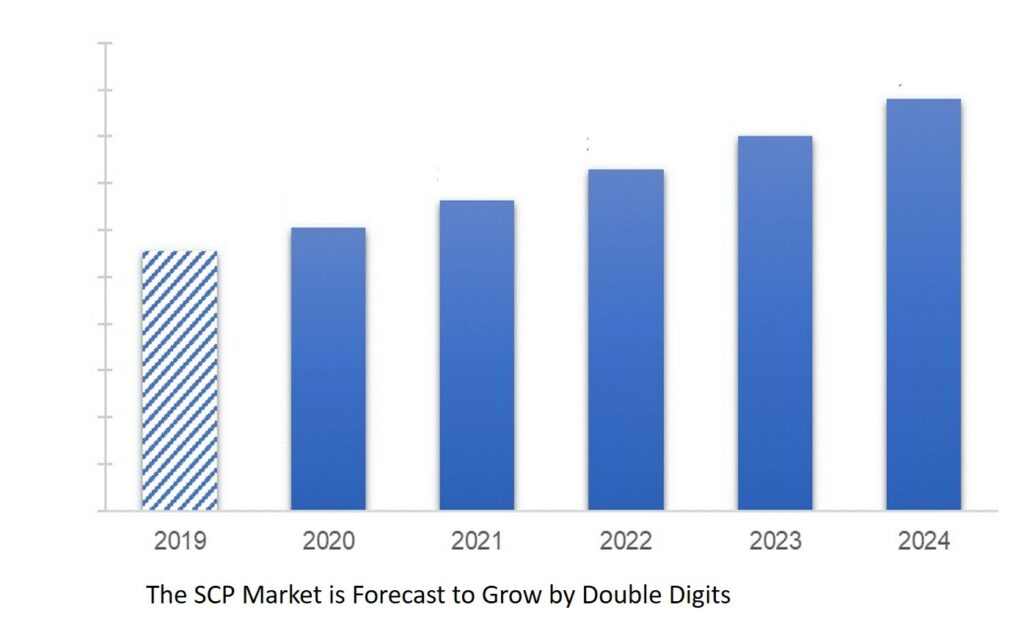
So how are the arguments of the big ERP vendors resonating in the marketplace? There is a tendency for enterprise application markets to consolidate over time; the big get bigger, and the small disappear. That has not occurred in the supply chain planning market, if you combine SAP and Oracle’s market shares from five years ago and compare them to their share today, their power in the market has declined.
Recent Comments