



Vermont craft brewers are banding together to support one of the state’s main environmental initiatives: clean water.
The Vermont Brewshed Alliance, launched in November by the Vermont Natural Resources Council, brings together breweries to raise awareness about what the industry can do to protect water resources.
The initiative makes Vermont the fourth state to formally involve beer makers in conversations about water quality.
Brian Shupe, executive director of the VNRC, explained that the main purpose of the Brewshed is to raise awareness among brewers and beer drinkers alike about the steps producers can take to reduce their environmental impact.
“All of the breweries we’ve brought on board have made a commitment to clean water,” he said. “They understand that it’s important to them, regardless of what their source of water is, and they want to help us to do our work to serve Vermont and keep its waters clean.”
Because Vermont has more breweries per capita than any other state, Shupe hopes the Brewshed promotes a greater understanding that businesses can promote good environmental habits without sacrificing their economic prospects. Breweries need clean water to make good beer.
“It’s a way to highlight that environmental protection and economic development are not mutually exclusive,” he said. “They are actually reliant on each other.”

The initiative launched with five breweries on board, and VNRC is looking for more to join the alliance. Currently, the only requirement for membership is that beer makers make a commitment to clean water and that they are in compliance with all existing water quality and wastewater management standards.
A big part of what breweries can do to lower their environmental impact is manage their wastewater responsibly, according to Nick Giannetti, the pretreatment program coordinator of the Department of Environmental Conservation’s wastewater program.
VTDigger is underwritten by:
Breweries discharge high strength wastewater, which has has more organic material in it than it would if it was from the average residential home.
“It exerts a much higher demand on the wastewater treatment facility,” Giannetti said.
The strength of the water exiting a brewery can potentially overload the local wastewater treatment plant, according to Giannetti, which can lead a plant to discharge untreated or partially treated wastewater into the state’s lakes, rivers and streams, or it can cause the plant’s equipment to fail entirely.
A common step that breweries can take to reduce their impact is to remove the organic solids from their wastewater before it enters a treatment facility in a process known as side streaming. Giannetti hopes the Brewshed will promote side streaming, which several of the alliance’s founding members already use.
One of these breweries is the Alchemist. Co-owner and CEO Jen Kimmich said every producer in the state can use this technique to reduce their negative impact on water quality.


“Whether you make yogurt or you make gin or your make donuts or you make beer, you should be pulling aside as much of your highest strength effluent as possible before it goes down the drain and diverting it responsibly,” Kimmich said.
Kimmich said her brewery sends the organic material it pulls out of its wastewater to a biodigester to be turned into energy. She also hopes that being a member of the Brewshed will help her reach out to other producers and educate them about how they can improve their wastewater management practices.
“We want to share everything we’ve learned with other producers so that their learning curve isn’t as steep as ours,” she said. “So that they can partake in some of these practices that really clean up our water.”
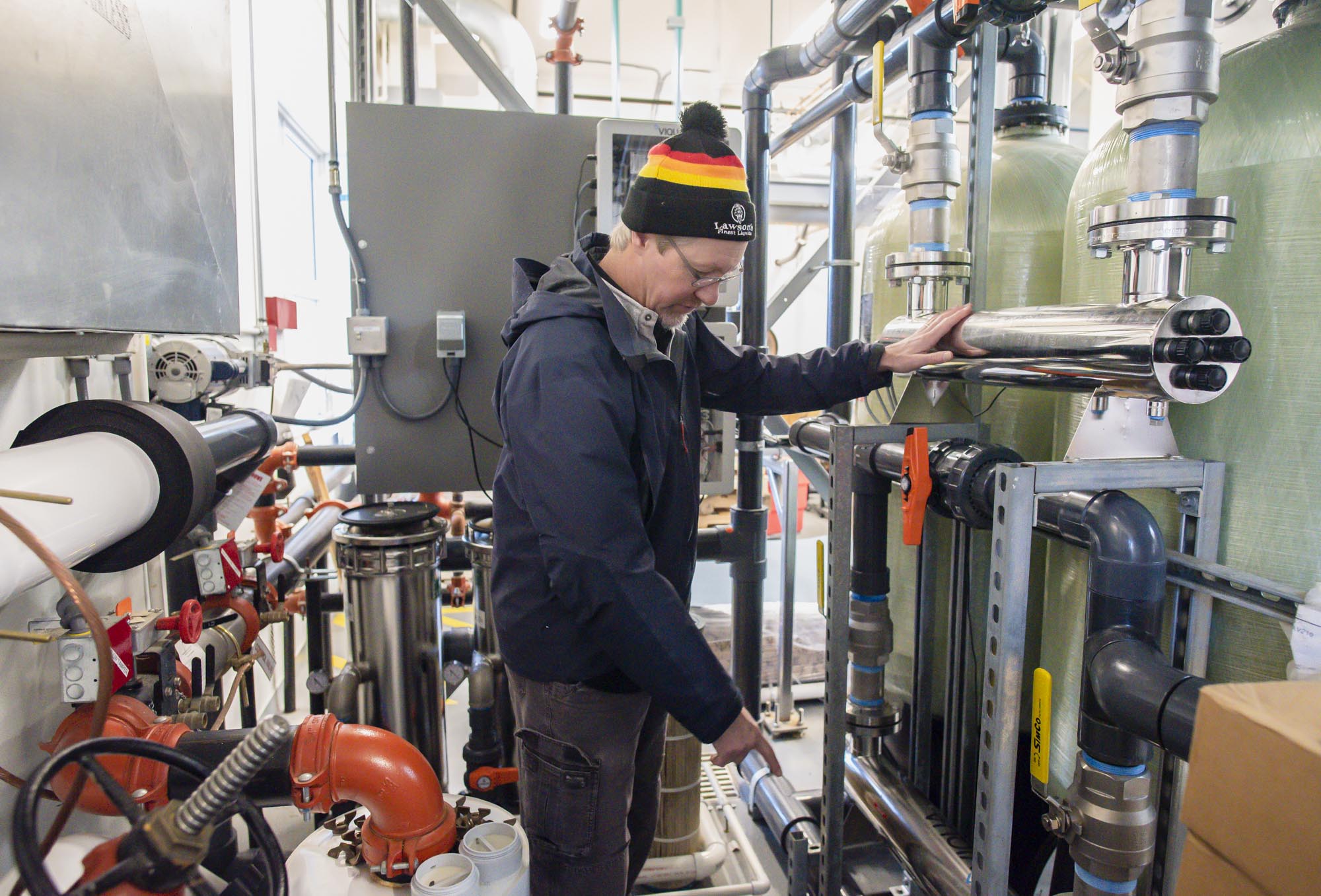
Another of the Brewshed’s founding partners, Lawson’s Finest Liquids, also practices side streaming, among other strategies, to reduce its impact. Lawson’s built a facility at its Waitsfield location to treat its own wastewater, and the treatment process reduces the strength of the organic content, as well as the total suspended solids, in the system by more than 95%, according to CEO and founding brewer Sean Lawson.
“Our wastewater is cleaner than the water that’s typically coming from a three-bedroom home in terms of quality,” he said. “In terms of quantity there’s quite a bit more.”

In addition to the steps Lawson’s has taken to improve its water treatment process, it has donated more than $80,000 to causes related to conservation through its Sunshine Fund since the fund opened in October 2018. Customers can pay into the fund instead of tipping servers, who make a living wage, at the company’s Waitsfield location.
Lawson said that in the next year his brewery plans to implement strategies to reduce its overall water usage and cut down on the wastewater it produces.
“We’re trying to reduce the number of gallons of wastewater produced for every gallon of beer produced,” he said. “We’re already meeting industry averages of five gallons of water to produce one gallon of beer but we want to keep getting better at that so we’re focused on that.”
Kimmich hopes to push for legislation that requires producers to measure and report their wastewater output in order to better understand the scope of the problem and hopefully continue to work toward clean water solutions.
VTDigger is underwritten by:
“Before we can make real progress we really need everyone to report so we have a clear picture of what we’re putting down the drain,” she said. “Then we can move forward with some regulation and some policy that really enables us all to move forward.”
Don’t miss a thing. Sign up here to get VTDigger’s weekly email on the energy industry and the environment.
I Appreciate VTDigger
I want to support independent local news.
John Spencer, Arlington

Recent Comments