


Industry 4.0 is the buzzword of choice in the world of manufacturing technology these days. It includes a veritable alphabet soup of technologies. Apart from internet of things (IoT) and artificial intelligence (AI), there is advanced analytics (AA), machine-learning (ML), big data, cloud, R, blockchain and Uberization. Operations teams from large process plants are making trips to tech hubs, such as the Silicon Valley, looking for tech nirvana. Yet, at the factory level, the grasp of how to use technology is low.
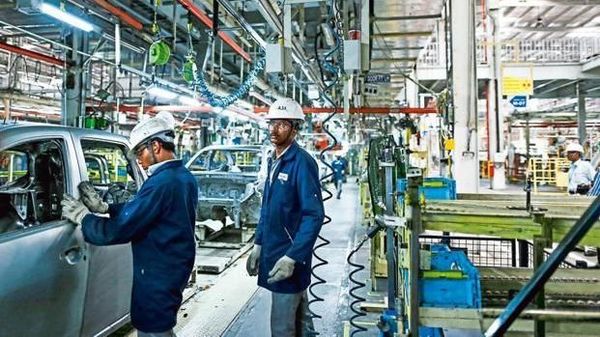
The World Economic Forum has put out a list of 26 global “digital lighthouse” plants, which seem to have cracked the challenges. A closer analysis shows that most of these make discrete products, such as automobiles. Only a handful, like Tata Steel’s Odisha plant, are in continuous process manufacturing. The list has no oil refineries, only one chemical plant and one mining site. Why are most lighthouse assemblers rather than process plants? Are the new technologies applicable only to discrete manufacturing? Are process industries late to the party?
We tapped McKinsey’s experience in driving Industry 4.0 transformations across process industries: refining, metals, petrochemicals, mining, power generation, cement, including some digital lighthouses. What separates winners from the also-rans is the desire of these companies’ leaders to improve business performance and realize gains. New tools could see margins improve by 2-4 percentage points of revenue.
Let’s look at the shifts needed. First, from “let’s wallow in technology”, businesses must shift to “let’s realize business opportunities”. Instead of getting lost in a maze of technologies, winners tackle their business problems first. Process industry problems are mostly about raising the productivity of raw material and making better use of capital-intensive assets, thus reducing costs and getting more output. The winners have picked the right digital tools to address these. In this industry, the biggest opportunity lies not in robotics or process automation, but in using advanced analytics to control processes, make plants more reliable, and to improve supply chains. Mathematical models can recognize patterns from the data that plants generate and deliver lower material consumption and lower variability.
The second shift should be from “let’s wait to get all the data together” to “let’s drive business improvement”. One CEO complained that any digital transformation had to wait till all the data was wired up. We waited, but found no dearth of data on an eventual plant visit. Projects to increase data availability were stuck, but it had enough data to raise performance. Automated control systems and several thousand sensors can generate plenty of data and if the business problem is clear, it can be fixed at a fairly low cost. In one company, a $180-million IT project was replaced by a $30-million largely capability-building investment, with quick results.
For the third shift, go from “we lack capability and need to outsource” to “let’s build the capability internally”. Leaders familiar with digital transformations often feel they lack the capabilities to execute them. Many of them tilt towards technology providers. One company has been working with an equipment provider for over 18 months to digitally improve energy-efficiency. The provider has a pool of data scientists in Bengaluru, who gather data, build AI models and send them over to plant operators in multiple remote locations. But the models are poorly understood by the operators, resulting in poor adoption. There are two lessons here. First, change that management to ensure adoption is a bigger challenge than building a digital model. The organization has to be engaged and change has to be led by insiders. Second, the models or solutions need to evolve and be retuned periodically. This requires dedicated internal resources. CEOs complain that it is hard to hire the right skills. While that is true of some profiles, such as data scientists, others can be acquired by repurposing existing talent. For example, a quarter of the officer-level workforce in one plant was retrained; 40 line plant operations and maintenance staff doubled up as data translators, 20 IT and automation officers played data engineering roles; a few even became data scientists.
The fourth shift should be from “pilot purgatory” to programmatic implementation. Almost every company we talk to has digital and analytics projects. However, over two-thirds of these have only a few isolated projects, often kept alive only by the passion of their managers. We call this the “pilot purgatory”. These projects had all started with fanfare, but when the results were not material to the business, people lost interest, and they’re now like hobbies. The WEF lighthouses have set up structured programmes with dozens of use cases, each with a major performance-upping target and concerted attention to capability building. These companies are scaling up their efforts. One aluminium company is now integrating digital models created for specific equipment into machines across the entire plant.
In summary, we believe the best way to get beyond buzzwords and trips to Silicon Valley is for the top management to see practical applications of digital technologies in settings similar to their own. They should then set a clear aspiration for performance improvement, as well as capability building, and execute them meticulously. Those who do this will lead their competition.
Rajat Gupta and Kunwar Singh are, respectively, senior partner, and partner at McKinsey & Co. Pinak Dattaray of McKinsey & Co. also contributed to this article.
Recent Comments