

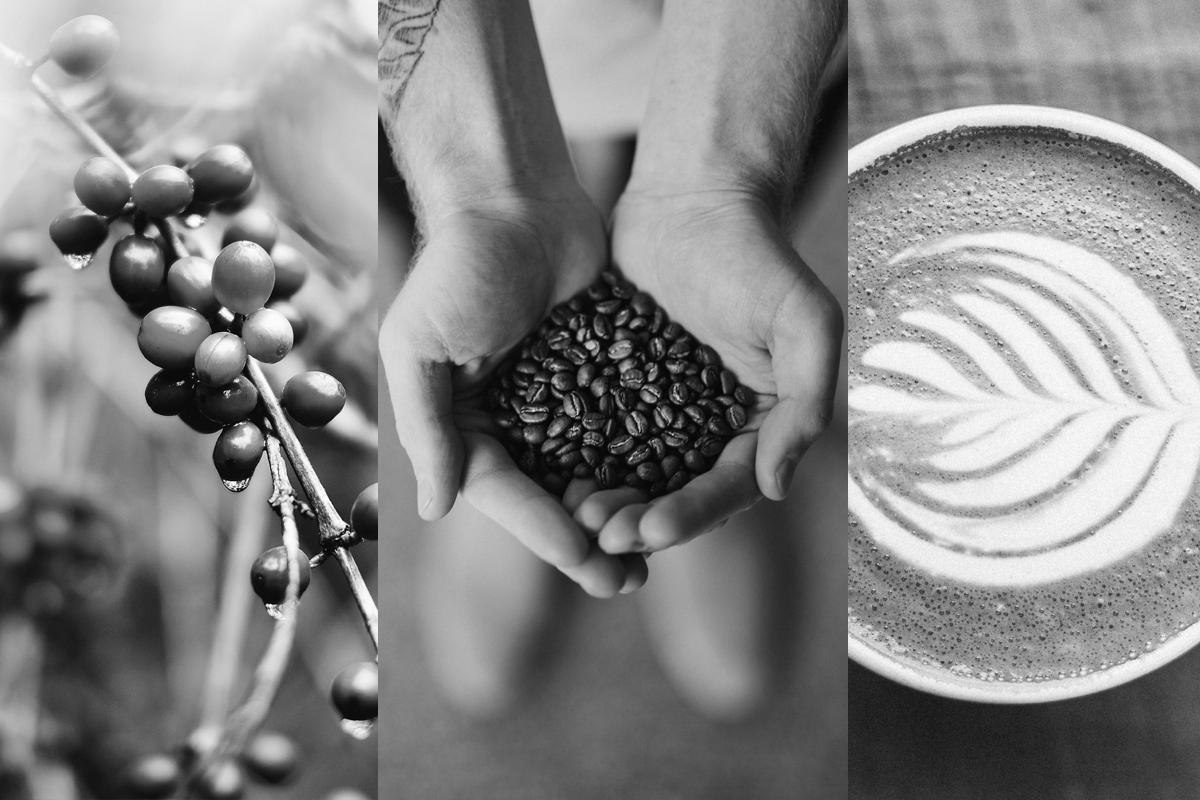

IBM is the latest vendor to provide a blockchain platform for coffee bean growers looking to track their product on its journey to market – and let consumers trace their java back to the farm to discover where and how it was grown.
The “Thank My Farmer” app is slated to roll out in March and lets users scan a QR code on packages of coffee to trace its journey and send a contribution to support sustainable farming projects in agricultural communities on five continents.
The app represents only the initial use of IBM’s distributed ledger technology (DLT) for an entire coffee ecosystem that includes farmers, traders, roasters, manufacturers and distributors who want to revamp a paper-based supply chain system and create digital payment rails for participants.
“We’re working on building a self-sovereign identity for farmers to actually own and control the data produced by their farm,” said Dave Behrends, founder and president of Farmer Connect. “By doing that, we’ll be able to digitize a lot of the transaction process that happens today in an analog way.”
QR codes should begin showing up on coffee packages in March; scanning the code using a mobile devices, coffee buyers will be able to track the entire journey of the beans from the farm to the store shelf. They can also send money to support sustainability projects near the farmer who grew the beans. Users in the U.S. and Canada will be able to scan QR codes on Folger’s 1850 brand premium single-origin coffee and other well-known brands.
“This app is a major step in the sustainability of the coffee industry,” IBM said in a statement. “By bringing some of the biggest companies in the industry together, it allows consumers to play an active role in supporting coffee farmers and demand more transparency from their favorite brands. It also assures family farmers that their work is valued: more than 12.5 million households rely on growing coffee for their income, supporting a $100 billion industry across the globe.”
The coffee industry and blockchain
Farmer Connect is only the latest coffee industry player to test the blockchain waters.
Last year, Starbucks announced it was working with Microsoft to develop a blockchain-based supply chain tracking system and mobile app that would allow customers to track the supply chain journey of the beans they buy and the coffee they drink. The company didn’t specify when the app would be live.
 Starbucks
’ and Microsoft are creating a mobile “bean to cup” tracking app that may look like this and enable customers to see where their coffee was grown and the journey it took to their cup.
Historically, wholesale coffee prices have been volatile, fluctuating widely over time. In the past two years, prices have dropped from a high of $1.55 per pound to a low of 87 cents. Currently, coffee sells for 99 cents per pound.
That volatility has been hard on small-to-medium sized coffee farms in countries where there are few banking options and where growers often get paid prices that don’t reflect the market, according to Luis Macias, CEO of blockchain-based supply chain service GrainChain. The company is based in McAllen, Texas.
“When coffee farmers don’t have access to formal financial systems and formal contracts for purchase, they are the ones pushed down in the industry,” Macias said. “One of the larger focuses in the overall industry…is to find solutions to not only have more financial inclusion but enhance the ability for coffee producers to have a marketplace.”
In September, GrainChain said its blockchain network was being piloted by roughly 10% of Honduras coffee growers, or about 12,000 farmers, with an eye on going into full production in April.
“There are quite a few initiatives involving the tracking of produce in many different countries. Coffee alone has seen at least half a dozen initiatives,” said Martha Bennett, a vice president with Forrester Research.
SAP has also launched a blockchain-based service used by companies such as Bumble Bee Foods to track and trace the origin of its tuna. Food suppliers add QR or bar codes to shipping labels that can be scanned and entered into a blockchain database, which becomes a transparent ledger for all participants to see as shipments travel along the supply chain.
 Andresr / Getty Images
The blockchain ledger behind the Thank My Farmer app is currently being tested and will be available to the entire supply chain ecosystem later this year, according to Behrends.
“Right now, what we’ve announced in terms of partners are traders or merchants, we have roasters and soon we’ll be adding cooperatives and farmers,” Behrends said. “We’re not trying to change the way the supply chain operates; we’re just trying to make the supply chain more efficient, inclusive and digitally connected.
“We’re just starting with coffee to prove the validity of the platform. Then, we’ll expand into cocoa, tea and other markets because a lot of those markets have the same issues coffee is facing,” Behrends added.
Founded only a year ago, Farmer Connect is working with the non-profit Sovrin Foundation to create coffee industry players’ self-sovereign identities, a new form of digital identity that enables users to own the security keys that control how their business and banking account data is shared with industry players; the technology can create a digital wallet that stores the encryption keys used to access banking funds and verify user identities.
Farmer Connect designed the Thank My Farmer app that IBM built and supports on its blockchain-based platform; it is the same technology used for the IBM’s Food Trust supply chain ledger. Since its launch in 2017, Food Trust, which is based on the Hyperledger protocol, has attracted a large group of leading food suppliers piloting it as part of a consortium. The group includes Dole, Driscoll’s, Golden State Foods, Kroger, McCormick and Company, McLane Company, Nestlé, Tyson Foods and Unilever.
Storing supply chain data on a blockchain provides digital identities, certificates and smart contracts to enable the delivery of, and payment for, commodities between unfamiliar parties. It can also automate the flow of data in real time. Verified data reduces the risk of fraud and enables players to share it in real-time with third parties.
With adoption increasing in the supply chain industry, blockchain and IoT sensors are expected to create $31 billion in food fraud savings globally by 2024, according to a recent study by Juniper Research. Substantial savings are expected as early as 2021 and compliance costs will be reduced by 30% by 2024.
The Farmer Connect consortium
Farmer Connect represents a global supply chain consortium that spans five continents and includes players such as Beyers Koffie, The Colombian Coffee Growers Federation (FNC), ITOCHU Corporation, Jacobs Douwe Egberts (JDE), J.M. Smucker Company, Rabobank, RGC Coffee, Volcafe, Sucafina and Yara International. For small farmers, who represent the lion’s share of coffee production, the electronic ledger means they’ll finally be able to see where their coffee ends up and get feedback on how consumers like it.
“For farmers, many times they spend their whole life growing these crops and trying to do everything perfect in order for the consumer to have the best quality coffee possible, but as soon as they sell it, they don’t know what’s happened to it,” Behrends said. “The great thing about blockchain is the data can flow both ways. So, we can also empower the brands who are willing to share data with farmers to show them, ‘Hey, your coffee is being served in this cool New York City café and it’s being served in this product in super market shelves in London.’
“When we’ve seen this happen, it’s really made a huge difference to farmers to know their work is appreciated,” Behrends added.
The application for farmers to track and trace their beans is expected to be out in a beta version by April, followed by a wider-scale release later this year.
The first step, however, is to connect farmers and the rest of the bean processing and supply chain ecosystem on a common platform that uses common data standards; once that’s completed, Farmer Connect will be able to build smart contracts and overlay digital marketplaces that provide more access to traditional coffee markets.
“Everyone right now is using their own, individual ERP legacy systems. So, we want Farmer Connect to become that common platform,” Behrends said. “Once that digital connectivity is there, the opportunities are endless on what we can build on top of that.”
Copyright © 2020 IDG Communications, Inc.
Recent Comments