

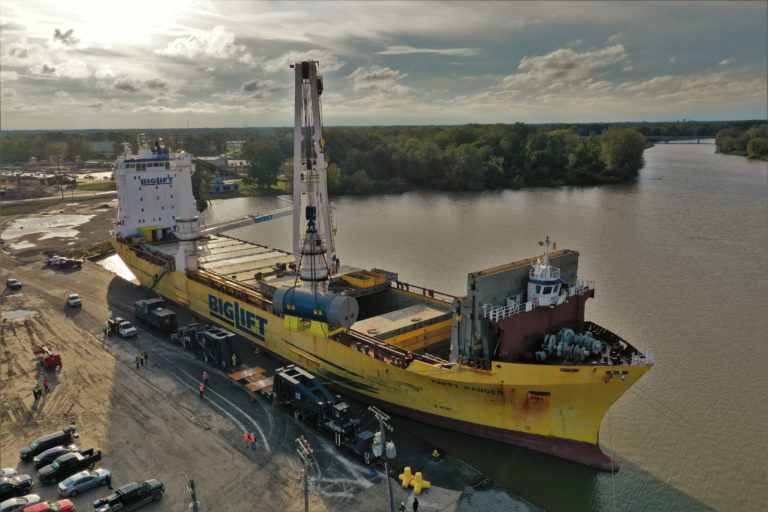

The U.S. Maritime Administration’s (MARAD) award of more than $1.1 million to the Port of Monroe, Michigan for a domestic “marine highway” project is welcome news for a port that says its efforts to increase international business has been stymied by the Detroit office of U.S. Customs and Border Protection.
Paul LaMarre, director of the port, said the grant from MARAD will be used to purchase a crawler crane, a crane mounted on tracks.
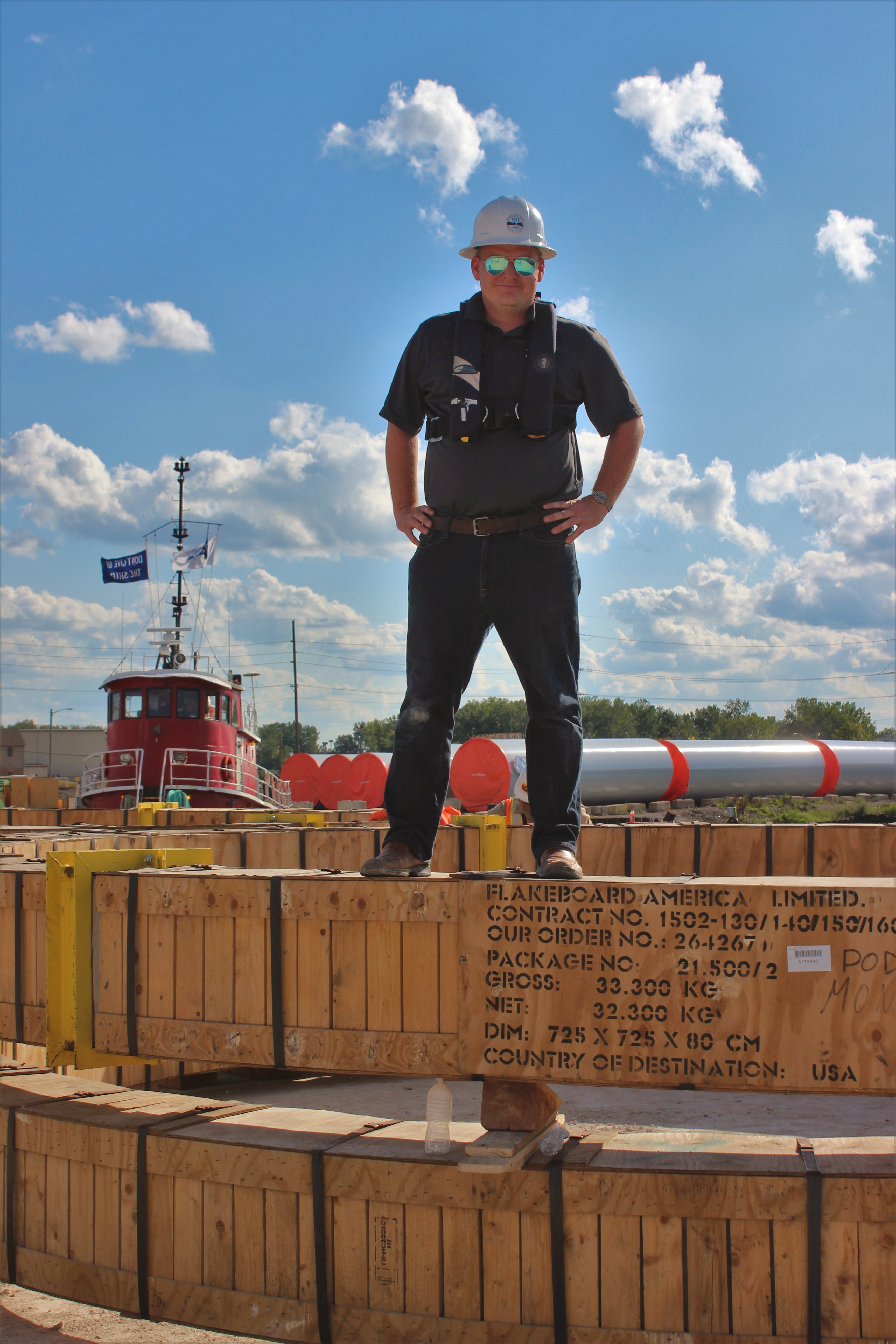
(Photo Credit: Port of Monroe)
The port in 2016 had a route designated under MARAD’s marine highway program. The proposed “Lake Erie Shuttle” would be a domestic container service between Monroe and Cleveland, with the possible addition of other ports such as Detroit and Buffalo, and the crane would be used to load and discharge containers and breakbulk cargo.
Currently, if ships loading and discharging cargo in Monroe do not have their own gear, the port has to rent cranes, which LaMarre says can be prohibitively expensive.
The port has been working with Green Shipping Line, on a proposed short sea service, Green Shipping Line was founded by Percy R. Pyne IV, a longtime advocate of short sea shipping and founder of the short-lived American Feeder Lines, which operated a service between Halifax, Portland, Maine and Boston in 2011-12. Pyne continues to look at starting up a domestic coastal service not only on the Great Lakes but on the East and Gulf Coast as well as building specialized vessels for the wind energy industry in the U.S.
The Port of Monroe is now looking at a number of opportunities to move cargo domestically or internationally, with a focus on the automobile industry, said LaMarre.
For example, he says the port could load containers with finished cars and other products and receive containers with automotive parts. In addition to the proposed Lake Erie Shuttle, the port and Green Shipping Line are looking at possibly transporting coils of aluminum made by Novelis in Oswego, New York, on Lake Ontario to Monroe and shipping aluminum scrap back to Oswego.
LaMarre said that the port also wanted to ship automobiles — specifically Ford Mustangs made at an assembly plant in nearby Flat Rock, Michigan — overseas but that effort was frustrated by decisions made by the Detroit office of Customs.
He said the port had done a demonstration for Ford of how the cars would be loaded in containers, but he said “ultimately the containers went back to Europe empty.”
“CBP compromised the entire project. Not only were they going to require inspection and putting their seal on outbound containers, they were going to require 100% scanning. They are still standing on that.”
In another instance, he says Monroe was denied the ability to discharge project cargo — construction material, machinery and supplies — bound for a $500 million fiberboard factory being built in Grayling, Michigan, by the North American subsidiary of the Chilean forest products company Arauco.
He said the project would have resulted in 14 breakbulk ships visiting the port.
“Overnight, in 2017 U.S. CBP decided a wood breakbulk crate is a container requiring scanning in Michigan and nowhere else in the country. That stands to this day,” said LaMarre. The first shipment of cargo was eventually taken to Cleveland, where it was not required to be opened, devanned or scanned by CBP according to an exhaustive 44-page report prepared by the University of Michigan’s Program in Practical Policy Engagement in May that detailed the Port of Monroe’s jousting with CBP.
The University of Michigan report found “CBP-Detroit imposes clearance requirements on Michigan ports that are not required elsewhere in the United States. This renders Michigan ports unable to handle crated or containerized cargo, putting them at a comparable disadvantage” and that “CBP-Detroit’s policy has damaged the reputation of the Port of Monroe and the state of Michigan, resulting in lost business and the potential loss of region-lifting economic developments like the Arauco project.”
CBP told Crain’s Detroit Business in December that because no two ports are exactly alike, it “must evaluate all requests for services individually.”
The Monroe News in August said a CBP officer in Detroit told it that facilities in Michigan lack the proper infrastructure and technology to inspect containerized cargo and that CBP’s limited resources are a factor in its decisions because working with the port requires pulling staff from their existing responsibilities.
LaMarre said while the initial shipment for the Arauco project was loaded on a barge and moved from Cleveland to the Port of Monroe, the subsequent shipments moved through Cleveland and Canadian ports and then trucked to Grayling.
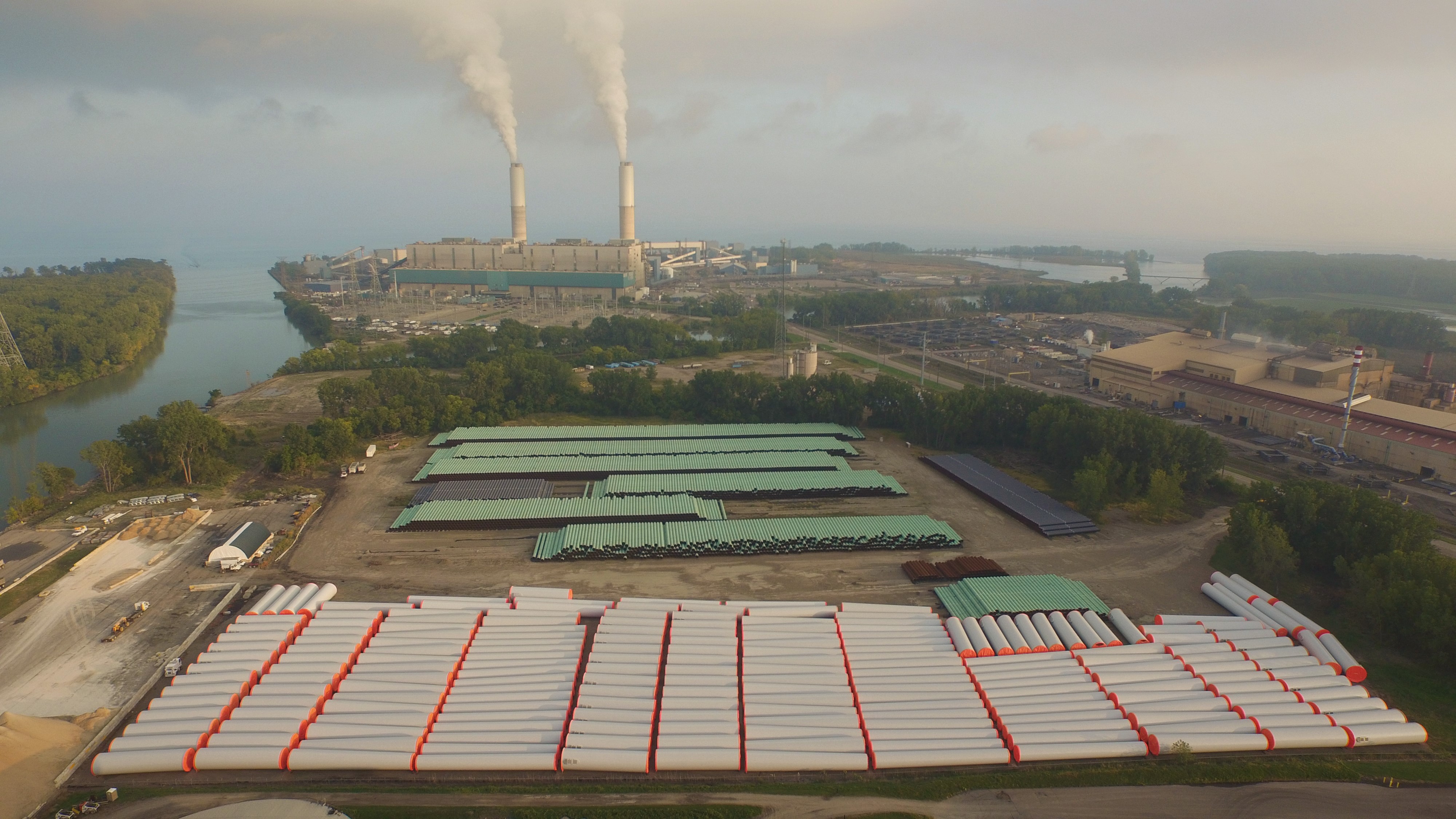
However, he says Monroe has been highly successful in arranging the movement of project cargo moved by carriers such as Spliethoff and Big Lift, including wind energy towers made by Ventower Industries. The port also installed a $1 million rail spur on its dock to receive a 390-ton generator stator from Rotterdam for the DTE Energy’s Fermi 2 nuclear power plant in Newport, Michigan. It also handles coal for DTE’s coal-fired power station, which is located next to the Port of Monroe.
“I say we are the biggest little port on the Great Lakes,” says LaMarre. “When I started here in 2012, it was an overgrown, grassy field that used to be a landfill. We have gone from not even being able to see the water because the trees were so high to a bustling seaport. And we have done it with very few resources.”
Recent Comments