


“Retailer and brands assumptions about OSA rates are frequently off target because they don’t have the real-time, real-world data they need to better manage and optimize inventory turns,” said Pensa CEO and co-founder Richard Schwartz.
NEW YORK (PRWEB)
January 12, 2020
NRF 2020 Vision: Retail’s Big Show
Pensa Systems, a leading innovator in autonomous perception systems for retail inventory, today released early learnings from multiple customer deployments that show real-world on-shelf inventory levels may be worse than long-accepted estimates. That’s a potentially significant finding, given that industry reports already identify stockouts as a $1 trillion problem for brands and retailers.
Specifically, Pensa’s early deployments show:
-
OSA may be worse than expected. While industry best practice has long aspired to 98 percent on-shelf availability (OSA), Pensa has found that the reality often is routinely averaging 90-96 percent; in fact, stockouts can be up to 25-30 percent – much higher than reported by inventory systems or the industry practice of “gunning the holes” to identify stockouts. There is also significant variability by store size, SKUs, manufacturers and individual store restocking processes. - “Hidden stockouts” represent up to 30 percent of the problem. Hidden stockouts refer to situations where an otherwise obvious gap from the stockout is “faced over” with an adjacent item or the wrong product, or where the desired product is actually in stock but hidden by other products in the wrong location, or only available in secondary locations but not where shoppers expect to find it. Pensa found that hidden stockouts can account for up to 30 percent or more of all stockouts.
- Stores often understock their top-selling products. This has been one of the most surprising findings for brands and retailers, given how motivated both are to ensure popular products are always on the shelf. The unfortunate reality found in multiple Pensa deployments, however, is that stockout rates are typically highest for top-selling products – often hitting 8 to 12 percent or more at many stores.
- Less popular products remain out-of-stock longer. Slower moving niche items on the shelf can be present to provide variety to the consumer. Ironically perhaps, hidden stockouts and inventory distortion conspire to cause these items to appear in stock and not selling, when in fact, they are out-of-stock and remain so undetected for long periods of time. Wrong conclusions can be self-perpetuating and supply chain practices for slower moving items exacerbate the impact.
- Small stores perform worse than average. While small stores obviously have less overall shelf space, they often stock too wide a variety in a desire to compete with larger stores and online retailers. Pensa’s initial analysis indicates this could very well be counter-productive, as it leads smaller stores to more frequently run out of top-selling products and exhibit high stockout rates overall.
- Automated stockout detection can add 2-4 percent to the bottom line. The industry has long lacked consistent real-time shelf inventory data. But now that real-time tracking data is a viable possibility, our deployments have demonstrated that it can underpin quick wins and long-term improvements, allowing retailers to adjust inventory operations and brands to have more precise visibility across stores and categories.
“Retailer and brands assumptions about OSA rates are frequently off target because they don’t have the real-time, real-world data they need to better manage and optimize inventory turns,” said Pensa CEO and co-founder Richard Schwartz. “It’s well-known that stockouts result in lost revenue, lower profits and low customer satisfaction. But with access to the right data via intra-day scans and powerful analytics, retailers can improve store operations, inventory planning and planogram compliance, and brands can optimize their product allocations, category plans and supply chain delivery.”
About Pensa Systems
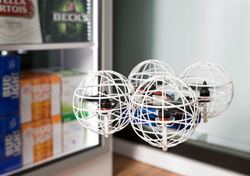
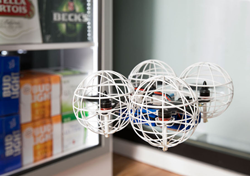
Pensa is a leading innovator in autonomous perception for retail inventory. Its system uses breakthrough technology – including artificial intelligence, autonomous drones and computer vision – to see and understand what’s on store shelves, providing crucial data to minimize stockouts, optimize product planning, and boost revenues and profitability. Pensa partners with top retailers and CPG brands globally to address a trillion-dollar “blind spot” at a critical time for the retail industry. Please visit http://www.pensasystems.com to learn more, and stay connected via Twitter and LinkedIn.
Share article on social media or email:
Recent Comments