


Dive Brief:
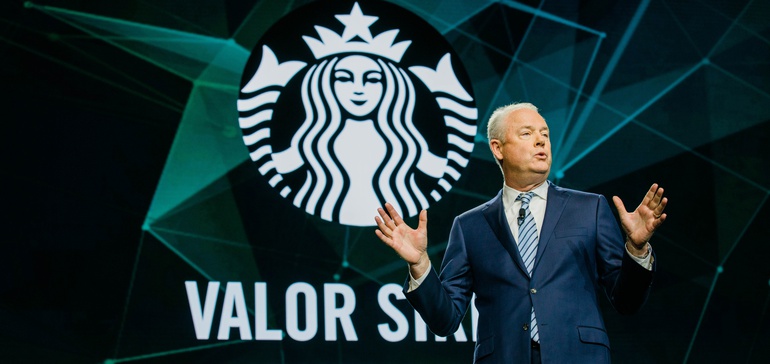
- Starbucks will work to become a “resource positive” company, CEO Kevin Johnson shared in a public letter Tuesday. Resource positive means storing more carbon than the company emits, eliminating waste and providing more clean freshwater than the company uses, according to the letter.
- Though Johnson laid out some initial targets for reduction in the letter, Starbucks will formalize 2030 goals in 2021 and suppliers and licensees, among other stakeholders, will need to get on board, the CEO wrote.
- Starbucks is working with the World Wildlife Fund and Quantis to create an accurate accounting of the company’s carbon emissions, waste and water usage. “This was the first time we had conducted this footprint assessment for all three of those areas, globally,” wrote Johnson. The company will also work with the Science-based Target Initiative to track its emissions reduction progress
Dive Insight:
Johnson called Tuesday’s declaration a “bold, multi-decade aspiration” and laid out preliminary terms in the letter, acknowledging he does not yet have all the answers to achieve the goal of resource positivity.
The goals Johnson outlined Tuesday include:
- A 50% reduction in direct operations and supply chain carbon emissions.
- Conserving or replenishing 50% of water withdrawal for direct operations and coffee production with a focus on communities and basins with high water risk.
- A 50% reduction in waste sent to landfill from stores and manufacturing, driven by a broader shift toward a circular economy.
“While we’re confident these strategies are directionally right, our eyes are wide open knowing that we do not have all the answers or fully understand all the complexities and potential consequences,” wrote Johnson.
Greenpeace agreed that the plan seems preliminary, saying the strategy is a welcome development, but the company still has a long way to go before it can be considered a sustainable operation.
“Starbucks’ new sustainability commitments are light on specifics,” Sarah King, the head of oceans and plastics at Greenpeace Canada, said in a statement. “Without more detailed plans on how Starbucks will make this happen, it’s difficult to say the solutions Starbucks pursues will be taking us in the right direction.”
To date, Starbucks has been a relatively ambitious player regarding sustainability, focused mainly on ethical coffee sourcing and LEED-certified, stores since roughly 2010 — and more recently taking aim at the immense quantity of single-use items it generates.
But the company has yet to set a clear target for total greenhouse gas emissions reduction, despite disclosing some information to CDP (formerly the Carbon Disclosure Project) since 2010. Starbucks most recently received a score of “C” from CDP’s climate change action indicating awareness but not active management or leadership in the area.
Johnson wrote that some past initiatives to become a more sustainable operation were dependent on consumer behavior change — leading to middling results.
“What we learned was that, absent the same rigorous analysis, partnerships and investments that made us leaders in sustainable coffee and green building, our results underperformed our high expectations and underscored the need for a different approach,” Johnson wrote.
The company ran a pilot in U.K. stores, charging five pence for a cup and offering a 25 pence discount to those who brought or purchased one. Reusable cup usage increased from 2.2% to 5.8%, according to Starbucks’ 2018 Global Social Impact Report— not exactly the sea change about which Johnson wrote.
The company’s goal before Tuesday’s announcement was to develop 100% compostable and recyclable cups and eliminate single-use straws by 2022. In the letter, Johnson said the company would conduct more market research to create better incentives for reusability. Starbucks cups are currently recyclable in just a handful of major cities.
The operational and procurement changes Johnson laid out will touch every corner of Starbucks’ operation from food sourcing to building construction. They are:
- Expand plant-based options.
- Shift from single-use to reusable packaging.
- Invest in innovative and regenerative agricultural practices, reforestation, forest conservation and water replenishment in the supply chain.
- Invest in better ways to manage our waste, both in our stores and in our communities, to ensure more reuse, recycling and elimination of food waste.
- We will innovate to develop more eco-friendly stores, operations, manufacturing and delivery.
Johnson also wrote that these efforts are not to interfere with financial growth targets for the company but are essential to maintaining the relevance of Starbucks’ brand.
Recent Comments