


Crude-oil and copper prices slumped Monday amid fears the spread of the coronavirus could erode demand in China, the world’s largest consumer of industrial commodities.
Brent crude futures, the global oil benchmark, dropped 3.2% to $57.98 a barrel, a three-and-a-half-month low. Three-month copper futures fell 1.7% on the London Metal Exchange to $5,819 a metric ton, their lowest price in eight weeks.
Oil’s sharp drop was “100% down to the coronavirus,” said
Edward Marshall,
a commodities trader at Global Risk Management. “I think we’re close to peak hysteria, so yes the move is justified. We’re in full panic mode.”
Chinese Premier
Li Keqiang
arrived in Wuhan on Monday to inspect and direct the government’s response to the outbreak, the government said. The virus has infected more than 2,700 people and killed at least 80, the vast majority in Hubei province, of which Wuhan is the capital.
On Monday, Beijing extended the annual Lunar New Year holiday by two days to Feb. 2. The longer New Year holiday will stretch out a period in which Chinese imports of natural resources typically decline. It could also disrupt industrial activity and prompt Chinese processors to run down existing stockpiles of crude oil and base metals, instead of buying new material.
“We need to make sure human lives are saved and this doesn’t continue, but obviously in the longer term the impact on commodities markets could be substantial,” said
Geordie Wilkes,
head of research at brokerage Sucden Financial. “Workers could not be able to go back to work. In terms of refiners and smelters in China, that could reduce operating rates.”

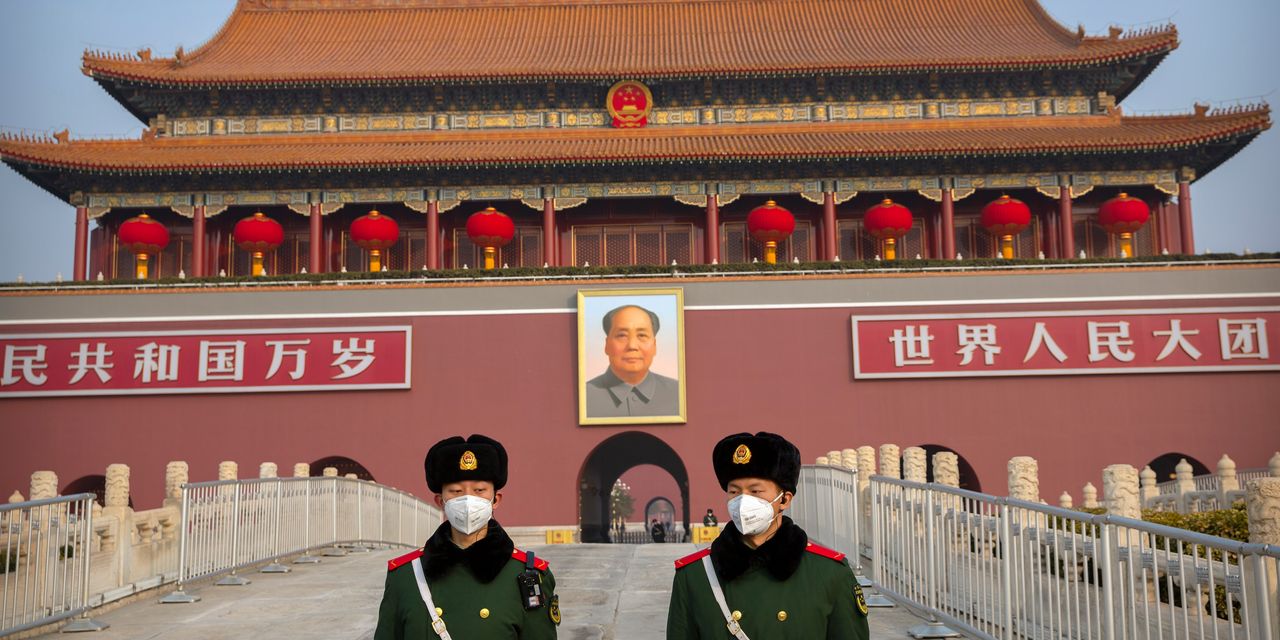
Photo:
Mark Schiefelbein/Associated Press
China imports more oil than any other nation in the world and consumes around 50% of the world’s copper.
The threat of extended quarantines for regions holding millions of Chinese citizens—particularly at a time of year when millions travel for the New Year holiday—is causing more stress for investors than the 2002 outbreak of the SARS virus, Global Risk Management’s Mr. Marshall said.
“Using SARS as a template underestimates the growth of the middle class in China with more flights being canceled each day. This could have a large and longer-lasting effect,” he said.
While the latest coronavirus appears less virulent than the severe acute respiratory syndrome (SARS) that hit China in 2002, it may have a larger impact on the Chinese economy, analysts say.
Based on the demand impact of SARS into 2020,
last week forecast a drop in daily oil demand of 260,000 barrels, including a 170,000 barrel-a-day loss of jet-fuel demand.
Saudi Arabia’s Energy Minister
Prince Abdulaziz bin Salman
attempted to reassure oil investors on Monday, referring in a statement to the market’s “extreme pessimism” and the coronavirus’s “very limited impact on global oil demand.” He added that the Organization of the Petroleum Exporting Countries and its allies have the capability and flexibility to stabilize the market if needed.
Write to David Hodari at [email protected] and Joe Wallace at [email protected]
Copyright ©2019 Dow Jones & Company, Inc. All Rights Reserved. 87990cbe856818d5eddac44c7b1cdeb8
Recent Comments