
Tech News, Magazine & Review WordPress Theme 2017
  • Home
  • Supply Chain Updates
  • Global News
  • Contact Us
  • Home
  • Supply Chain Updates
  • Global News
  • Contact Us
No Result
View All Result
No Result
View All Result
Home Supply Chain Updates

Commentary: Drug smuggling increases on the high seas

usscmc by usscmc
January 30, 2020
Commentary: Drug smuggling increases on the high seas
Share on FacebookShare on Twitter

The views expressed here are solely those of the author and do not necessarily represent the views of FreightWaves or its affiliates.

Popular culture tells us that smuggling illicit drugs from overseas is a clandestine operation done in stealthy, small-scale movements with a speed boat or a private helicopter. But as it turns out it is much easier to evade the U.S. Coast Guard and port authorities by packing up the goods in a container and having a major global carrier ship it for you. And with containers generally costing between $2,000 to $3,000 to ship, it is much cheaper too.

Drug kingpins are taking advantage of this simplified shipping plan as evidenced by the increasingly sizable drug busts that highlight a booming international drug trade. And unfortunately, the odds are in the favor of the drug smugglers. At some locations, such as the Belgian port of Zeebrugge, only one in 100 containers is x-rayed. Though this represents one of the least obstructive ports of entry, only one container of 10 is checked in most places.
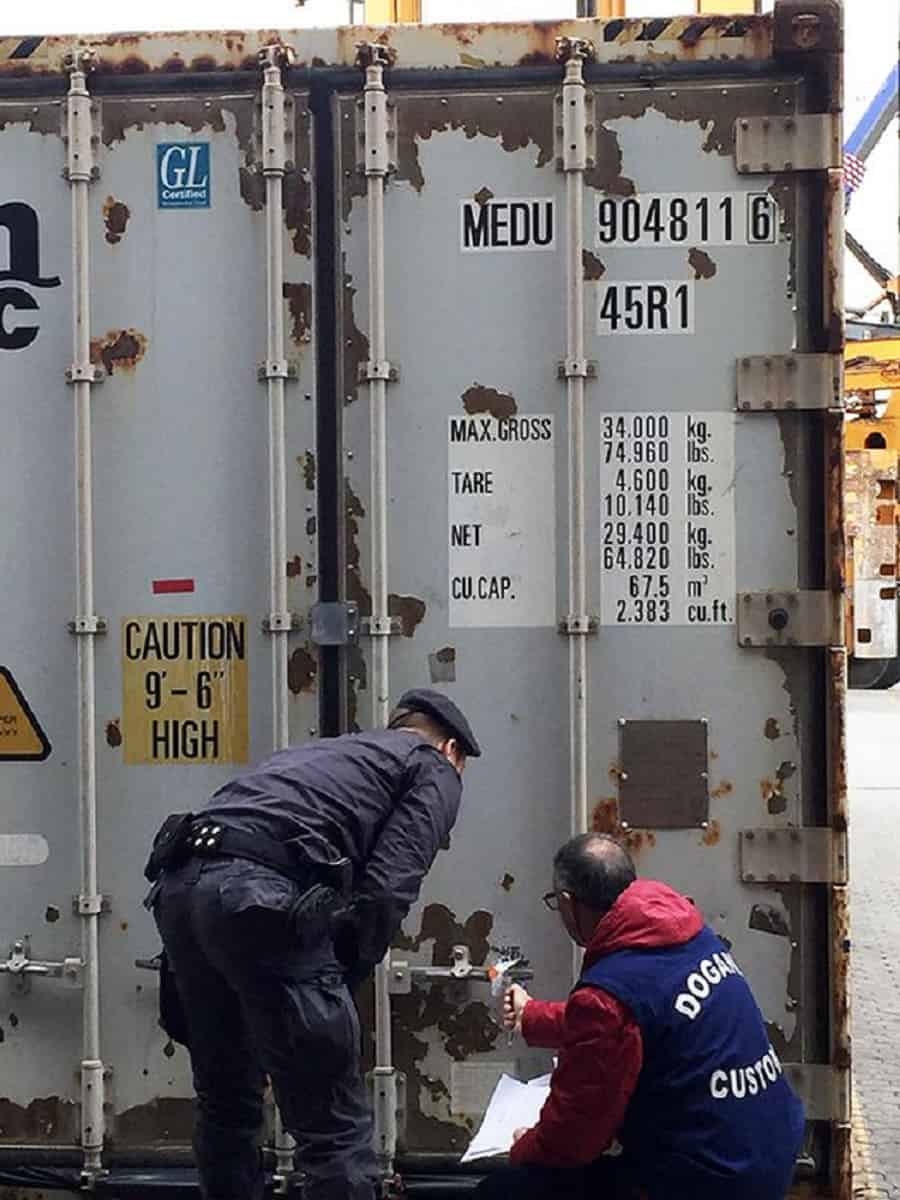
$275 million of cocaine was found in this container at the port of Gioia Tauro. (Photo credit: Europol)

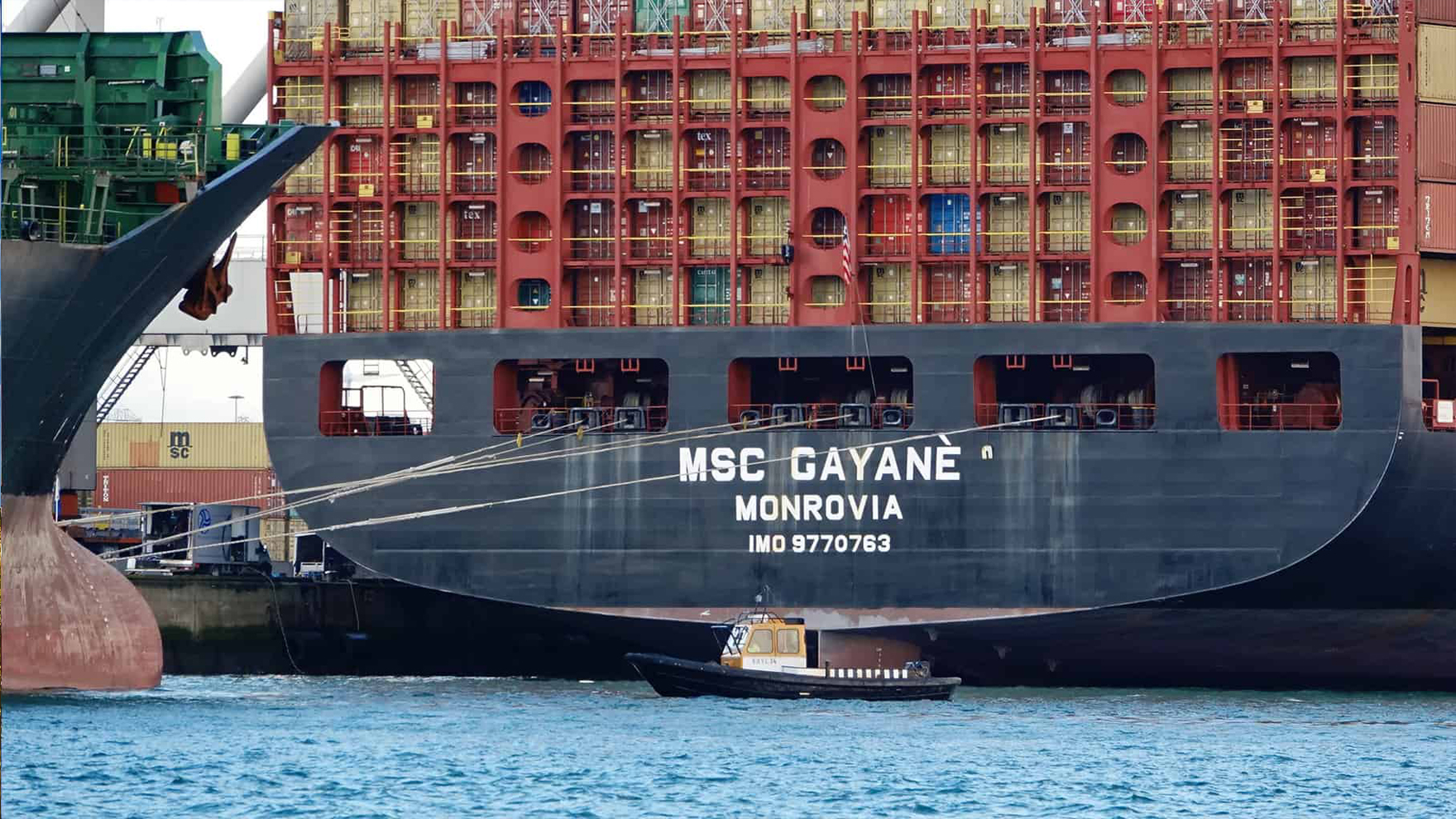
In July 2019, a ship owned by international banking behemoth JP Morgan and crewed by Mediterranean Shipping Company (MSC) was seized en route to Rotterdam. Twenty tons of cocaine were discovered on board, which forced the two companies to forfeit $50 million to secure the ship’s release from U.S. Customs and Border Patrol (CBP) authorities in Philadelphia.

And this was not MSC’s first scrape with the law regarding illegal drugs last year. As it turns out, Swiss-based MSC had already suffered two drug busts earlier in 2019. The first occurred in March at the Port of Philadelphia. Authorities discovered 13 large black duffel bags containing 450 bricks (992 pounds) of cocaine valued at $38 million.

CBP publicized the find, noting what a success it was to remove a half ton of dangerous drugs from entering the American market. But just a few months later, CBP discovered a huge load of cocaine weighing in at 40 times the amount of the previous bust. The July seizure of the MSC Gayane was the largest seizure of drugs on a vessel in the 230-year history of CBP and its predecessor agencies. Members of the ship’s crew were arrested and charged with conspiring to transport around $1 billion in drugs.
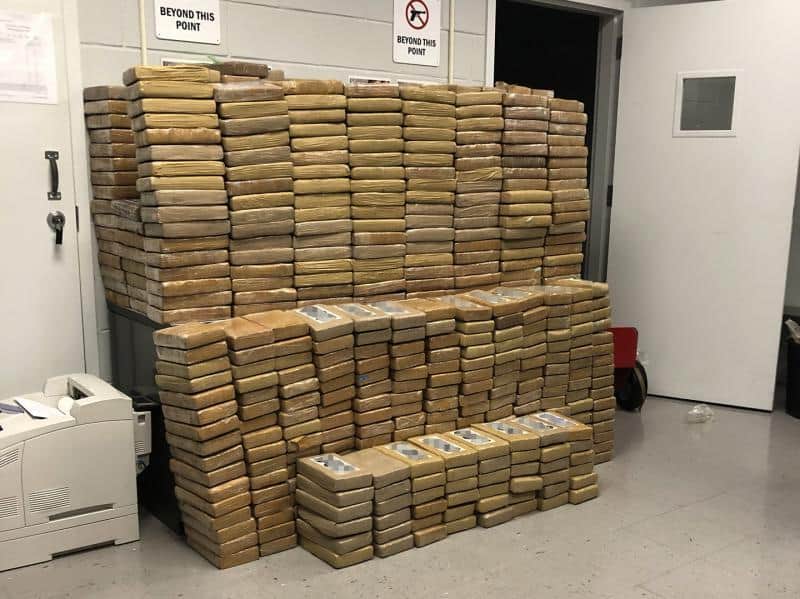
CBP officers at the Port of Savannah used container-scanning technology to seize this 2,133-pound cocaine shipment on Oct. 29, 2019. [Photo Credit: U.S. Customs and Border Protection]

And the problem is not confined to the United States. In January 2019 Italian authorities in Genoa discovered $555 million of cocaine at its port. It was the largest drug seizure in a quarter of a century and was orchestrated as a sting operation involving Colombia and Spain. The container in question arrived from Colombia and was destined for Barcelona. Ingeniously, Italian authorities replaced the cocaine with salt, let the shipment continue along its journey, and tracked the shipment to the house of an elderly Catalonian who was part of a plot to distribute the drugs across Europe.

The success of this sting operation came on the heels of another bust in the port of Livorno, Italy, of 528 bricks of cocaine hidden bags of coffee. Though authorities do not believe the operations were connected, they do believe that the busts point to Italian ports as a new crossroads for trafficking narcotics administered by the Calabrian mafia, a proven ringleader in funneling drugs to Europe from Latin America.In the US, some pundits believe the increased boldness is spurred by the Trump administration’s efforts to clamp down on the U.S.-Mexico border. Drug cartels would have formerly sent their illicit goods by truck; now they are turning to the shipping industry. The new transport plan shines a light on a disconcerting lack of inspection at ports around the world, which some U.S. lawmakers have been sounding the alarm about since the events of September 11, 2001.

usscmc

usscmc

No Result
View All Result

Recent Posts

  • How Hapag Lloyd captured a major market share in the Container Shipping Industry in USA
  • Why USA’s East Coast is the Favorite Destination for Manufacturing Companies
  • How Trade Relations Between the USA and UK Improved After Keir Starmer Became Prime Minister
  • Tips and Tricks for Procurement Managers to Handle Their Supplier Woes
  • The Crazy Supply Chain of Walmart Spanning Across the Globe

Recent Comments

  • Top 5 Supply Chain Certifications that are in high demand | Top 5 Certifications on Top 5 Globally Recognized Supply Chain Certifications
  • 3 Best Procurement Certifications that are most valuable | Procurement Newz on Top 5 Globally Recognized Supply Chain Certifications

Archives

  • July 2024
  • June 2024
  • May 2024
  • April 2024
  • March 2024
  • February 2024
  • January 2024
  • December 2023
  • November 2023
  • October 2023
  • September 2023
  • August 2023
  • July 2023
  • June 2023
  • May 2023
  • April 2023
  • March 2023
  • February 2023
  • January 2023
  • December 2022
  • November 2022
  • October 2022
  • September 2022
  • August 2022
  • July 2022
  • June 2022
  • May 2022
  • April 2022
  • March 2022
  • February 2022
  • January 2022
  • December 2021
  • November 2021
  • October 2021
  • September 2021
  • August 2021
  • July 2021
  • June 2021
  • May 2021
  • April 2021
  • March 2021
  • February 2021
  • January 2021
  • December 2020
  • November 2020
  • October 2020
  • September 2020
  • August 2020
  • July 2020
  • June 2020
  • May 2020
  • April 2020
  • March 2020
  • February 2020
  • January 2020
  • December 2019
  • November 2019
  • September 2019

Categories

  • Global News
  • Supply Chain Updates

Meta

  • Log in
  • Entries feed
  • Comments feed
  • WordPress.org
  • Antispam
  • Contact Us
  • Disclaimer
  • Home
  • Privacy Policy
  • Terms of Use

© 2025 www.usscmc.com

This website uses cookies to improve your experience. We'll assume you're ok with this, but you can opt-out if you wish. Cookie settingsACCEPT
Privacy & Cookies Policy

Privacy Overview

This website uses cookies to improve your experience while you navigate through the website. Out of these cookies, the cookies that are categorized as necessary are stored on your browser as they are essential for the working of basic functionalities of the website. We also use third-party cookies that help us analyze and understand how you use this website. These cookies will be stored in your browser only with your consent. You also have the option to opt-out of these cookies. But opting out of some of these cookies may have an effect on your browsing experience.
Necessary
Always Enabled
Necessary cookies are absolutely essential for the website to function properly. This category only includes cookies that ensures basic functionalities and security features of the website. These cookies do not store any personal information.
Non-necessary
Any cookies that may not be particularly necessary for the website to function and is used specifically to collect user personal data via analytics, ads, other embedded contents are termed as non-necessary cookies. It is mandatory to procure user consent prior to running these cookies on your website.
SAVE & ACCEPT
No Result
View All Result
  • Home
  • Supply Chain Updates
  • Global News
  • Contact Us

© 2025 www.usscmc.com