

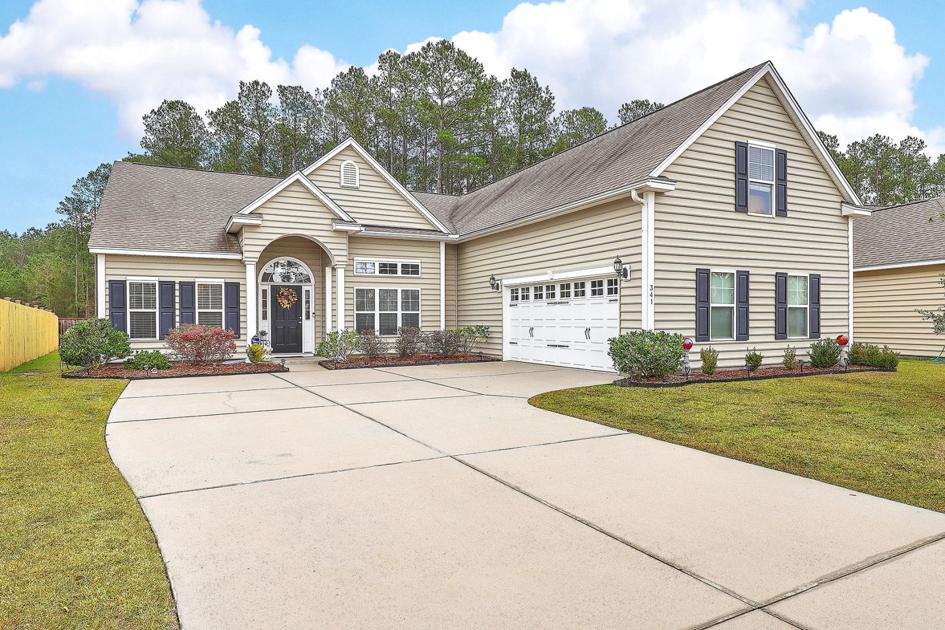

When he woke up on the morning of Jan. 1, Ron Saunders checked his phone and found five new messages from clients looking to buy or list homes. Happy new year, indeed.
“The jobs being created in Dorchester, Berkeley and Charleston counties are just overwhelming,” said Saunders, managing principal of Monterra Realty. “And we’ve got such an influx of buyers and such low inventory, it leads to a lot of calls.”
Welcome to the great dichotomy within the Charleston residential market: tremendous activity, despite low inventory. Low interest rates and a booming economy helped the region set a new record in 2019 with 18,576 total sales, according to the Charleston Trident Association of Realtors. But finding homes remains difficult due to below normal inventory levels; the number of single-family homes for sale dropped 18.7 percent between December 2018 and December 2019, CTAR reported.
The combination creates rising prices and a seller’s market, trends that appear likely to continue into 2020—at least until the presidential election in November, when sales traditionally slow due to uncertainty.
Last year “was a record year for us,” said Will Freeman, broker in charge at Beach Residential. “We had our highest volume to date, and honestly I think the spring of 2020 will be as good if not better. I think we will probably see the normal slow down around the election, but I do think the spring will be just as good as it was last year.”
Supply and demand
Charleston’s real estate boom is being fueled by the same factor that ignited the upward trend, a strong job market boosted by the arrival of major manufacturers like Volvo and Boeing. And as manufacturing pushes up the Interstate 26 corridor, it opens new areas for home construction in towns outside Summerville that to locals were once little more than dots on a map.
“Areas well past Summerville, like Ridgeville and Jedburg, are starting to come into play,” Freeman said. “We’re just going to see that continue.”
And it’s not just the North Area—in north Mount Pleasant, Awendaw, Ravenel and Hollywood, builders continue to push the boundaries of the region to find buildable land. Although new construction has dropped overall in Charleston from its peak in October 2017, according to CTAR, new homes comprise 29.7 percent of the market in upper Mount Pleasant, 35 percent in Goose Creek and Moncks Corner, and 43 percent on Johns Island.
“People tend to really gravitate toward that new product, and that new product tends to be farther out,” Freeman said. “Do you want the $400,000 brick ranch that’s closer in, but you have to put some work into? Or do you want to go 10 minutes farther out and spend $400,000 and get a brand new house? A lot of people are making the decision to get the new product, and that’s what’s contributing to the growth.”
Yet that new construction, evident in burgeoning neighborhoods like Nexton, Cane Bay Plantation and Carolina Park, still hasn’t been enough to satisfy the demand. Saunders believes that’s because builders, burned by the 2007 recession, now proceed more cautiously—they build out neighborhoods only a few homes at a time as sales merit, rather than risk constructing several homes that may sit idle.
“Before when the market was really pumping, builders threw caution to the wind and would have 15 specs sitting on a lot. I think what they’re doing now is building maybe one to two specs,” Saunders said. “They aren’t making too much available too soon, which keeps the demand high but also protects them financially.”
Many locals who moved a few years ago when interest rates were lower, Saunders added, are staying put, further contributing to the inventory squeeze. That in turn leads to more off-market sales, Freeman added, and more agents sending out feelers on behalf of clients who can’t find what they’re searching for on the Multiple Listing Service.
“I get a lot of emails daily, and I also send them, saying, ‘I have a client looking for something like this coming available, so if you have a client that might be willing to sell, let us know. Because we’ve seen everything on the MLS, and we can’t find what we’re looking for,’” Freeman added.
Location and price
Although detached single-family homes still dominate Charleston’s residential real estate scene, condos and townhomes comprised a substantial chunk of market share in some areas—46 percent downtown, 28 percent in lower Mount Pleasant, and 26.8 percent in West Ashley, according to CTAR statistics from 2019.
Pending condo sales increased 8.4 percent from December 2018 to December 2019, but area real estate professionals don’t necessarily see that rise as a result of low housing inventory. “I don’t know that someone’s settling for a condo because they can’t find a single family house,” Freeman said. The upturn likely has more to do transplants and retirees entering the market, and price.
“I don’t think it’s quite people locally buying in to live there,” Saunders added. “I think it’s more of an investment opportunity that people are jumping into. if people are buying them to living there, it’s because they want to live in an area that’s saturated with higher prices.”
The median sales price in the Charleston market increased 4.2 percent to $277,500 in 2019, according to CTAR. The areas seeing the most home sales last year were Goose Creek/Moncks Corner and Summerville—3,458 and 2,195, respectively—which continue to be powered by large master-planned developments.
“The Summerville market is just going crazy,” Saunders said. “I think that’s a little due to price, because we’re farther out from the city, and people can get a better house and more land for less money over some other areas.”
With mortgage rates still low and the economy still strong, Realtors expect more of the same in 2020, despite the region’s low inventory. Freeman saw an uptick even in early January, thanks in part to unseasonably warm weather in the first few weeks of the year.
“Fingers crossed, I think 2020 will be as good as 2019, especially the spring,” he added. “It’s been very active since the beginning of the year.”
Recent Comments