




Editor’s note: The following is a guest post written by David Glick, CTO at Flexe, a Seattle logistics startup.
I’ve spent a lot of time in warehouses. I joined Amazon as a junior project manager in late 1998, when the company was just gaining steam. Cyber Monday didn’t exist, but we did have a holiday peak. Our Seattle distribution center needed help keeping up with demand, so it was all hands on deck. I worked for three weeks on the midnight shift, and my job was to get boxes on trucks so the trucks could get to customers. Now, as the CTO of FLEXE, I still spend time in warehouses.
Moving protons and neutrons — InstantPots, books, and mattresses — is much more difficult than moving electrons: building websites and routing orders. However, it’s that very challenge that has kept me engaged, and it is what makes logistics so interesting.
Here are two of the lessons I’ve learned from two decades in logistics technology.
Put the engineers close to the customer
At their core, engineers are problem-solvers. The most efficient way for them to uncover solutions is to move them close to the customer.
During one warehouse visit with a senior vice president of operations, we found an incredibly wasteful workflow. The associate had to scan the same barcode four times in four different windows. He called me over to explain how broken my software was. I shared this with the director in charge of that area, who told the team manager. That manager said: “this isn’t on our roadmap.” This message never reached an engineer!
Weeks later, a team of engineers went to the same warehouse and saw the same workflow. One of them said, “this is dumb, I can fix this,” and she did.
When you have too many links in the communication chain, it can quickly become a game of telephone, which risks misinformation and confusion (see below for a visual representation of what this looks like).

Engineers must deeply understand the problem they’re solving. That can’t happen if they’re five steps removed from the issue. The most effective way to solve a problem is to see it firsthand.
The first time I brought a group of FLEXE engineers to one of our warehouses, we stood on the floor and an associate came up to us and said, “What does this error mean?” This provided a much more visceral experience for the engineer than getting a Zendesk ticket from 2,000 miles away. Needless to say, the bug was fixed and deployed within the hour. At the end of the trip, the team was buzzing with new ideas about how to improve our tech.
Building logistics technology is complex. All of the puzzle pieces have to fit together to keep operations moving and to keep people safe. It’s incredibly difficult to improve existing, nuanced processes from across the country. Getting engineers in the warehouse enables them to obtain a deeper understanding of the customer so they can build the best products.
Robots aren’t taking over
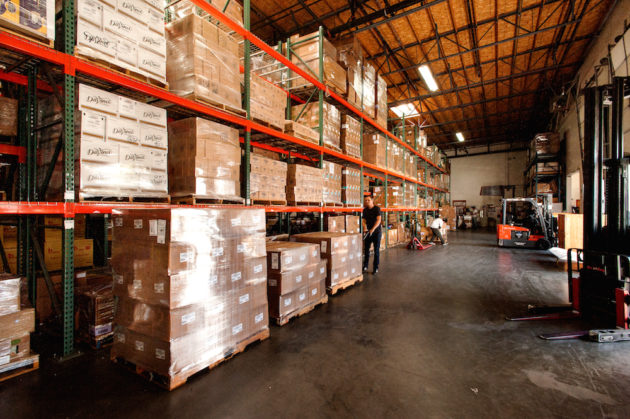
You may have seen videos of robots zipping around the warehouse and heard the rumors of AI and automation replacing jobs. I don’t agree. Logistics is a $1.6 trillion industry; a fraction of that will be automated. Even so, only a few businesses in the world have enough inventory and demand to warrant that level of automation (I can think of three).
What’s more important than throwing automation at a process is understanding what problem you’re trying to solve.
When fulfilling orders in a warehouse, the most labor-intensive part is walking the miles required to pick inventory. While some robotics companies have spent time trying to mimic the human hand to improve how orders are picked, the Kiva robots we implemented at Amazon automated the walking part of the equation. Human hands are difficult to replicate, carrying heavy objects is not.
It is interesting and fun to hypothesize what the future of AI, robotics, and automation will look like, but even the coolest tech won’t matter if you can’t give consumers what they want: fast, free delivery. To do that, retailers and brands must put inventory close to customers to shorten the last mile of delivery. All of the automation in the world won’t help you if your network is inefficient and can’t meet consumer demands.
There’s definitely potential for the future of robotics, AI, and automation in logistics. I’m just not convinced it’s going to come at the cost of human workers.
What’s in store for the next 20 years?
From raw materials manufacturing to last-mile delivery, tech is disrupting the supply chain. And, there’s still so much to do. We’re all consumers, and our buying behaviors are changing rapidly. The only way for retailers and brands to keep up is with technology. To build the right solutions, the engineers behind the technology must get close to the customer and deploy automation intentionally. After 20 years in logistics technology, of those two things I’m certain.
Recent Comments