
Tech News, Magazine & Review WordPress Theme 2017
  • Home
  • Supply Chain Updates
  • Global News
  • Contact Us
  • Home
  • Supply Chain Updates
  • Global News
  • Contact Us
No Result
View All Result
No Result
View All Result
Home Supply Chain Updates

What supply chain pros can learn from their salaries

usscmc by usscmc
November 14, 2019
What supply chain pros can learn from their salaries
Share on FacebookShare on Twitter

I’ve been in the P2P (procure-to-pay) and payment space for over 15 years. Before that, I spent a bunch of years selling payroll automation. Payroll automation achieved mass adoption relatively quickly—few companies today pay employees manually.

I figured—wrongly—that P2P was the next green field for back-office technology. Just as every company has to pay its employees, every company also has to pay its suppliers. Manual processing for both payroll and supplier payments is expensive, inefficient, and non-scalable. Technology for procurement and invoice handling seemed on the verge of breaking through, similarly to payroll technology back in the day.

I wasn’t alone in thinking that. In 2005, the company I worked for brought an analyst in the space in to address our sales team about industry trends. He told us that invoice processing would be paperless by 2010. We’ve come a long way, but here in late 2019, far too many companies still deal with paper invoices and manual processes. Supplier payment automation can help change that.
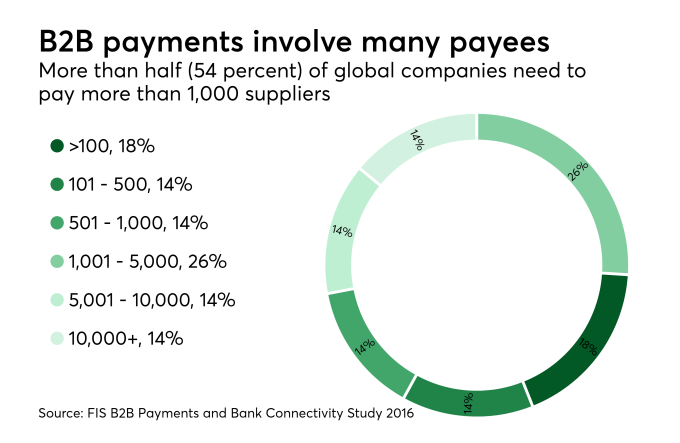
When I first started selling P2P solutions, the primary challenge I faced was a lack of awareness—most organizations didn’t know there was a better way to process invoices. Standard operating procedure was to hire a bunch of people to review invoices, manually enter them into the financial system, and get them paid. More invoices? Hire more people—just as it had been with payroll.

Some companies hired “black belts” to make changes to their processes by creating shared service centers or, in some cases, outsourcing the entire department to a business process outsourcing company. That had its own issues—namely lack of control and timing gaps, since many of these BPOs sat halfway across the globe.

As time went on, P2P solution providers became more widely known, and a growing number of companies adopted these solutions in order to reduce costs and increase efficiency by getting visibility into spend and putting more controls on how employees purchased goods or approved invoices.

Clearly the real challenge wasn’t lack of awareness. It was getting the project to the top of the list in a given company. Without a doubt, P2P solutions can drive positive ROI, but so can many other initiatives. Implementation of these types of projects can be lengthy, and eat up time and resources in procurement, finance and IT.

Based on my experience, for organizations with annual revenues greater than $500 million, a typical P2P project can come with one-time implementation fees north of $250,000 (or more with the addition of professional services) and implementation time frames of nine months to a year or more. That’s a pretty big chunk of change for ROI that may take another year or so to manifest. As a result, these projects get pushed aside in favor of initiatives that generate revenue relatively quickly.

That was the case with countless companies I called on—they saw the value but still couldn’t get it done. Selling the ROI for P2P solutions was far more challenging than doing the same for payroll solutions. It was frustrating as hell.

Companies want P2P but can’t figure out how to get there, and they’re not sure what to do first. Do we automate P2P and then finish it off by automating payments, or do we flip the scenario around? As companies trying to discern which should come first, I firmly believe that many companies may not fully understand what an enterprise payment platform can bring to the table and how the ROI it drives can fund their P2P project.

So, what should come first, the chicken or the egg? If egg = payments, then I say egg. It is why most if not all P2P providers are trying to figure out how to automate payments.


Jim Wright

Jim Wright

Jim Wright is the Vice President of Enterprise Sales in the East Region at Nvoicepay.


For reprint and licensing requests for this article, click here.


usscmc

usscmc

No Result
View All Result

Recent Posts

  • How Hapag Lloyd captured a major market share in the Container Shipping Industry in USA
  • Why USA’s East Coast is the Favorite Destination for Manufacturing Companies
  • How Trade Relations Between the USA and UK Improved After Keir Starmer Became Prime Minister
  • Tips and Tricks for Procurement Managers to Handle Their Supplier Woes
  • The Crazy Supply Chain of Walmart Spanning Across the Globe

Recent Comments

  • Top 5 Supply Chain Certifications that are in high demand | Top 5 Certifications on Top 5 Globally Recognized Supply Chain Certifications
  • 3 Best Procurement Certifications that are most valuable | Procurement Newz on Top 5 Globally Recognized Supply Chain Certifications

Archives

  • July 2024
  • June 2024
  • May 2024
  • April 2024
  • March 2024
  • February 2024
  • January 2024
  • December 2023
  • November 2023
  • October 2023
  • September 2023
  • August 2023
  • July 2023
  • June 2023
  • May 2023
  • April 2023
  • March 2023
  • February 2023
  • January 2023
  • December 2022
  • November 2022
  • October 2022
  • September 2022
  • August 2022
  • July 2022
  • June 2022
  • May 2022
  • April 2022
  • March 2022
  • February 2022
  • January 2022
  • December 2021
  • November 2021
  • October 2021
  • September 2021
  • August 2021
  • July 2021
  • June 2021
  • May 2021
  • April 2021
  • March 2021
  • February 2021
  • January 2021
  • December 2020
  • November 2020
  • October 2020
  • September 2020
  • August 2020
  • July 2020
  • June 2020
  • May 2020
  • April 2020
  • March 2020
  • February 2020
  • January 2020
  • December 2019
  • November 2019
  • September 2019

Categories

  • Global News
  • Supply Chain Updates

Meta

  • Log in
  • Entries feed
  • Comments feed
  • WordPress.org
  • Antispam
  • Contact Us
  • Disclaimer
  • Home
  • Privacy Policy
  • Terms of Use

© 2025 www.usscmc.com

This website uses cookies to improve your experience. We'll assume you're ok with this, but you can opt-out if you wish. Cookie settingsACCEPT
Privacy & Cookies Policy

Privacy Overview

This website uses cookies to improve your experience while you navigate through the website. Out of these cookies, the cookies that are categorized as necessary are stored on your browser as they are essential for the working of basic functionalities of the website. We also use third-party cookies that help us analyze and understand how you use this website. These cookies will be stored in your browser only with your consent. You also have the option to opt-out of these cookies. But opting out of some of these cookies may have an effect on your browsing experience.
Necessary
Always Enabled
Necessary cookies are absolutely essential for the website to function properly. This category only includes cookies that ensures basic functionalities and security features of the website. These cookies do not store any personal information.
Non-necessary
Any cookies that may not be particularly necessary for the website to function and is used specifically to collect user personal data via analytics, ads, other embedded contents are termed as non-necessary cookies. It is mandatory to procure user consent prior to running these cookies on your website.
SAVE & ACCEPT
No Result
View All Result
  • Home
  • Supply Chain Updates
  • Global News
  • Contact Us

© 2025 www.usscmc.com