

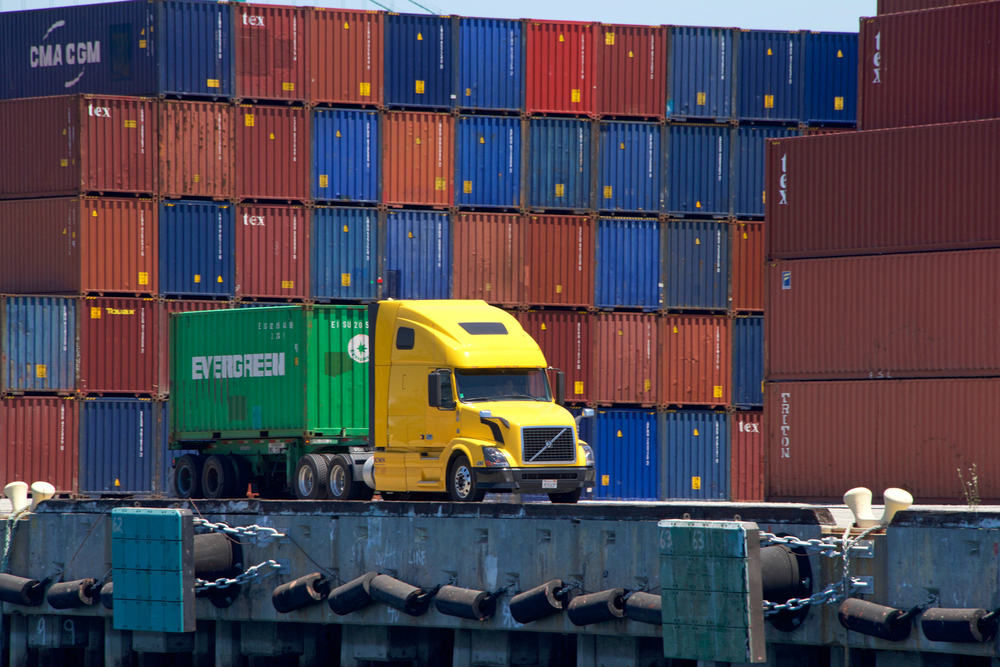

While the full impact of the slowdown in shipping from China to the U.S. will not be seen for another week or two, experts remain optimistic any lost freight volume this early in the year can be made up.
Though the spread of the COVID-19 coronavirus in China appears to be slowing, there’s still likely a looming impact to be felt in the U.S. in terms of freight demand, especially at West Coast ports. Analysts contend, however, that any disruption in freight volume can be made up as the year progresses.
“It’s too early yet to measure container volumes, but we’ll know within a week or so,” says Noël Perry, chief economist for Truckstop.com. “Anecdotally, there have been quite a few disruptions in production in China and South Korea, but how big that is, we don’t know.” So far, the outbreak has had little impact on the U.S. trucking, he said.
Since the disease began to spread, more than 78,000 people have been infected (97% of which are in China), and more than 2,400 people have died from the disease, according to the latest numbers from the World Health Organization.
Perry says the impact in the U.S., from a freight perspective, mostly will be isolated to drayage companies working the ports. Those carriers may see some disruptions in the coming weeks with slowdowns in container shipments from China, he says.
“The real issue in the U.S. is to what extent are supply chains operational in China, and that’s a function of policy, not of disease,” Perry adds. “We’ll know in about two weeks.”
Shipping from China is still a normal post-Lunar New Year lull, says Larry Gross, head of Gross Transportation Consulting. The economic lull from Lunar New Year celebrations in China generally last about three weeks, during which time businesses in China close for a week. That shutdown was extended this year, and the effects of that have yet to be seen due to the lag time in getting freight from China to the U.S.
“We’re in the meat of the normal lull we see following the Lunar New Year,” Gross says. “It takes about three weeks to reach [the U.S.]. For another week or two, we’ll be seeing the normal lull, then we’ll start to see the effects of the extended shutdown in another week or two.”
Gross adds that a number of container shipping companies, including Maersk, the world’s largest, have announced a high number of blank (canceled) sailings from Asia to the U.S. amid coronavirus fears. The key question, Gross says, is if that container volume is lost for good or just delayed until later in the year.
Kenny Vieth, president and senior analyst at ACT Research, is optimistic that volume is just delayed.
“One of the upsides here is that it’s early in the year,” Vieth says. “If it takes a month for China to get back on their feet, we still have April through December to make up any lost ground. Retailers are beginning to dip into their inventory stocks more deeply than they’d prefer, and if manufacturers don’t build in March, that builds pent-up demand in the system for later in the year. On the backside of this hopeful short downturn is that everything will be stronger later in the year.”
Gross notes that long-haul trucking companies will be among the last to feel any impacts from any supply chain disruptions.
“The first folks that see it are the ocean carriers, then the ports, then local cartage companies, then intermodal” he says. “A bunch of folks will feel it before general long-haul trucking.”
In a blog post earlier this month, DAT’s Peggy Dorf also noted that trucking won’t be affected immediately. “Imports comprise only a small percentage of trucking freight in the U.S.,” she says in the blog. She says there will likely be “ripple effects in the supply chain due to changes in the prices and availability of oil, copper and other commodities, as well as manufactured goods and components that China will not be able to provide in the expected quantities.”
Recent Comments