



As we move further into 2020 we’re flooded with the now commonplace news reports of devastating droughts, continental bush fires and torrential rains. Our oceans are being choked to death by plastic pollution that seriously threatens the entire marine ecosystem and our human food supply. We cannot ignore that humanity’s reliance on, and increase in production of, single use plastic and packaging is largely to blame for this scourge.
I’ve therefore long been forced to ask myself: What accountability do I have as a design professional in the packaging industry? What will the repercussions of my complacency be in the future? I feel these questions need to be asked by every person contributing to the value chain and production of consumer products. We can no longer be complacent!
Not all doom and gloom (or, to quote Benjamin Franklin: “Out of adversity comes opportunity”)
When I look at both the daily eco-innovations popping up on my newsfeed and the sustainable strides we’re making as a packaging design team, I know there is a mountain of opportunity that exists!
I strongly believe that it is both our personal and corporate responsibility to champion sustainable, ethical design, production and distribution. In turn, we can then play a critical role in facilitating sustainable consumption, assuring ecological balance and a sustainable economy.
The simple truth is we need to rethink the way we make and use things. In my mind there are three key elements to the packaging production life cycle that need to be successfully reimagined in order for us to succeed in creating a sustainable production model:
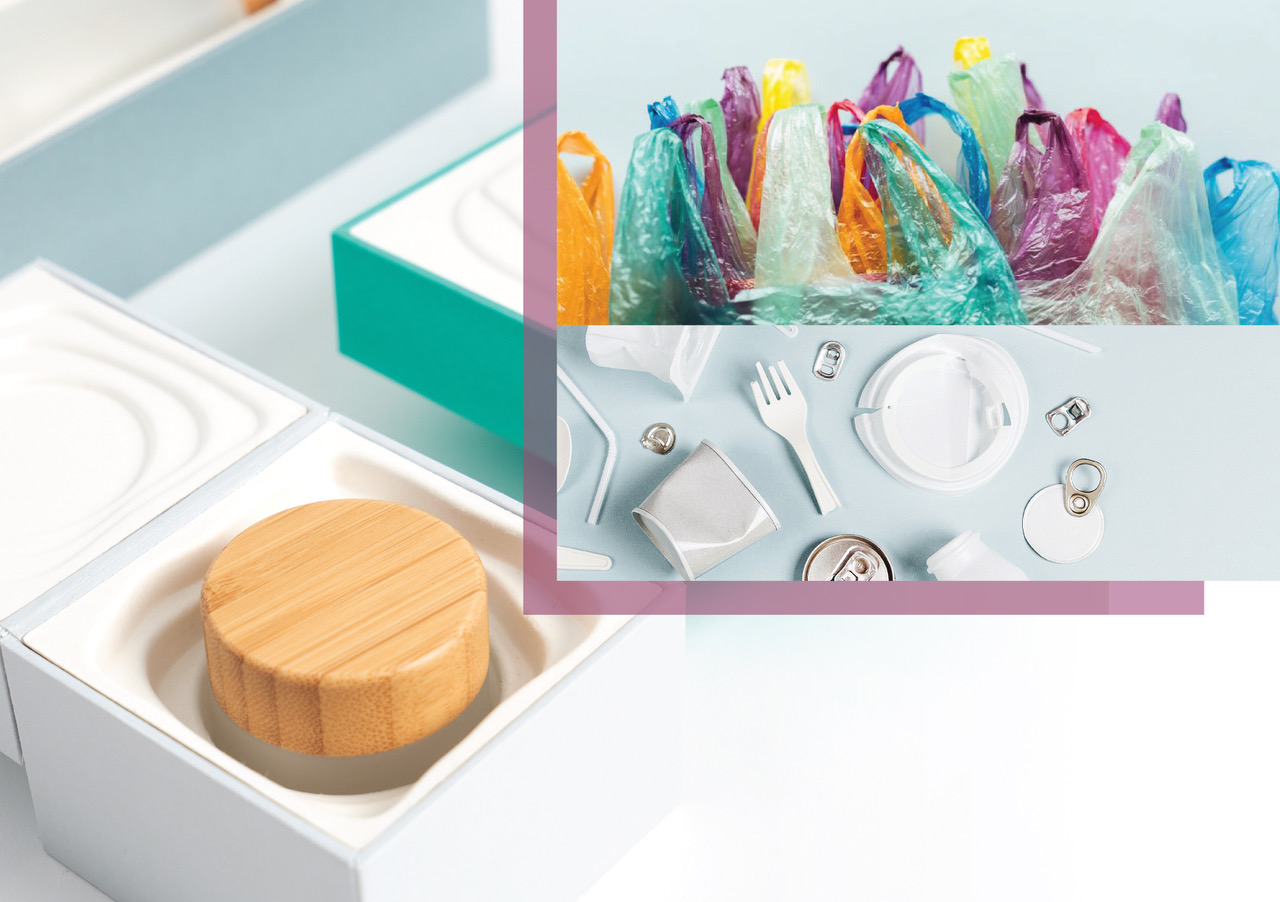 How we Manage and Maintain the Resources used in Packaging Production
According to the United Nations: “Should the global population reach 9.6 billion by 2050, the equivalent of almost three planets could be required to provide the natural resources needed to sustain current lifestyles.” What this means quite simply is: When recycled or recyclable material is available we MUST use it! If the desired paper product or requisite packaging material is not sustainably sourced from an accountable supplier we cannot utilise it.
Furthermore, if there is an opportunity to source locally we must take it! It is critical that we substantially reduce packaging waste generation through prevention, reduction, recycling and reuse. It is also critical that this mentality of responsible material management translates into all our design and production processes.
Mindful Design and Manufacturing (or, to quote Dieter Rams, “Good design is thorough down to the last detail”)
“Nothing must be arbitrary or left to chance. Care and accuracy in the design process show respect towards the user,” continues Dieter. I would add to this that care and responsibility also show respect for the limited resources we use to satisfy the needs of the consumer. As the IPL Packaging Design Team we’re actively exploring elements such as bio-fabrication and investigating fully compostable alternatives to synthetic materials.
We’re looking at options that replace polystyrenes with mycelium grown from agricultural byproducts. We’re finding that organic starch-based molding is offering competitive alternatives to thermoformed plastics in markets on a global scale. Plant-based inks and adhesives are also able to significantly reduce the impact of industrial manufacturing on our water supply. As designers we need to be aware of the changing landscape and be at the cutting edge of applying ground breaking innovations in material and processes into incredible new products made from responsibly acquired resources in a sustainable way.
Recognise Waste as a ‘Flaw’ in the Design & Production Process
The overwhelming impact pollution, and waste from consumer products, has on the natural world is by no means not accidental! Consider that every item on every shelf in every store in the world has traveled through a design pipeline into production. An appropriate response would be to recognise waste as a flaw in the design and production process. We must utilise new technology, make use of exciting new materials and processes and consistently strive to reuse and recycle – with the ultimate goal being a non-linear product life cycle, a circular economy.
And, of course, a sustainable future! If we’re able to engineer ‘living concrete’ made of bacteria and sand, and plant-based performance running sneakers made from castor beans, eucalyptus tree and algae foam – there really are no excuses! Researchers around the world are turning tea waste, coffee grounds and by products from pineapple farming into new bio plastics, and vegan leather alternatives.
Despite the challenge before us, this decade has provided us with more tools than ever to create products that will reduce environmental impact and meet customer demand for sustainable, eco-friendly packaging. These are tools, materials and process that will help us to enhance the world around us, not destroy it. We must use them!
LB Odendaal, head of design, IPL Packaging
Recent Comments