


When it comes to climate change, companies are always asking one question: Where and how can I take the most effective action? As the world’s largest developing economy, with huge market growth potential for businesses in various segments, China’s strategic importance has given it a central role in this discussion.
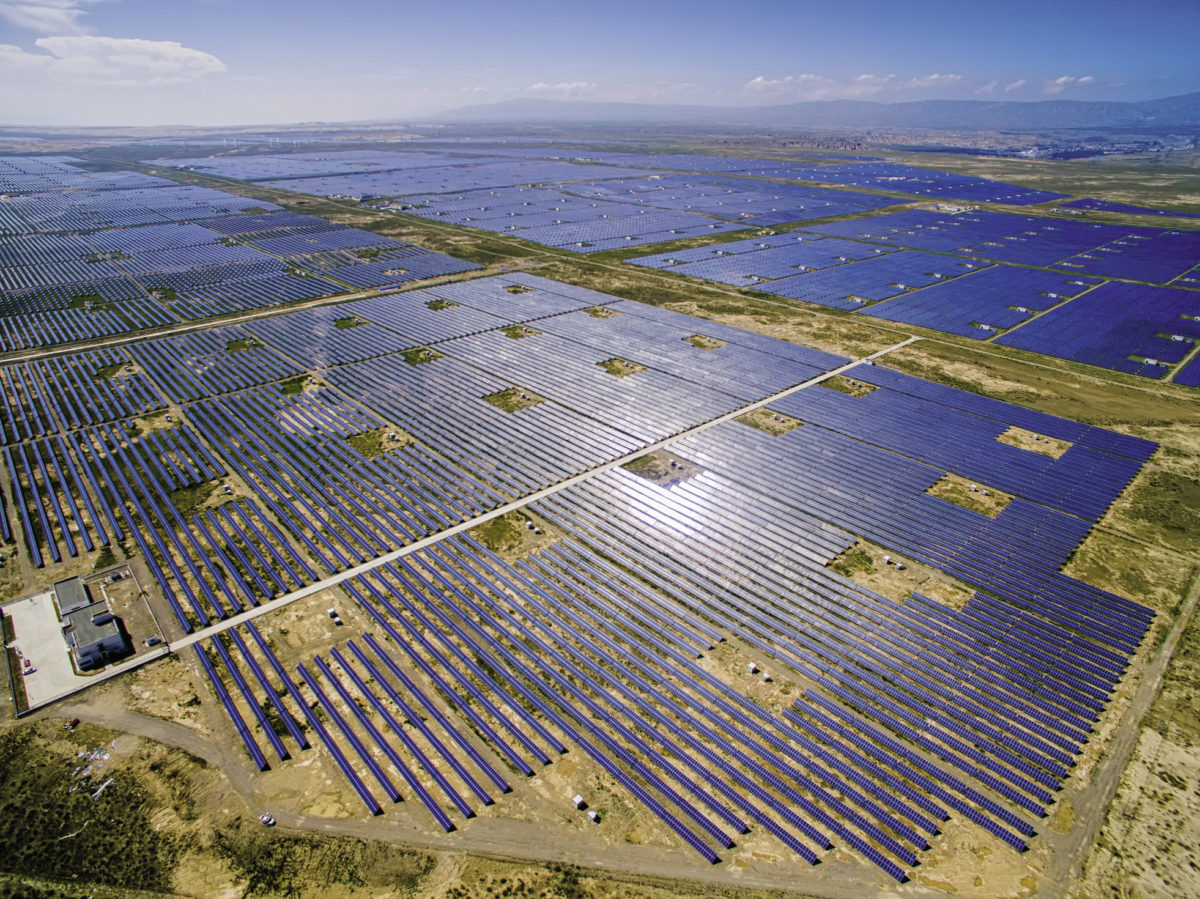
China is both the leader in the supply of renewable energy equipment globally and number one in total installed renewables capacity. According to a forecast by the China Electricity Council, China likely had a total installed capacity of 200 GW of solar and 210 GW of wind by the end of 2019 – a 15% and 14% increase from 2018, respectively.
A new agenda
pv magazine is setting a new editorial agenda. Via our global UP sustainability initiative, we are diving deep into the topic of what it means to be truly sustainable, looking at what is already being done, and discussing areas for improvement. Check out the feature page for news on our quarterly themes and to read the latest magazine content. Contact [email protected] to learn more.
The views and opinions expressed in this article are the author’s own, and do not necessarily reflect those held by pv magazine.
Though the market is growing quickly, industry in China still faces challenges. The levelized cost of electricity (LCOE) of renewables remains less competitive than that of coal in many regions, and quite a few provinces are still experiencing significant levels of wind and solar curtailment.
Over the past year, notable market changes have been seen. Market mechanisms are starting to play bigger roles in shaping China’s industrial base, putting pressure on both electricity developers and end users to identify new business models and adapt to a changing market.
The final subsidies
Historically, renewables development in China has mainly been driven by feed-in-tariffs, set by the central government and adjusted periodically. This mechanism led to remarkable growth, but lacked sufficient flexibility to respond to cost changes, and provided limited incentives for further cost reduction. With the intent to accelerate cost reductions, an auction mechanism was introduced to permit projects with lower reliance on subsidies.
Auction results released in 2019 showed a more than 30% price reduction for new utility-scale solar projects on average compared to May 2018 levels. Subsidy-free projects are also appearing on the horizon and will be prioritized in permitting. In 2019, 250 subsidy-free projects totaling more than 20 GW were given the go-ahead, with solar representing more than 70% of this. Under this competitive permitting mechanism, developers expect limited possibilities for future subsidies.
Renewable Portfolio Standard
In May 2019, China’s long-awaited renewable portfolio standard (RPS) was formally released. It sets minimum renewables consumption at a provincial level and allocates the responsibilities for renewable energy consumption among obligated parties, namely load-serving entities.
Misaligned incentives between provinces have been a key factor hindering interprovincial renewable energy transactions. This policy will mandate renewables consumption in coastal provinces (where many corporations have load) and stimulate the interprovincial power trade. Except for a 2020 target, no future targets have yet been released, and the RPS’s impact on long-term renewables investment remains unclear.
Corporate support
Onsite solar is a mature option that is widely adopted by corporations in China and has grown significantly over the past few years. Despite reduced subsidies, corporations still receive attractive electricity bill discounts by renting out their rooftops to developers. Also, some corporations are making equity investments in utility-scale projects to support China’s renewables development.
Direct purchase contracts, which allow corporations to procure wind and solar energy directly in bulk from generators, are also becoming available. These are similar to power purchase agreements in Europe and the United States, but are only available in provinces with renewable curtailment, not in eastern provinces where many factories are located. They also offer a maximum contract length of one year.
Corporations are actively engaging with governments and grid companies to enable these large-scale direct power purchase agreements at the provincial level. With the introduction of RPS policies, corporations can take a more proactive role in procuring renewable energy through the voluntary market, thus driving more renewables integration in the compliance market.
The 14th Five-Year Plan
This year will be critical for China. The country will enter into its 14th Five-Year Plan (FYP) for National Economic and Social Development in 2021. A series of policies and plans will be drafted in the coming year, setting targets covering the years 2021 through 2025, which will provide strategic directions for industrial development. Considering China’s determination and efforts to accelerate the energy transition, renewable energy will continuously be the focus of new demand growth in the upcoming 14th FYP. However, with renewable subsidies gradually being phased out in the next few years, it is becoming extremely important to install effective incentives to drive long-term development, and to stay on track to reach China’s Paris Agreement target.
As the first year for RPS implementation, lessons learned from 2020 will provide valuable insights to refine the standard and catalyze more market transaction opportunities. The RPS could potentially become the engine to drive sustainable renewable energy growth in China.
Regardless of declining monetary incentives for renewables at the national level, some local governments are still subsidizing distributed renewables projects to increase their bankability. Distributed projects will continue to flourish in 2020, and are showing strong financial performance after the past few years’ rapid market growth.
The progress of multinational corporations has been influencing their supply chain companies in China. As 2020 progresses, more Chinese domestic companies will debut as national champions. With rising demand for renewables from corporations, more innovative mechanisms are expected to drive renewable energy development in China.
About the authors
Caroline Zhu is a senior associate with Rocky Mountain Institute’s power team in China. She primarily conducts market and policy research on the Chinese renewable energy sector and supports companies that are looking to procure renewable energy in China.
Jiayin Song is a manager at Rocky Mountain Institute, leading its Business Renewables Center China program. She is working to accelerate renewable energy procurement in China through corporate demand.
Recent Comments