

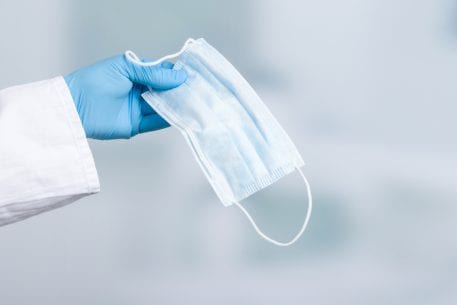
Hand sanitizer shortages. Face mask counterfeiting. And some of the most dramatic disruptions in supply chains around the world. The coronavirus continues to wreak havoc on the markets in more ways than one.
The healthcare supply chain is unsurprisingly facing particularly acute disruptions amid the global health crisis, with significant impacts to how hospitals and other facilities source, procure and manage inventory of necessary medical equipment to combat the virus.
According to TractManager’s Dee Donatelli, vice president of Professional Services, and Mark S. Kestner, chief medical officer, the coronavirus is placing added pressures on an already inefficient and costly procurement process in the U.S., with consequences of the virus likely to last far after the crisis ends.
Like other industries, the healthcare space is facing major disruptions to its supply chain as a result of the coronavirus. But as Donatelli and Kestner explained to PYMNTS in a recent interview, those impacts are affecting healthcare facilities in many more ways than one.
Supply Chain Disruption’s Inventory Impact
Kestner noted that the U.S. healthcare industry’s reliance on foreign suppliers for equipment and supplies has made the sector particularly exposed to the coronavirus risk.
“How do we deliver when our supply chain is dependent upon these foreign markets?” he asked hypothetically.
The coronavirus’ impact mirrors the supply chain and product sourcing consequences seen in 2017 during Hurricane Maria, which devastated the island of Puerto Rico, the U.S.’s main supplier of IV solutions, forcing procurement officials to look in other markets to fill demand.
With the ongoing endemic, supply chains are once again facing major disruptions. Kestner noted that the majority of facilities’ software comes from China, while products like face masks are also forcing procurement teams to react to a squeeze in supply or source from other vendors not yet impacted by the coronavirus.
Donatelli emphasized that it’s not just the sellers of these products that must be reassessed. Indeed, the manufacturing facilities in which these products are made, as well as the providers of raw materials for these products, may also be affected by the coronavirus, with consequences flowing straight up the supply chain.
“This is just the tip of how this is going to impact healthcare because we are so dependent on foreign markets,” added Kestner. “Hospitals right now are struggling to address it.”
Preexisting Conditions: Inefficiencies And Wasted Spend
One of the immediate responses healthcare facilities make is to stockpile available products in anticipation of tightened demand. Donatelli said that right now, hospitals are doing so without regard to budget constraints, but such unrestricted purchasing is likely to add financial pressure to a healthcare industry already bogged down by wasted spend and procurement inefficiencies.
“I can guarantee you every hospital in this country is stockpiling critical protection devices right now [regardless] of budget,” she said.
It’s not just a crisis like the coronavirus that could lead to wasted spend in these facilities, however. Donatelli explained that each doctor has her or his own preference card, a card with a list of devices they need to perform a procedure. The problem, she said, is that oftentimes, these devices will be opened and unused, and ultimately thrown away.
This practice also adds pressure to facilities’ sourcing and procurement practices, with a lack of standardization and a high volume of products needed to meet each doctor’s individual preference card needs, resulting in an expensive purchase with high waste.
“The lack of standardization and practice in this country as a result of entrepreneurship of the physicians — which, I don’t deny, we want to encourage because it brings on new technology and innovation — has led to excessive spending in the healthcare industry today,” said Donatelli.
Long-Lasting Impacts, Good And Bad
In the near-term, many of the consequences of squeezed supplies as the result of global events like hurricanes and viral outbreaks can yield compromises in the quality of care. In the case of Hurricane Maria, for example, Kestner noted that an IV shortage led providers to explore cutting a single IV bag into two, which yielded additional complexities like how to do so with proper sterilization techniques, and how to procure enough bags to hold the liquid.
In a face mask shortage, providers will have to compromise quality of higher-tiered face mask products in favor of lower-quality ones. They’re also facing questions about whether to take back a face mask that has already been fitted by one person, which could violate sterilization standards, said Kestner.
“I think we’ll quickly shift from good, to good enough,” said Donatelli about the need to settle for less-than-perfect products. “Nobody can be more creative than healthcare workers on jerry-rigging things to make them work in the absence of the No. 1 choice.”
But in times of a global health crisis, some of the impacts on how providers source and use products could actually lead to long-lasting impacts for the better, according to Kestner. He pointed to the potential need for providers to re-use and sterilize equipment, rather than use single-use products, as a result of limited supplies. There’s potential for that practice to continue long after the coronavirus crisis, and it would be for the better, he said, with a more environmentally-friendly approach without compromising safety.
Such a change would again have profound impacts on providers’ souring, procurement and supply chain management activities, but as Donatelli noted, hospitals are increasingly eager to embrace technologies that can bring about efficiencies and cost savings, whether in a global health crisis or not.



Recent Comments