
Tech News, Magazine & Review WordPress Theme 2017
  • Home
  • Supply Chain Updates
  • Global News
  • Contact Us
  • Home
  • Supply Chain Updates
  • Global News
  • Contact Us
No Result
View All Result
No Result
View All Result
Home Supply Chain Updates

Ocean carriers unlikely to recover the full cost of IMO 2020 compliance

usscmc by usscmc
March 1, 2020
Ocean carriers unlikely to recover the full cost of IMO 2020 compliance
Share on FacebookShare on Twitter

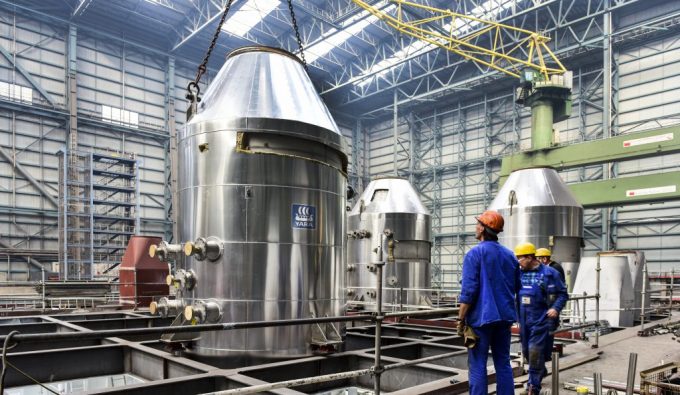
Scrubber
By Mike Wackett

27/02/2020

Notwithstanding the significant impact to the bottom line of ocean carriers from the coronavirus outbreak, it is also becoming increasingly apparent that they have failed to pass on all of the extra cost of IMO 2020 cleaner fuel legislation to their customers.

According to Bimco’s chief shipping analyst, Peter Sand, container freight rates have not risen sufficiently to cover the price of compliance.

“The hike this year was not enough, with the market offering little support to carriers attempting to pass these costs on fully,” said Mr Sand.

He noted that container lines’ surcharge mechanisms had been “widely criticised for not being transparent, or for being too complex to understand, leading to carriers having trouble implementing them”.

He added: “Those that have succeeded may have done so by lowering the underlying freight cost such that the total price shippers’ pay has not changed much.”

He said comparing the January average of the comprehensive spot market Shanghai Containerized Freight Index (SCFI) and the longer-term market China Containerized Freight Index (CCFI) – reflecting the seasonal pre-CNY cargo rush and unaffected by covid-19 – both indices were recorded above the six-year average, “but not remarkably so, and not enough to cover the additional fuel costs”.

However, according to a report published today by Alix Partners, the frustration felt by many customers at the way carriers calculate and communicate surcharges “is likely to lead to all-new pressure this year on container shipping players to contain prices and to standardise industry pricing formulae, including fuel bunker adjustment factors – a pressure campaign that could be led by eastbound transpacific mega-shippers who have a history of driving changes in the way carriers do business”.

Esben Christensen, global co-leader of the transport and infrastructure practice at AlixPartners, added: “The wide spreads today between the costs of intermediate- and low-sulphur fuels might suggest that installing scrubbers should at least be considered; however, carriers need to carefully consider the details of if and how they go about converting vessels, plus other longer-term factors such as whether smaller and more-remote ports might be challenged to secure adequate low-sulphur fuel supplies.”

Indeed, a failure to pass on the extra cost of the IMO’s sulphur cap is seen as a high risk in Maersk’s 2020-2024 business strategy of achieving a “likelihood” factor of over 25%.

The analysis said: “In the short-term, the risk is that Maersk will not be able to recover the additional cost from its customers.”

The risk analysis noted that its competitors could have “more cost-effective compliance strategies than Maersk” by their decisions to install more scrubbers on ships.

Maersk plans to have just 10% of its 700-ship fleet fitted with the exhaust gas cleaning systems, whereas its main challenger for the top rank, MSC, will have over half of its 574-strong fleet equipped with scrubbers by the end of this year.

Maersk CEO Soren Skou alluded to the problem during the group’s recent earnings call when he said that although the recovery of BAFs “had gone to plan so far”, there were around half of contracts still to be negotiated which would take place against “a weak environment”.

Meanwhile, Mr Sand said that although fleet growth would be lower than last year, at around 2.5% – representing the first time in four years that deliveries would be below 1m teu – demand growth was likely to be no better than the 0.8% for 2019; and that is without factoring-in the effect of covid-19 on demand.

“A prolonged downturn in Chinese manufacturing may result in a boost in exports once the virus is contained and manufacturing is back at its usual capacity,” said Mr Sand.

However, he added that any spike in demand would be “unlikely to make up for lost volumes earlier in the year”.

usscmc

usscmc

No Result
View All Result

Recent Posts

  • How Hapag Lloyd captured a major market share in the Container Shipping Industry in USA
  • Why USA’s East Coast is the Favorite Destination for Manufacturing Companies
  • How Trade Relations Between the USA and UK Improved After Keir Starmer Became Prime Minister
  • Tips and Tricks for Procurement Managers to Handle Their Supplier Woes
  • The Crazy Supply Chain of Walmart Spanning Across the Globe

Recent Comments

  • Top 5 Supply Chain Certifications that are in high demand | Top 5 Certifications on Top 5 Globally Recognized Supply Chain Certifications
  • 3 Best Procurement Certifications that are most valuable | Procurement Newz on Top 5 Globally Recognized Supply Chain Certifications

Archives

  • July 2024
  • June 2024
  • May 2024
  • April 2024
  • March 2024
  • February 2024
  • January 2024
  • December 2023
  • November 2023
  • October 2023
  • September 2023
  • August 2023
  • July 2023
  • June 2023
  • May 2023
  • April 2023
  • March 2023
  • February 2023
  • January 2023
  • December 2022
  • November 2022
  • October 2022
  • September 2022
  • August 2022
  • July 2022
  • June 2022
  • May 2022
  • April 2022
  • March 2022
  • February 2022
  • January 2022
  • December 2021
  • November 2021
  • October 2021
  • September 2021
  • August 2021
  • July 2021
  • June 2021
  • May 2021
  • April 2021
  • March 2021
  • February 2021
  • January 2021
  • December 2020
  • November 2020
  • October 2020
  • September 2020
  • August 2020
  • July 2020
  • June 2020
  • May 2020
  • April 2020
  • March 2020
  • February 2020
  • January 2020
  • December 2019
  • November 2019
  • September 2019

Categories

  • Global News
  • Supply Chain Updates

Meta

  • Log in
  • Entries feed
  • Comments feed
  • WordPress.org
  • Antispam
  • Contact Us
  • Disclaimer
  • Home
  • Privacy Policy
  • Terms of Use

© 2025 www.usscmc.com

This website uses cookies to improve your experience. We'll assume you're ok with this, but you can opt-out if you wish. Cookie settingsACCEPT
Privacy & Cookies Policy

Privacy Overview

This website uses cookies to improve your experience while you navigate through the website. Out of these cookies, the cookies that are categorized as necessary are stored on your browser as they are essential for the working of basic functionalities of the website. We also use third-party cookies that help us analyze and understand how you use this website. These cookies will be stored in your browser only with your consent. You also have the option to opt-out of these cookies. But opting out of some of these cookies may have an effect on your browsing experience.
Necessary
Always Enabled
Necessary cookies are absolutely essential for the website to function properly. This category only includes cookies that ensures basic functionalities and security features of the website. These cookies do not store any personal information.
Non-necessary
Any cookies that may not be particularly necessary for the website to function and is used specifically to collect user personal data via analytics, ads, other embedded contents are termed as non-necessary cookies. It is mandatory to procure user consent prior to running these cookies on your website.
SAVE & ACCEPT
No Result
View All Result
  • Home
  • Supply Chain Updates
  • Global News
  • Contact Us

© 2025 www.usscmc.com