


HARLINGEN — It’s a small world after all.
Since the December eruption of the coronavirus in the Chinese city of Wuhan, the impact of the highly transmissible respiratory illness already is being felt here in the Rio Grande Valley and northern Mexico due to its disruption of manufacturing supply chains.
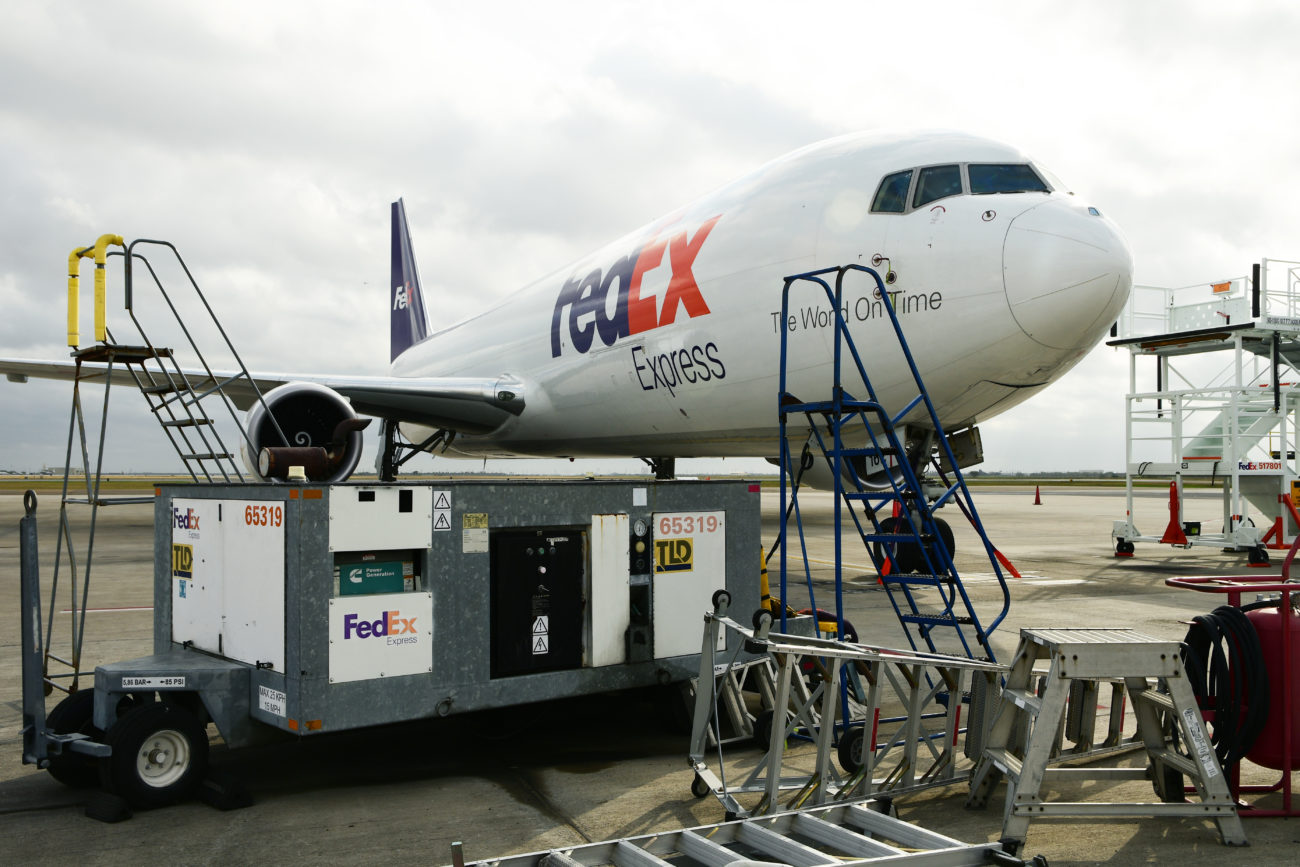
Ten days ago at Valley International Airport’s board meeting, Marv Esterly, director of aviation, told board members FedEx’s air freight at VIA in January was off 22 percent.
One of the reasons the Memphis-based delivery company gave was turbulence in global trade due to the coronavirus, now referred to as Covid-19.
“They did talk about the coronavirus,” Esterly said, referring to his conversations with FedEx officials. “The coronavirus has brought down the economy, slowed the economy of China, so the influx of goods in and out of China has slowed.
“But we’re hopeful that that will wake up pretty soon once they get this all straightened out,” he added. “China really has a global reach, especially for goods and transportation of those goods back and forth in the states and everywhere in the world. When their economy slows, it affects all of us.”
Planes and ships, too
Major airlines have been suspending flights or modifying service due to the coronavirus outbreak in China. Over 20 airlines have cancelled all flights to and from mainland China, and 15 others have dropped some China flights and routes.
Now that the virus has spread to more than 40 countries, airlines are modifying service on other routes to and from those as well.
When it comes to air freight, the global air cargo market saw a 4 percent decline in January compared to a year ago, according to market intelligence from CLIVE Data Services.
But the disruption in the critical manufacturing logistics chain between China and the world isn’t just disrupting air cargo.
Keith Patridge, executive director of the McAllen Economic Development Corp. and a board member of the South Texas Manufacturer’s Association, says the coronavirus’ disruption of Chinese manufacturing production also is impacting ocean-going cargo vessels.
“I’ve been following this pretty closely, but as of this morning (Thursday) over 2.04 million TEUs, which are the containers in which they ship most of the components from China on, 2.04 million of the TEUs, which are 20-foot-equivalent containers, are out of service because they’re not shipping product,” Patridge said, referring to the acronym for a rough measure of cargo capacity.
“When you look at it, that’s 8.8 percent of the global fleet, so almost 9 percent of all the containers in the world are not being used right now because they’re not shipping anything and that’s largely because of the coronavirus,” he added.
Best estimate of when this global cargo issue will resolve itself assuming the virus is contained? Patridge says two to three months.
Holiday chaos
The coronavirus that has caused factory shutdowns in China couldn’t have been timed worse.
The illness broke as millions of Chinese were visiting relatives to celebrate the Chinese New Year. While they were gone, the Beijing government decreed quarantines and a travel ban, stranding millions of factory workers and preventing them from returning to their jobs.
“So all of the workers that were in the plants in that area, the Wuhan area, had gone home to be with family and friends during the Chinese New Year,” Patridge said. “Well, then this hit, and they weren’t able to get back to the factory because they were not allowed to travel. As a result, while they’re still not at full capacity on their employment, it will probably. I’m going to say, be 30 to 45 days at least before they’re able to get all their employees back.”
That loss of factory production already is being felt by plants here in the Valley and in northern Mexico.
“I have heard to a certain extent of a slowdown on certain products,” said Sergio Contreras, executive director of the RGV Partnership. “So there is that supply chain problem in regards to automotive vehicles in particular.
“I’m thinking that currently quite a few of our manufacturing plants are beginning to prepare for such disruption,” he added.
There are around 220 manufacturing plants in and around Reynosa alone, and they employ around 135,000 people. Many of these companies have sister warehouses or plants, like Cardone Industries, here on the United States side of the border.
And those plants, and the people employed there, all are heavily dependent on China.
Shortages
The way modern manufacturing works along the border is China manufactures component parts such as electronics and ships them to Mexico.
There workers take these parts and assemble a full or partially complete product which is then trucked across the border to warehouses and distribution centers in the United States.
As the flow of parts from China slows dramatically, a complicating factor is modern companies which manufacture products are reluctant to pay for warehouse space they may not need, so manufacturers have adopted just-in-time delivery. That means that since they don’t have significant inventory stacked away, any break in the logistical chain quickly becomes an issue which could lead factories to close temporarily.
“I know many of our plants are impacted, or will be impacted, if it continues too long because of interruptions to their supply chain,” Patridge said. “The reason is a good portion of our companies are electronic, and when you start looking at where many of the electronic components come from, they’re from China. I know we are just hearing anecdotally from some of our companies that there are certain products that they are not able to assemble because of parts shortages.”
Patridge says companies in the Valley and northern Mexico should be OK at least for a few weeks.
“Is it large-scale? Not yet, because most of these companies have generally the inventories in three stages,” he said. “It’s either here, in a warehouse somewhere, or many of them are on the ocean in containers coming across, so that inventory they’re still working off of.”
Yet given the uncertainty of how far the coronavirus may spread, and the impact it could have were it to become a worldwide pandemic, an air of unease hangs over global manufacturing.
“It is creating some issues,” Patridge said. “It has not had a large-scale disruption yet, but as I say, it could if it continues too long.”
Global slowing
Supply lines are under threat elsewhere in the world, too.
In Southeast Asia, many industries depend on China for raw materials, not just component parts, for manufacturing.
Cambodia, Vietnam and Myanmar will probably have to temporarily curtail manufacturing of clothing, shoes, mobile phones and more due to a lack of materials or components.
Smaller companies in Southeast Asia could be facing the highest risk, experts there say.
“If you’re the big guys then no problem,” Liang Kuo-yuan, president of Yuanta-Polaris Research Institute, told Voice of America. “Yet if you’re the small and medium-sized firms, you can’t hold out and then you face the issue of bankruptcy.”
Not all the ripples affecting manufacturing operations in the Rio Grande Valley and northern Mexico are emanating from China.
Some are coming from elsewhere.
“I know there was just a recent outbreak in Italy and that is impacting some of our companies because they are Italian companies and they can’t come over to the plants so it’s impacting them somewhat,” Patridge said. “And then there are coronavirus issues in Korea, South Korea, and we have several Korean companies in the area, too.”
Bringing plants back
Concerns about an over-reliance on the Chinese supply line already had been raised before Covid-19. Many manufacturers in North America, South America and Europe have been exploring the concept of “re-shoring,” or bringing manufacturing operations back from Asia and re-establishing these component-producing plants closer to home.
“Out of every bad thing there’s always something good that seems to come out of it,” Patridge said. “What we are seeing is now that this is brought to the forefront, companies are recognizing that from a supply chain standpoint, and especially in a just-in-time or a rapid delivery environment we’re in now, they can’t afford to have all their eggs in one basket in China.
“So we’re already hearing companies that are saying we are going to very quickly start changing our supply chain from one where they get everything out of China because its the cheapest or whatever it may be, to identifying regional supply chains, which means that in the Americas, North and South America, they will develop a supply chain that will supply their company in the local region where their plants are located,” Patridge added.
Perhaps the most frustrating thing for manufacturing operation stockholders, managers and employees, is the overriding sense of uncertainty about Covid-19.
How long will it last, and how wide will it spread? Will some countries’ health care systems be overwhelmed?
“We don’t need people getting scared and doing crazy stuff right now,” Patridge said, “because that will hurt more than if we take a wait-and-see attitude about what’s going to happen.”
Recent Comments