



02 Mar 2020 — Since officially exiting the EU on January 31, the UK remains in a “transition period” that keeps it affixed to both the EU’s Customs Union and Single Market. As the nation anticipates full departure from the bloc, experts point to “inevitable” bottlenecks to international supply chains and the need for F&B businesses to adapt rapidly to trade policy revisions. On these topics, FoodIngredientsFirst speaks to Russell Hughes, VAT Consultant at UK-based VAT compliance and consultancy organization Accordance.
“Recent announcements by senior UK politicians suggest that the UK sees friction in trade as inevitable. This has wide-reaching implications for businesses that operate on both sides of the border from January 1, 2021 [end of the transition period],” details Hughes.
The removal of particular trade policy provisions is proving challenging for British industry. On January 30, the UK withdrew the “Transitional Simplified Procedure” – a policy that aimed to prevent congestion at the border by allowing businesses to complete custom declarations for a period after they were imported into the UK.
“This policy would have assisted in preventing bottlenecks at the border,” stresses Hughes. “Given that it will not be in place, it is more important than ever for businesses in the F&B industry to plan ahead while also ensuring export and import documents are accurate. This is important because there are no measures to ease impact and there is a real risk of goods being delayed at borders.”
 Click to EnlargeBusinesses must now take into account special planning for trade roadblocks amid policy revisions.Meanwhile, the UK also withdrew its Postponed VAT Accounting Scheme, which its government aimed to leverage to ease the burden of businesses having to pay import VAT for goods brought into the country. “This scheme would have allowed the importer to account for the import VAT on their VAT return while claiming this back in the same period, which would be an accounting exercise only. However, a new challenge is that businesses will now be required to pay the VAT upon import,” says Hughes.
“Businesses can make use of existing regimes that should remain in place, such as duty deferment and Simplified Import VAT Accounting (SIVA), but will have to provide a guarantee to use such schemes,” he adds.
Once the UK leaves the EU completely next year, there may be an additional requirement for businesses that have VAT registrations in different Member States to have fiscal representation. “Using a fiscal representative does not limit in any way the rights and obligations of a business as opposed to it being registered under a direct registration,” details Hughes.
“However, registrations by means of a fiscal representative will increase compliance costs as it can be held jointly liable with the person it represents for any outstanding VAT liabilities. This will be another cost of Brexit,” he adds.
The next step for businesses in the F&B industry is to be reviewing their supply chains and ensuring they have the correct systems in place to enable coping with the impact of the changes already discussed, outlines Hughes. At present, European ministers are meeting to approve a mandate for post-Brexit talks with the UK. A future trade relationship with the UK is vital for the EU, as the UK is the single largest trading partner of the EU with a total value of food and drink trade of €47.5 billion (US$51.5 billion) in 2018, according to reports by FoodDrinkEurope.
“We also still don’t know what the future trade agreement is going to look like, so being proactive using the information already known, having plans in place and being able to react to any changes quickly will be key,” he says.
The government has already indicated there are going to be checks at the border especially for food and animal products, while issuing guidance for companies that details a new customs system. “It is going to be about speed for businesses in the F&B industry, so making sure there are no delays in goods crossing the border is going to be vital. Businesses will need to ensure those export and import documents are completed correctly to ensure as quick a journey as possible and prevent perishable goods from expiring,” says Hughes.
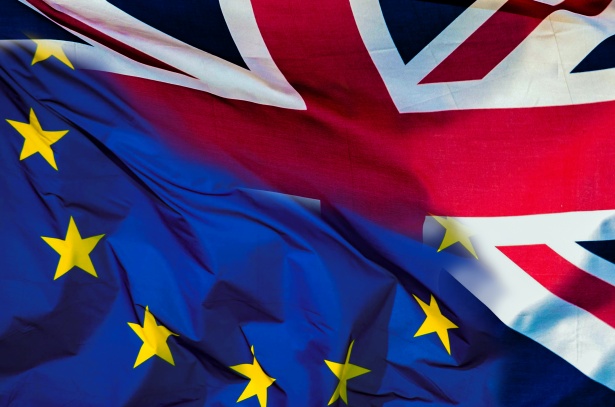 Click to EnlargeOne of the anticipated impacts after Brexit is the likelihood for increased charges for consumers. Price hikes and prolonged deliveries
One of the anticipated impacts after Brexit is the likelihood for increased charges for consumers. Hughes underscores that businesses will bear the costs in terms of increased requirements at customs points and on exports, while stressing that many organizations will not have the capacity to manage the completion of export documents – thus opting to use a customs broker or freight forwarder, which is an additional cost.
At the end of the UK’s transition period, foods may be subject to additional customs duties and VAT upon import into the UK or the EU. “This could mean additional duty costs to the business, as these cannot be recovered, as well as cash flow implications, should they be required to pay import VAT upfront,” explains Hughes.
“We understand that the likely price for this service can be in the region of €20 [US$22.17] per export declaration. This purely Brexit cost will drive up the price of goods and it is very likely that some of this cost will be passed on to consumers,” he highlights.
While stockpiling ahead of a no-deal Brexit was very much headline news, Hughes explains that businesses at the time still had uncertainty on whether the Withdrawal Agreement would get approval or if there would have been a no-deal scenario, which would have meant a hard-Brexit.”
“Now businesses have that certainty, there should be enough time to plan and prepare themselves for the end of the transitional period – this is something the UK government has commented on. However, it will also need to do their part by ensuring the infrastructure and staff are in place to deal with the sudden influx of imports from the EU,” he concludes.
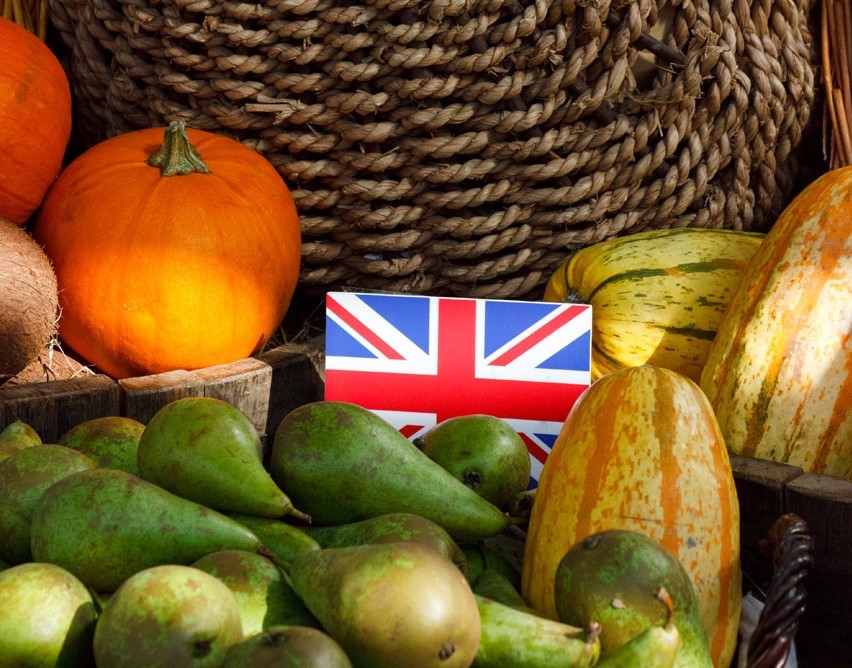 Click to Enlarge“A supply chain review is the first and most immediate step that businesses reliant on exports or with EU supply chains must take,” stresses Hughes.Planning for smooth trade
In contingency planning for Brexit’s impact, Hughes outlines actionable recommendations for export-reliant companies – meaning businesses that rely on EU supply chains. “A supply chain review is the first and most immediate step that businesses reliant on exports or with EU supply chains must take.”
“Any review must consider whether the incoterms [predefined commercial terms in international law] currently agreed with suppliers would still apply post-Brexit and what the impact of those are. In some cases, it may mean that a UK business may now need to register for VAT in the EU Member State, where previously they would not,” he says.
“To give an example, the ‘ex-works’ incoterm requires a customer to arrange pick up and delivery of goods from the suppliers’ warehouse. After Brexit – if either the supplier or customer is based in the UK – the EU’s existing ‘intra-Community supplies arrangement’ will cease to apply. This means there will likely be additional requirements of export and import documentation, checks of the goods at the port at possibly import VAT in the UK, or local VAT charges made by the supplier.”
Businesses should also consider the movement of goods within the supply chain. “Some may import goods into the EU before supplying these to UK customers. Post-Brexit, this could mean having to pay double duty, upon import into the EU, and then again upon import into the UK. Some EU Member States also require a business to be established in the EU to be able to do an export. Therefore, UK businesses may require some presence in the EU to enable them to export or would have to rely on a customs agent to undertake this on their behalf.
British businesses should also consider using a local warehouse to store goods and deliver to UK customers, which would mean only having to pay duty upon arrival into the the country along with the possibility of using customs simplifications, such as customs warehouses, where duty is generally not payable until the goods are released, Hughes advises.
“Planning now is imperative to ensure that the impacts of post-Brexit trade arrangements are managed in as efficient manner as possible. The failure to do so will very possibly lead to stalled goods which, if they ruin, will increase costs yet further. Investing upfront to conduct a review of supply chains, to understand the position of all parties involved in a sale, and to put processes in place is a must,” he concludes.
By Benjamin Ferrer
To contact our editorial team please email us at
[email protected]
If you found this article valuable, you may wish to receive our newsletters.
Subscribe now to receive the latest news directly into your inbox.
Recent Comments