

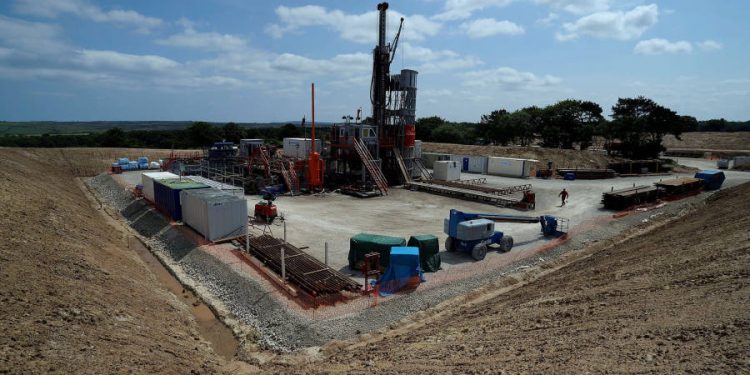
Investors in Sirius Minerals reluctantly voted for Anglo American’s takeover offer of the company, paving the way for continued development of the UK’s biggest mining project in a generation.
A total of 62 per cent of the shareholders who voted agreed on the deal at a meeting on the grounds of the Honourable Artillery Company in the City of London, the company said. They represented 80 per cent of the shares.
The vote is a victory of Anglo American and a defeat for thousands of retail investors who had backed the company’s plans to build a huge fertiliser mine below the national park on the North York Moors and are now nursing significant losses.
Shares in Sirius have fallen 78 per cent over the past year as it struggled to raise the $3.1bn it needed to complete the construction of the mine.
In January Anglo American offered 5.5p a share in cash for Sirius, valuing the company, which ran into financial difficulties last year, at £405m, excluding debt.
But most retail investors bought in at around 25p will now suffer heavy losses. Some had invested their entire pension pots and life savings into the company.
The takeover required approval by a majority of Sirius investors present or voting by proxy at the meeting, and by 75 per cent of shareholders by value.
Shares of Sirius rose 8 per cent on Tuesday to trade at 4.67p. They are still down 18 per cent since the announcement of the offer by Anglo on January 20.
At a testy meeting in London shareholders of Sirius Minerals criticised the company’s executives, calling them “stupid” and the offer “an absolute disgrace” since it undervalued the project and did not give them shares in Anglo American in return.
“This is opportunism at its ugliest,” Yashmin Ismail, who led a co-ordinated shareholder attempt to block the deal, said. Sirius should have tapped shareholders for more money instead, she said.
“They should have just come to us,” she said. “When you’re going to lose everything you’re going to put your hands into your pocket.”
Sirius said there was no alternative to Anglo’s offer and the company would go into administration as soon as this month if it was rejected.
Russell Scrimshaw, Sirius’s non-executive chairman, said: “The positive outcome from today’s meeting secures a return for shareholders, and provides greater certainty in terms of safeguarding the project, protecting the jobs of our employees, and allowing the community, region and the UK to continue to benefit from the project.”
He said the company had “scoured every corner of the global financial markets” for other investors but found none other than Anglo that was willing to put in the the money needed to build the mine.
“This is the only offer on the table, I’m sorry to say,” he said. “The only likely alternative is administration or liquidation.”
Henry Steel, portfolio manager at Odey Asset Management, said a bidding war could now start for Sirius.
“Now comes the fun part where we wait and see if Cantopex [a group of Canadian potash producers] or the Belarusians turn up to take control of this project. We could end up in a bidding war.”
Odey built a 1.4 per stake in Sirius and refused to back Anglo’s offer unless it was declared final or increased to more than 7p, neither of which happened.
Sirius’s Yorkshire project involves sinking two 1.5km-deep shafts to tap a huge deposit of polyhalite, a mineral that can be used as fertiliser, and building a 37km tunnel to take the material to a port on Teesside.
Gavin Palmer of the SNAC Action Group said Sirius’s executives had been “stupid” to walk away from a possible debt guarantee from the UK government for the project and seek funding from JPMorgan last year. The bank’s promise of a $2.5bn revolving credit facility fell apart after Sirius failed to sell a high-yield bond last summer.
“It was your job to keep it [the government guarantee] going instead of strutting away like a peacock,” Mr Palmer said.
Chris Fraser, the chief executive of Sirius, said the company had spoken to the “highest levels” of the UK government but they had decided against backing the project because of the risks to taxpayers.
“The failure to secure financing . . . is the greatest failure of my career,” Mr Fraser, a former banker for Rothschild and Citigroup in Australia, told shareholders.
Michael Holland, who has been a shareholder in Sirius since 2009, said the company would not have got planning permission for the project without the support of local investors.
“It’s the death throes of a dream,” Mr Holland said. “No one wants to believe it’s coming to an end.”
Recent Comments