

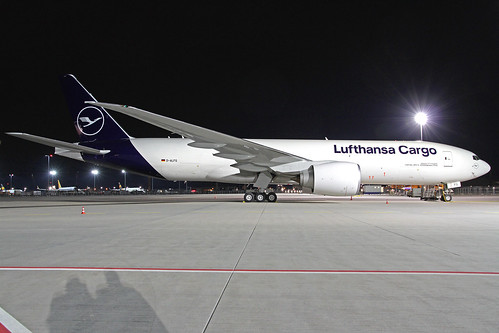

In cooperation with the International Air Transport Association (IATA), Lufthansa Cargo has developed a
four-pillar model to improving its environmental performance and reaching its target of reducing its
2005 level carbon emissions by 25% this year.
The carrier aims to cut its specific CO2 emissions in air freight transport by 25% by 2020, which they’ve,
to date, reduced to 475 grams per tonne-kilometer, corresponding to a reduction of around 13.5%.
Their four-pillar approach to climate protection begins with technologies progress. Lufthansa has
purchased five new Boeing 777Fs, which currently have the best environmental performance, emitting
roughly 17% less CO2 per tonne-kilometer than the MD-11F. Additionally, they’ve worked to improve
the efficiency of their freighters, including the MD-11F, through additional technical measures, such as
fan blade recontouring, which restores the contour of the engine’s fan blades and reduces emissions
and kerosene consumption while extending the lifespan of the parts.
The second pillar is operational, including more than 50 measures carried out by pilots as part of the
German airline’s fuel-efficiency project. They include the identification of the most efficient routes,
which can save up to 1,000 tonnes of kerosene annually, and more efficient aircraft-loading processes to
counter uneven weight distribution and decrease fuel consumption. One example of this improved
loading process is Lufthansa’s replacement of standard containers with AKH Lightweight-Containers in
2014, which save 2,100 tonnes of kerosene and 6,800 tonnes of CO2 annually.
Additional operational measures include the development of light pallets and removal of loose objects,
such as flashlights and cockpit documents. Since implementing IATA’s electronic air waybill (eAWB) in
2015, one-third of all Lufthansa Cargo shipments are transported without a paper air waybill. The
onboard weight reduction that results from the digitalizing of one cargo document can save
approximately 225 tonnes of CO2 annually.
The remaining pillars are: improved infrastructure, including helping to restructure European airspace to
enable more direct flights under the Single European Sky (SES) project; and economic measures that are
focused primarily on the United Nations International Civil Aviation Organization’s system of climate
levies.
Recent Comments