
Tech News, Magazine & Review WordPress Theme 2017
  • Home
  • Supply Chain Updates
  • Global News
  • Contact Us
  • Home
  • Supply Chain Updates
  • Global News
  • Contact Us
No Result
View All Result
No Result
View All Result
Home Supply Chain Updates

Can a ‘Zero Trust’ Approach Work in the Supply Chain?

usscmc by usscmc
March 8, 2020
Can a ‘Zero Trust’ Approach Work in the Supply Chain?
Share on FacebookShare on Twitter

3rd Party Risk Management
,
Governance & Risk Management

Experts From Cisco, Microsoft Discuss Third-Party Security
Ishita Chigilli Palli (Ishita_CP) •
March 3, 2020    

Can a 'Zero Trust' Approach Work in the Supply Chain?
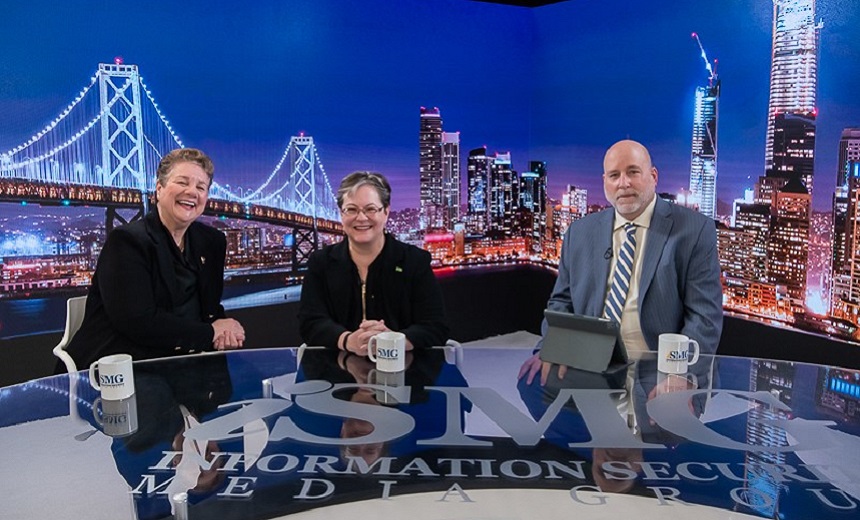
From left: Edna Conway of Microsoft and Wendy Nather of Cisco in conversation with ISMG’s Tom Field

For years, enterprises have struggled with securing their supply chains, trying to reduce the pervasive risks in an increasingly interconnected world. Now, it’s time to try a “zero trust” approach, specialists from Cisco and Microsoft told Information Security Media Group in an interview at the RSA 2020 conference in San Francisco.

See Also: Redefining Security Analytics


Edna Conway, vice president of global security, risk and compliance at Microsoft Azure, and Wendy Nather, the head of advisory CISOs at Cisco, said enterprises should start redefining how they apply the concept of “trust” to their third-party suppliers.


Over the years, the platform economy, exemplified by companies such as Amazon, Airbnb, Uber and others, has taken hold across the globe. As a result, companies are not always sure who they are dealing with and the amount of opacity within the supply chain has increased, Conway says.


These developments, Conway says, are one reason why the dialogue around supply chain security should be changing and why different approaches are needed. “For those of us that make things, whether they are tangible goods or services, we have an end-to-end ‘value chain.’ … We’re still talking about supply chain security as if it’s something new that hasn’t been tackled,” Conway says.


Conway says that security teams should be considering what methods of building trust across the full spectrum of the third-party ecosystem will prove most effective, while acknowledging that it’s not possible to know everyone or trust everyone within the ecosystem.


Reducing threats to U.S. supply chains has been listed as one of the top priorities for 2020 by the National Counterintelligence and Security Center, the agency that leads counterintelligence efforts for the U.S. Protecting the supply chain includes identifying high-risk software vendors and other firms selling technology services to American firms and government agencies, the center states (see: US Counterintelligence Outlines 5 Key Priorities)


‘Zero Trust’ and Supply Chain


Companies now have to clarify the basis on which they are going to trust third-party providers and agree on the right people and technologies to trust, according to Conway.


While it’s not possible to know everything about all the firms that make up the value chain, Nather says that companies have determine whether their security is good enough. And while Nather would prefer a different term, the concept of zero trust can help businesses better consider their approach third-party risk.


“If you have a user with a device, you can say: ‘Look, I don’t care what you do with your device until you come to access our resources, and then we care a whole lot and we’re going to set up requirements that you have to meet. But until then, we don’t need to know the rest of what you are doing.'”


Enterprises used to be able to control more of the supply chain process, but now there are more third-party and even fourth-party vendors taking control of bits and pieces of the supply chain from the earliest stages, Nather says.


“Now we have this economy where people are taking over control of slices and you cannot see things underneath anymore, she says. “So you have to trust – and that means you have to decide on what basis you’re going to trust.”


The basis for trust needs to be defined more explicitly, whether it’s through a questionnaire with probing questions or by conducting additional verification at the point of execution for a transaction.

usscmc

usscmc

No Result
View All Result

Recent Posts

  • How Hapag Lloyd captured a major market share in the Container Shipping Industry in USA
  • Why USA’s East Coast is the Favorite Destination for Manufacturing Companies
  • How Trade Relations Between the USA and UK Improved After Keir Starmer Became Prime Minister
  • Tips and Tricks for Procurement Managers to Handle Their Supplier Woes
  • The Crazy Supply Chain of Walmart Spanning Across the Globe

Recent Comments

  • Top 5 Supply Chain Certifications that are in high demand | Top 5 Certifications on Top 5 Globally Recognized Supply Chain Certifications
  • 3 Best Procurement Certifications that are most valuable | Procurement Newz on Top 5 Globally Recognized Supply Chain Certifications

Archives

  • July 2024
  • June 2024
  • May 2024
  • April 2024
  • March 2024
  • February 2024
  • January 2024
  • December 2023
  • November 2023
  • October 2023
  • September 2023
  • August 2023
  • July 2023
  • June 2023
  • May 2023
  • April 2023
  • March 2023
  • February 2023
  • January 2023
  • December 2022
  • November 2022
  • October 2022
  • September 2022
  • August 2022
  • July 2022
  • June 2022
  • May 2022
  • April 2022
  • March 2022
  • February 2022
  • January 2022
  • December 2021
  • November 2021
  • October 2021
  • September 2021
  • August 2021
  • July 2021
  • June 2021
  • May 2021
  • April 2021
  • March 2021
  • February 2021
  • January 2021
  • December 2020
  • November 2020
  • October 2020
  • September 2020
  • August 2020
  • July 2020
  • June 2020
  • May 2020
  • April 2020
  • March 2020
  • February 2020
  • January 2020
  • December 2019
  • November 2019
  • September 2019

Categories

  • Global News
  • Supply Chain Updates

Meta

  • Log in
  • Entries feed
  • Comments feed
  • WordPress.org
  • Antispam
  • Contact Us
  • Disclaimer
  • Home
  • Privacy Policy
  • Terms of Use

© 2025 www.usscmc.com

This website uses cookies to improve your experience. We'll assume you're ok with this, but you can opt-out if you wish. Cookie settingsACCEPT
Privacy & Cookies Policy

Privacy Overview

This website uses cookies to improve your experience while you navigate through the website. Out of these cookies, the cookies that are categorized as necessary are stored on your browser as they are essential for the working of basic functionalities of the website. We also use third-party cookies that help us analyze and understand how you use this website. These cookies will be stored in your browser only with your consent. You also have the option to opt-out of these cookies. But opting out of some of these cookies may have an effect on your browsing experience.
Necessary
Always Enabled
Necessary cookies are absolutely essential for the website to function properly. This category only includes cookies that ensures basic functionalities and security features of the website. These cookies do not store any personal information.
Non-necessary
Any cookies that may not be particularly necessary for the website to function and is used specifically to collect user personal data via analytics, ads, other embedded contents are termed as non-necessary cookies. It is mandatory to procure user consent prior to running these cookies on your website.
SAVE & ACCEPT
No Result
View All Result
  • Home
  • Supply Chain Updates
  • Global News
  • Contact Us

© 2025 www.usscmc.com