

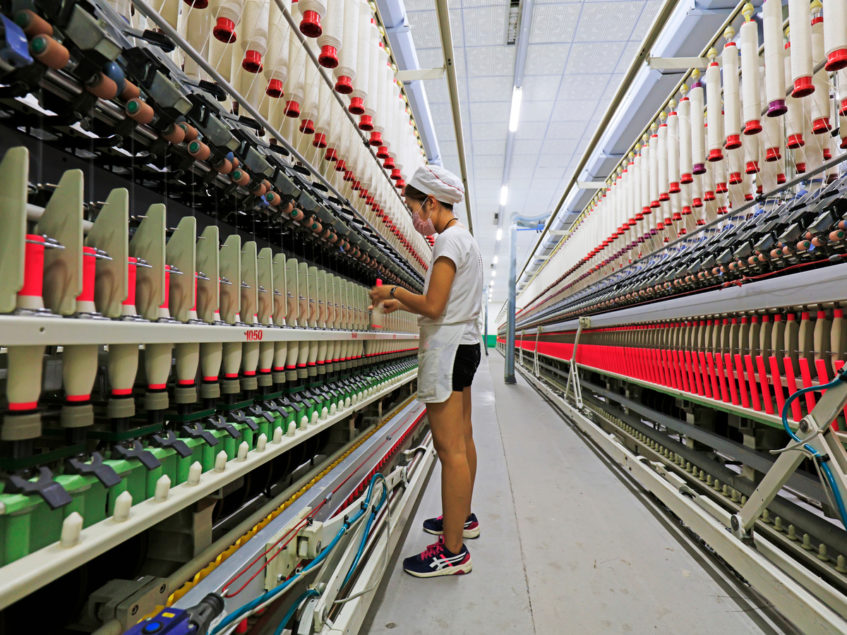

Three major innovations have shifted the global supply chain into hyperdrive.
In the 1950s, the advent of container shipping made it easier to move large volumes of goods in ocean vessels. More recently, the internet, the cloud and easier ways to communicate have made business processes more efficient. Finally, next-generation technology innovations such as the internet of things promise to transform how companies share data, track goods and enhance visibility in an ever-expanding global supply chain.
No amount of nationalist politics will stop this forward movement. The global supply chain is firmly integrated into our way of doing business. Companies rely on it to be more competitive in sourcing, and to enter new markets. American consumers, whether they realize it or not, depend on it because it leads to lower-cost goods and a higher standard of living.
Despite these overwhelming benefits, there are risks and vulnerabilities that are unique to the global model. As the supply chain grows in scope and reach, it becomes more complex and difficult to manage. Partners in multiple countries might not be on the same page operationally, or adhere to the same corporate culture and quality standards. Management styles in an egalitarian country might conflict with a Confucian business culture, which places more value on a top-down command structure. And more recently, we’ve seen how a public health emergency can cause significant disruptions.
“Companies across all industries are moving towards an open, distributed supply chain network, which can deliver big advantages in terms of access to specialized manufacturing facilities, proximity to new and emerging markets, decreases in overall pricing, and competitive contracts,” says Rick Ruiz, principal at Tunnell Consulting. “In the pharmaceutical industry especially, we’re seeing this deep supply chain ecosystem as essential for startup companies and specialized drug developers, who must spend most of their resources on research and development, and then rely on contractors for everything from manufacturing to shipping and even testing.
“But despite the overwhelming benefits,” Ruiz continues, “a distributed supply chain has inherent vulnerabilities, and its frailty can come to light when we see an unexpected development seeping into the supply chain. We are already seeing this now with the Wuhan coronavirus, which has impacted supply chains across all industries.”
Furthermore, because maintaining a strong and efficient supply chain depends largely on the data upon which it’s built, other issues could arise if that data is gathered using different technologies or with varying standards of quality and reliability. Even when supply-chain partners use the same standards and state-of-the-art technology, cultures and expectations can differ.
“A solution to preparing for the unexpected is in acknowledging that data is the foundation of a resilient supply chain,” says Ruiz. “Regardless of the technological platform, the supply chain is only as good as the data that drives it. The coronavirus is not the first time a public health emergency has disrupted global supply chains, nor will it be the last. Having good data won’t make the public health emergency go away, but it will help companies be more prepared for it.”
Visibility, too, becomes an issue. Gaining a true understanding of every aspect of the end-to-end supply chain becomes more difficult as more partners from different locations are added. Other risks that might enter into the supply-chain equation include the reliability of supply and shipping. With the unexpected impacts resulting from the coronavirus, manufacturers depending on parts from China are already seeing their supplies in jeopardy, and their inventories running low.
China’s growth and position as one of the world’s largest economies has changed the global response. The SARS outbreak of 2003, which also originated from China in the Guangdong province, impacted 26 countries, but didn’t have nearly the same level of economic repercussion. That’s due to the fact that China’s share of GDP has quadrupled since then — and in today’s economy, anything that impacts China impacts the world.
According to Simon Knowles, chief marketing officer at Maine Pointe, the coronavirus outbreak in China has served as a sobering reminder of the vulnerability of today’s hyper-connected supply chains, and the importance of contingency planning to ensure resilience. While executives are aware of at least some of the most prevalent supply-chain risk factors, many lack robust contingency plans if the unexpected happens. As a result, the outbreak has caught many businesses off guard, making the need to know sooner, and act faster, even more urgent.
This vulnerability in the global supply chain was already evident in the global response to the U.S.-triggered trade wars, punitive tariffs and a new era of isolationism. Bad for business, consumers, and, ultimately, the American worker, trade wars continue to stifle the economy and hinder companies that rely on imported raw materials to operate.
A global health emergency like the Wuhan coronavirus could represent a major tipping point in the disruption of commerce. It has already caused supply chains around the world to fall into disarray. General Motors, Toyota and Volkswagen have temporarily closed their Chinese plants; Hyundai shuttered seven car factories in South Korea due to a shortage of Chinese components, and overall the outbreak could reduce global vehicle output by more than 1.7 million cars. BP has warned that there could be 40% fall in oil demand as a direct result of the outbreak. India has reported concerns about the supply of necessary drugs and active pharmaceutical ingredients from China, and is now seeking secondary supply sources from European markets.
Multinational corporations aren’t the only ones to be affected. There are supply chains within supply chains, and U.S.-based companies that claim no reliance on China are very likely wrong in that contention. While their immediate suppliers might be domestic, the suppliers’ suppliers might not be.
“We have long seen this vulnerability in the pharmaceutical industry, in which the importation of active pharmaceutical ingredients is a critical part of the manufacturing supply chain,” says Ruiz. “Domestic drug companies, even with localized manufacturing facilities, still have to rely on other countries, primarily China, for these ingredients. About 72% of active pharmaceutical ingredients come from outside the U.S., and a disruption of that source, whether through trade war or due to a public health crisis restricting access, would be devastating to the U.S. pharmaceutical industry. As a result, the public health risks of the coronavirus itself may be aggravated by a disruption of the supply of critical life-saving drugs.”
Understanding your suppliers, and your suppliers’ suppliers, is key. Part of that effort is achieving visibility, but it’s equally important to understand the risks your own company faces, as well as those that can occur at every step of the supply chain.
Optionality — having a proactive backup plan and alternative sources — should be a part of supply-chain strategy whenever possible. The coronavirus outbreak has already caused severe disruptions throughout multiple industries. A global supply chain presents a balance of incredible opportunity and equally incredible risk.
“In the face of any emergency, whether it’s public health or politics, data will always play a role in the solution,” says Ruiz. “The end-to-end visibility is driven by a strong data strategy, data governance and defined process, which ultimately helps to create a vision for moving forward, and a strategy for being prepared for the unexpected.”
Dan Blacharski is president of Ugly Dog Media.
Recent Comments