


BEIJING—The mysterious patient samples arrived at Wuhan Institute of Virology at 7 P.M. on December 30, 2019. Moments later, Shi Zhengli’s cell phone rang. It was her boss, the institute’s director. The Wuhan Center for Disease Control and Prevention had detected a novel coronavirus in two hospital patients with atypical pneumonia, and it wanted Shi’s renowned laboratory to investigate. If the finding was confirmed, the new pathogen could pose a serious public health threat—because it belonged to the same family of bat-borne viruses as the one that caused severe acute respiratory syndrome (SARS), a disease that plagued 8,100 people and killed nearly 800 of them between 2002 and 2003. “Drop whatever you are doing and deal with it now,” she recalls the director saying.
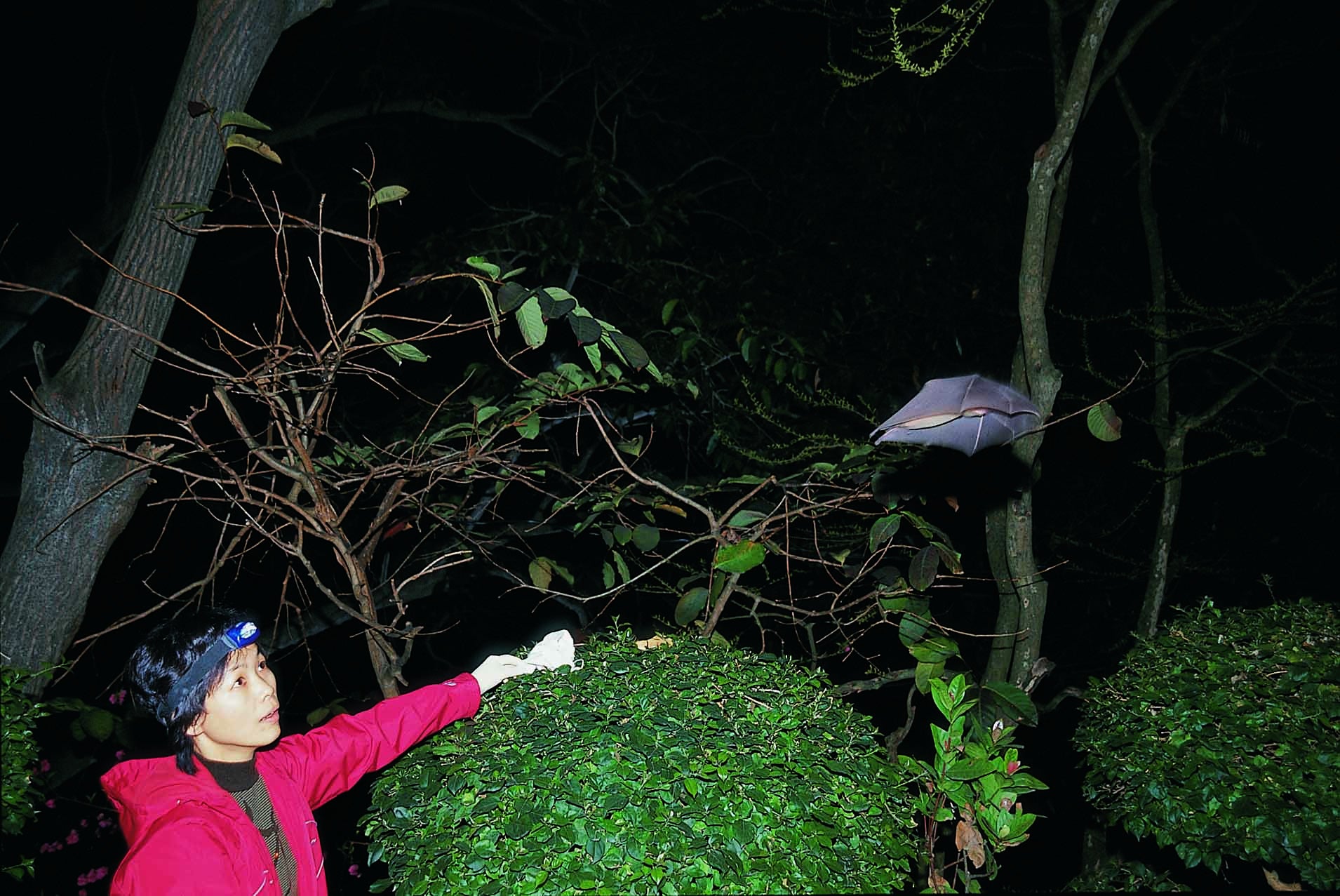
Shi—a virologist who is often called China’s “bat woman” by her colleagues because of her virus-hunting expeditions in bat caves over the past 16 years—walked out of the conference she was attending in Shanghai and hopped on the next train back to Wuhan. “I wondered if [the municipal health authority] got it wrong,” she says. “I had never expected this kind of thing to happen in Wuhan, in central China.” Her studies had shown that the southern, subtropical areas of Guangdong, Guangxi and Yunnan have the greatest risk of coronaviruses jumping to humans from animals—particularly bats, a known reservoir for many viruses. If coronaviruses were the culprit, she remembers thinking, “could they have come from our lab?”
While Shi’s team at the Chinese Academy of Sciences institute raced to uncover the identity and origin of the contagion, the mysterious disease spread like wildfire. As of this writing, about 81,000 people in China have been infected. Of that number, 84 percent live in the province of Hubei, of which Wuhan is the capital, and more than 3,100 have died. Outside of China, about 41,000 people across more than 100 countries and territories in all of the continents except Antarctica have caught the new virus, and more than 1,200 have perished.
The epidemic is one of the worst to afflict the world in recent decades. Scientists have long warned that the rate of emergence of new infectious diseases is accelerating—especially in developing countries where high densities of people and animals increasingly mingle and move about.
“It’s incredibly important to pinpoint the source of infection and the chain of cross-species transmission,” says disease ecologist Peter Daszak, president of EcoHealth Alliance, a New York City–based nonprofit research organization that collaborates with scientists, such as Shi, around the world to discover new viruses in wildlife. An equally important task, he adds, is hunting down other related pathogens—the “known unknowns”—in order to “prevent similar incidents from happening again.”
Tracing the Virus at Its Source
To Shi, her first virus-discovery expedition felt like a vacation. On a breezy, sunny spring day in 2004, she joined an international team of researchers to collect samples from bat colonies in caves near Nanning, the capital of Guangxi. Her inaugural cave was typical of the region: large, rich in limestone columns and—being a popular tourist destination—easily accessible. “It was spellbinding,” Shi recalls, with milky-white stalactites hanging from the ceiling like icicles, glistening with moisture.
But the holidaylike atmosphere soon dissipated. Many bats—including several insect-eating species of horseshoe bats that are abundant in southern Asia—roost in deep, narrow caves on steep terrain. Often guided by tips from local villagers, Shi and her colleagues had to hike for hours to potential sites and inch through tight rock crevasses on their stomach. And the flying mammals can be elusive. In one frustrating week, the team explored more than 30 caves and saw only a dozen bats.
These expeditions were part of the effort to catch the culprit in the SARS outbreak, the first major epidemic of the 21st century. A Hong Kong team had reported that wildlife traders in Guangdong first caught the SARS coronavirus from civets, mongooselike mammals that are native to tropical and subtropical Asia and Africa.
Before SARS, the world had little inkling of coronaviruses—named because, seen under a microscope, their spiky surface resembles a crown—says Linfa Wang, who directs the emerging infectious diseases program at Singapore’s Duke-NUS Medical School. Coronavirues were mostly known for causing common colds. “The SARS outbreak was a game changer,” says Wang, whose work on bat-borne coronaviruses got a swift mention in the 2011 Hollywood blockbuster Contagion. It was the first time a deadly coronavirus with pandemic potential emerged. This discovery helped to jump-start a global search for animal viruses that could find their way into humans.
Shi was an early recruit of that worldwide effort, and both Daszak and Wang have since been her long-term collaborators. But how the civets got the virus remained a mystery. Two previous incidents were telling: Australia’s 1994 Hendra virus infections, in which the contagion jumped from horses to humans, and Malaysia’s 1998 Nipah virus outbreak, in which it moved from pigs to people. Both diseases were found to be caused by pathogens that originated in fruit-eating bats. Horses and pigs were merely the intermediate hosts.
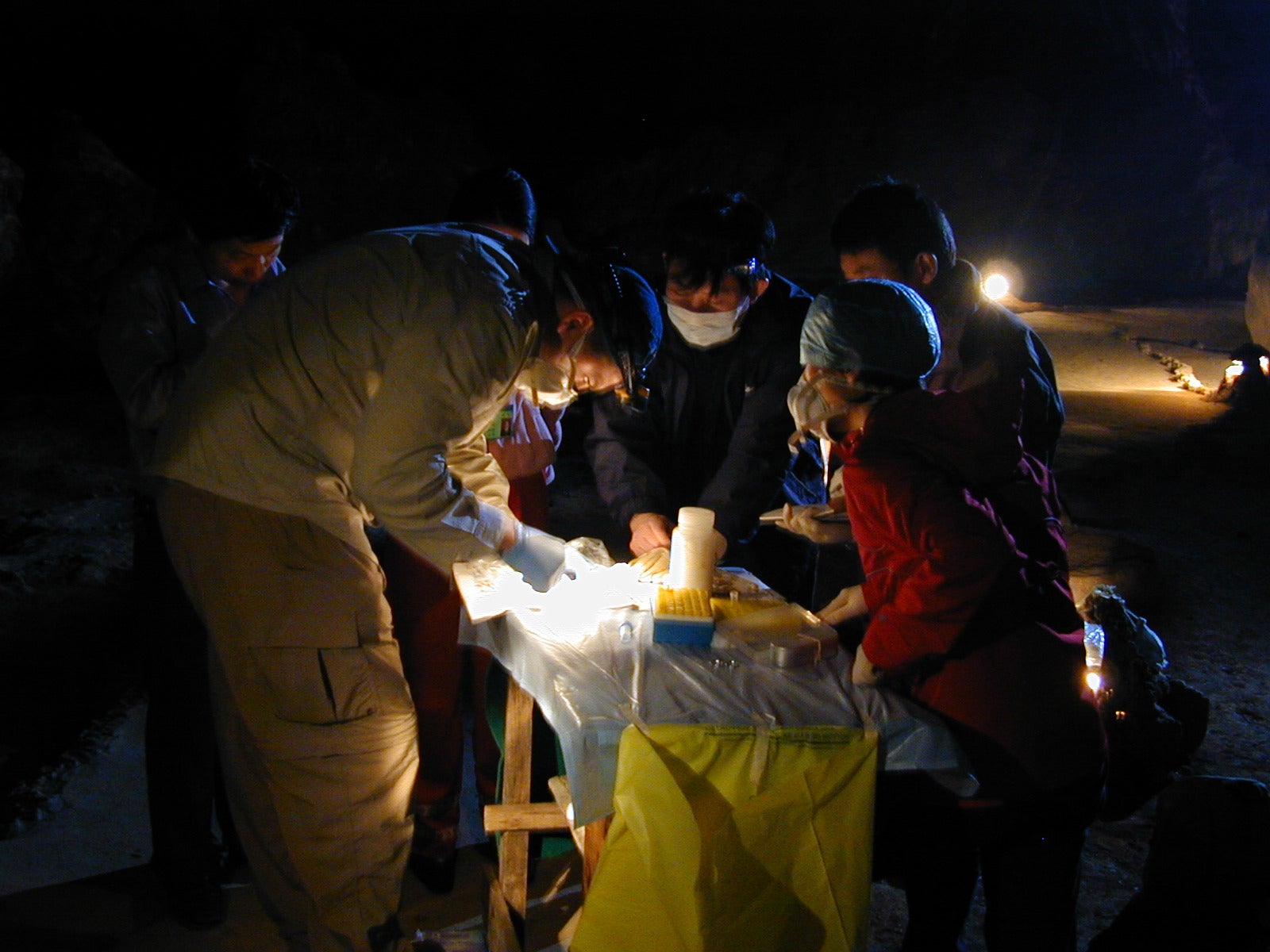
In those first virus-hunting months in 2004, whenever Shi’s team located a bat cave, it would put a net at the opening before dusk—and then wait for the nocturnal creatures to venture out to feed for the night. Once the bats were trapped, the researchers took blood and saliva samples, as well as fecal swabs, often working into the small hours. After catching up on some sleep, they would return to the cave in the morning to collect urine and fecal pellets.
But sample after sample turned up no trace of genetic material from coronaviruses. It was a heavy blow. “Eight months of hard work seemed to have gone down the drain,” Shi says. “We thought coronaviruses probably did not like Chinese bats.” The team was about to give up when a research group in a neighboring lab handed it a diagnostic kit for testing antibodies produced by people with SARS.
There was no guarantee the test would work for bat antibodies, but Shi gave it a go anyway. “What did we have to lose?” she says. The results exceeded her expectations. Samples from three horseshoe bat species contained antibodies against the SARS virus. “It was a turning point for the project,” Shi says. The researchers learned that the presence of the coronavirus in bats was ephemeral and seasonal—but an antibody reaction could last from weeks to years. So the diagnostic kit offered a valuable pointer as to how to hunt down viral genomic sequences.
Shi’s team used the antibody test to narrow down locations and bat species to pursue in the quest for these genomic clues. After roaming mountainous terrain in the majority of China’s dozens of provinces, the researchers turned their attention to one spot: Shitou Cave on the outskirts of Kunming, the capital of Yunnan—where they conducted intense sampling during different seasons throughout five consecutive years.
The efforts paid off. The pathogen hunters discovered hundreds of bat-borne coronaviruses with incredible genetic diversity. “The majority of them are harmless,” Shi says. But dozens belong to the same group as SARS. They can infect human lung cells in a petri dish, cause SARS-like diseases in mice, and evade vaccines and drugs that work against SARS.
In Shitou Cave—where painstaking scrutiny has yielded a natural genetic library of bat viruses—the team discovered a coronavirus strain in 2013 that came from horseshoe bats and had a genomic sequence that was 97 percent identical to the one found in civets in Guangdong. The finding concluded a decade-long search for the natural reservoir of the SARS coronavirus.

Viral Melting Pots
In many bat dwellings Shi has sampled, including Shitou Cave, “constant mixing of different viruses creates a great opportunity for dangerous new pathogens to emerge,” says Ralph Baric, a virologist at the University of North Carolina at Chapel Hill. And in the vicinity of such viral melting pots, Shi says, “you don’t need to be a wildlife trader to be infected.”
Near Shitou Cave, for example, many villages sprawl among the lush hillsides in a region known for its roses, oranges, walnuts and hawthorn berries. In October 2015 Shi’s team collected blood samples from more than 200 residents in four of those villages. It found that six people, or nearly 3 percent, carried antibodies against SARS-like coronaviruses from bats—even though none of them had handled wildlife or reported SARS-like or other pneumonia-like symptoms. Only one had travelled outside of Yunnan prior to sampling, and all said they had seen bats flying in their village.
Three years earlier, Shi’s team had been called in to investigate the virus profile of a mineshaft in Yunnan’s mountainous Mojiang County—famous for its fermented Pu’er tea—where six miners suffered from pneumonialike diseases (two of them died). After sampling the cave for a year the researchers discovered a diverse group of coronaviruses in six bat species. In many cases, multiple viral strains had infected a single animal, turning it into a flying factory of new viruses.
“The mineshaft stunk like hell,” says Shi, who went in with her colleagues wearing a protective mask and clothing. “Bat guano, covered in fungus, littered the cave.” Although the fungus turned out to be the pathogen that had sickened the miners, she says it would only have been a matter of time before they caught the coronaviruses if the mine had not been promptly shut.
With growing human populations increasingly encroaching on wildlife habitats, with unprecedented changes in land use, with wildlife and livestock transported across countries, with their products transported around the world, and with a sharp increase in both domestic and international travel, new disease outbreaks of pandemic scale are a near mathematical certainty. This had been keeping Shi and many other researchers awake at night—long before the mysterious samples landed at the Wuhan Institute of Virology on that ominous evening last December.
About a year ago, Shi’s team published two comprehensive reviews about coronaviruses in Viruses and Nature Reviews Microbiology. Drawing evidence from her own studies—many of which were published in top academic journals—and from others, Shi and her co-authors warned of the risk of future outbreaks of bat-borne coronaviruses.
Racing against a Deaadly Pathogen
On the train back to Wuhan on December 30 last year, Shi and her colleagues discussed ways to immediately start testing the patient samples. In the following weeks—the most intense and the most stressful time of her life—China’s bat woman felt she was fighting a battle in her worse nightmare, even though it was one she had been preparing for over the past 16 years. Using a technique called polymerase chain reaction, which can detect a virus by amplifying its genetic material, the first round of tests showed that samples from five of seven patients contained genetic sequences known to be present in all coronaviruses.
Shi instructed her team to repeat the tests and, at the same time, sent the samples to another laboratory to sequence the full viral genomes. Meanwhile she frantically went through her own laboratory’s records from the past few years to check for any mishandling of experimental materials, especially during disposal. Shi breathed a sigh of relief when the results came back: none of the sequences matched those of the viruses her team had sampled from bat caves. “That really took a load off my mind,” she says. “I had not slept a wink for days.”
By January 7 the Wuhan team determined that the new virus had indeed caused the disease those patients suffered—a conclusion based on results from polymerase chain reaction anaylsis, full genome sequencing, antibody tests of blood samples and the virus’s ability to infect human lung cells in a petri dish. The genomic sequence of the virus—now officially called SARS-CoV-2 because it is related to the SARS pathogen—was 96 percent identical to that of a coronavirus the researchers had identified in horseshoe bats in Yunnan, they reported in a paper published last month in Nature. “It’s crystal clear that bats, once again, are the natural reservoir,” says Daszak, who was not involved in the study.
The genomic sequences of the viral strains from patients are, in fact, very similar to one another, with no significant changes since late last December, based on analyses of 326 published viral sequences. “This suggests the viruses share a common ancestor,” Baric says. The data also point to a single introduction into humans followed by sustained human-to-human transmission, researchers say.
Given that the virus seems fairly stable and that many infected individuals appear to have mild symptoms, scientists suspect the pathogen might have been around for weeks or even months before the first severe cases raised alarm. “There might have been mini outbreaks, but the virus burned out” before causing havoc, Baric says. “The Wuhan outbreak is by no means incidental.” In other words, there was an element of inevitability to it.
To many, the region’s burgeoning wildlife markets—which sell a wide range of animals such as bats, civets, pangolins, badgers and crocodiles—are perfect viral melting pots. Although humans could have caught the deadly virus from bats directly (according to several studies, including those by Shi and her colleagues), independent teams have suggested in preprint studies that pangolins may have been an intermediate host. These teams have reportedly uncovered SARS-CoV-2–like coronaviruses in these animals, which were seized in antismuggling operations in southern China.
On February 24 the nation announced a permanent ban on wildlife consumption and trade except for research or medicinal or display purposes—which will stamp out an industry worth $75 billion and put approximately 15 million people out of jobs, according to a 2017 report commissioned by the Chinese Academy of Engineering. Some welcome the initiative, whereas others, such as Daszak, worry that without efforts to change people’s traditional beliefs or provide alternative livelihoods, a blanket ban may push the business underground. This could make disease detection even more challenging. “Eating wildlife has been part of the cultural tradition in southern China” for thousands of years, Daszak says. “It won’t change overnight.”
In any case, Shi says, “wildlife trade and consumption are only part of problem.” In late 2016 pigs across four farms in Qingyuan county in Guangdong—60 miles from the site where the SARS outbreak originated—suffered from acute vomiting and diarrhea, and nearly 25,000 of the animals died. Local veterinarians could not detect any known pathogen and called Shi for help. The cause of the illness, called swine acute diarrhea syndrome (SADS), turned out to be a virus whose genomic sequence was 98 percent identical to a coronavirus found in horseshoe bats in a nearby cave.
“This is a serious cause for concern,” says Gregory Gray, an infectious disease epidemiologist at Duke University. Pigs and humans have very similar immune systems, making it easy for viruses to cross between the two species. Moreover a team at Zhejiang University in the Chinese city of Hangzhou found the SADS virus could infect cells from many organisms in a petri dish, including rodents, chickens, nonhuman primates and humans. Given the scale of swine farming in many countries, such as China and the U.S., Gray says, looking for novel coronaviruses in pigs should be a top priority.
Although the Wuhan outbreak is the sixth one caused by bat-borne viruses in the past 26 years —the other five being Hendra in 1994, Nipah in 1998, SARS in 2002, MERS (Middle East respiratory syndrome) in 2012, and Ebola in 2014—“the animals [themselves] are not the problem,” Wang says. In fact, bats help promote biodiversity and the health of their ecosystems by eating insects and pollinating plants. “The problem arises when we get in contact with them,” he says.
Fending Off Future Outbreaks
More than two months into the epidemic—and seven weeks after the Chinese government imposed citywide transportation restrictions in Wuhan, a megacity of 11 million—life feels almost normal, Shi says, laughing. “Maybe we are getting used to it. The worst days are certainly over.” The institute staffers have a special pass to travel from home to their laboratory, but they cannot go anywhere else. For more than a month, they had to subsist on instant noodles during their long hours in the lab because the institute’s canteen was closed.
The researchers found that the new coronavirus enters human lung cells using a receptor called angiotensin-converting enzyme 2 (ACE2). The scientists have since been screening for drugs that can block it. They, as well as other research groups, are also racing to develop vaccines and test promising candidates. In the long run, the team plans to develop broad-spectrum vaccines and drugs against coronaviruses deemed risky to humans. “The Wuhan outbreak is a wake-up call,” Shi says.
Many scientists say the world should move beyond merely responding to deadly pathogens when they arise. “The best way forward is prevention,” Daszak says. Because 70 percent of animal-borne emerging infectious diseases come from wild creatures, “where we should start is to find all those viruses in wildlife globally and develop better diagnostic tests,” he adds. Doing so would essentially mean rolling out what researchers such as Daszak and Shi have been doing on a much bigger scale.
Such efforts should focus on high-risk viral groups in certain mammals prone to coronavirus infections, such as bats, rodents, badgers, civets, pangolins, and nonhuman primates, Daszak says. He adds that developing countries in the tropics, where wildlife diversity is greatest, should be the frontline of this battle against viruses.
In recent decades, Daszak and his colleagues analyzed approximately 500 human infectious diseases from the past century. They found that the emergence of new pathogens tended to happen in places where a dense population had been changing the landscape—by building roads and mines, cutting down forests and intensifying agriculture. “China is not the only hotspot,” he says, noting that other major emerging economies, such as India, Nigeria and Brazil, are also at great risk.
Once potential pathogens are mapped out, scientists and public health officials can regularly check for possible infections by analyzing blood and swab samples from livestock, wild animals that are farmed and traded, and high-risk human populations, such as farmers, miners, villagers who live near bats, and people who hunt or handle wildlife, Gray says. This approach, known as “One Health,”, aims to integrate the management of wildlife health, livestock health, and human health. “Only then can we catch an outbreak before it turns into an epidemic,” he says, adding that the approach could potentially save the hundreds of billions of dollars such an epidemic can cost.
Back in Wuhan, China’s bat woman has decided to retire from the frontline of virus-hunting expeditions. “But the mission must go on,” says Shi, who will continue to lead research programs. “What we have uncovered is just the tip of an iceberg.” Daszak’s team has estimated that there are as many as 5,000 coronavirus strains waiting to be discovered in bats globally. Shi is planning a national project to systematically sample viruses in bat caves—with much greater scope and intensity than her team’s previous attempts.
“Bat-borne coronaviruses will cause more outbreaks,” she says with a tone of brooding certainty. “We must find them before they find us.”
Read more about the coronavirus outbreak here.
Recent Comments