
Tech News, Magazine & Review WordPress Theme 2017
  • Home
  • Supply Chain Updates
  • Global News
  • Contact Us
  • Home
  • Supply Chain Updates
  • Global News
  • Contact Us
No Result
View All Result
No Result
View All Result
Home Supply Chain Updates

U.S. Travel Ban Is Expected to Snarl Trans-Atlantic Airfreight

usscmc by usscmc
March 12, 2020
U.S. Travel Ban Is Expected to Snarl Trans-Atlantic Airfreight
Share on FacebookShare on Twitter

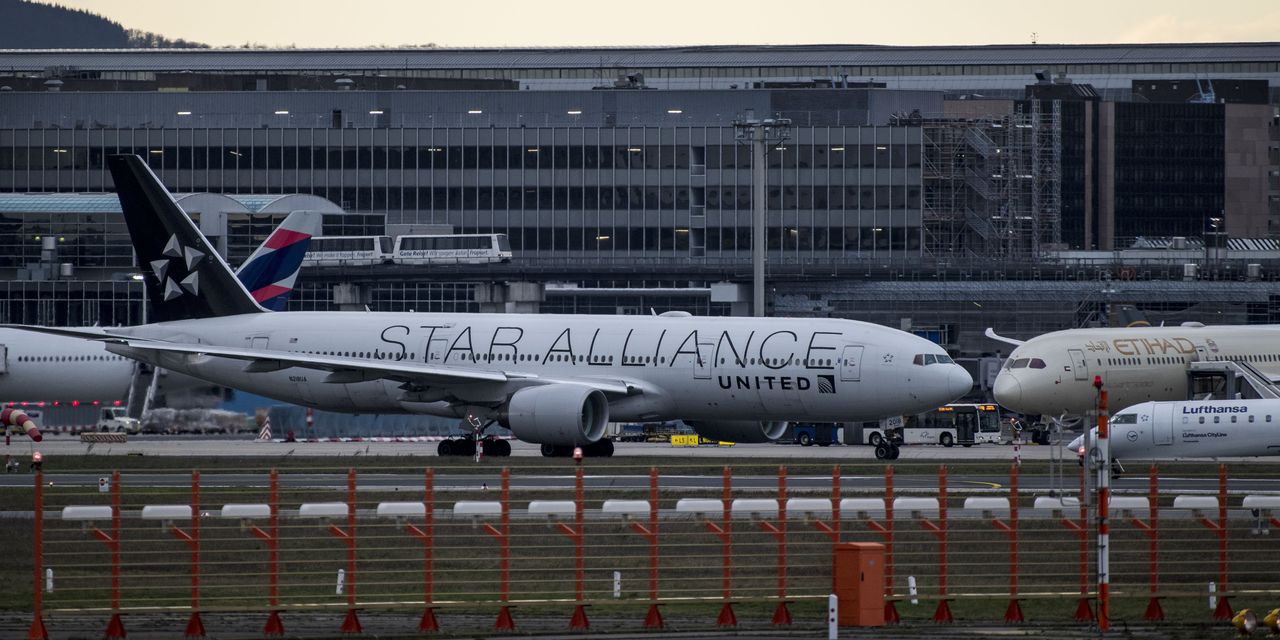
The U.S. 30-day ban on some travel from Europe could have a significant impact on the movement of trans-Atlantic cargo flown in the bellies of passenger planes, driving up shipping rates and crimping airfreight capacity, industry executives said.

President Trump suggested in his Wednesday night address that the restrictions would also apply to cargo, though the White House later said they applied only to people.

However, more than 60% of the airfreight that moves between Europe and the U.S. travels on passenger flights, well above the world-wide average, according to cargo data provider WorldACD. Those shipments include electronics and cross-border e-commerce, as well as pharmaceuticals and medical supplies. “Given the importance of belly capacity for air cargo in this market, clearly the measures announced yesterday will cause a severe drop in capacity offered,” WorldACD Managing Director Gerard de Wit said.

Airlines faced with a reduction of passenger volumes will likely cancel flights between Europe and the U.S., said Brandon Fried, executive director of the Airforwarders Association, an industry group.

That would squeeze capacity for “vital air cargo shipments that depend on passenger flights,” Mr. Fried said. “Everything from technology goods to health care-related shipments including organs, tissue samples, medical equipment, machine parts.”

Airlines are scrambling to respond to the ban, which restricts European travelers from 26 countries but doesn’t apply to the U.K. and Ireland. Last year, there were roughly 200,000 flights scheduled between the U.S. and those countries, equivalent to around 550 flights a day, according to the International Air Transport Association. The trade group issued a statement Thursday urging governments to prepare for the adverse economic impact of such measures.

The new U.S. requirements come as airlines already have canceled thousands of flights because of cratering demand and prior travel restrictions to the countries worst hit by the virus, including China and Italy.

Dozens of U.S., European and Asian airlines suspended service to mainland China in the wake of the coronavirus pandemic, slashing trans-Pacific capacity for high-value, expedited goods such as electronics. World-wide air cargo fell by 2.7% in the first two months of 2020 compared with the previous year, with volumes originating out of China and Northeast Asia, including Hong Kong, down 7.3% and 7.8%, respectively, according to WorldACD.

Some companies have been flying in auto parts and other important freight that would usually ship from Asia by ocean. Containership operators have canceled roughly 110 trans-Pacific sailings from early February to early April as the shutdown of Chinese factories amid the outbreak reduced the flow of oceangoing freight. Farm equipment-maker

Deere

& Co. is budgeting an extra $40 million in expedited freight costs for the current quarter to help ensure parts from Chinese suppliers can reach its facilities, the Moline, Ill.-based company said in an earnings call last month.

Now companies that arrange shipments by air are bracing themselves for potentially dramatic effects on trans-Atlantic routes.

“The trade between Europe and North America for airfreight is dominated by passenger aircraft, more so than any other trade lane,” said Brian Bourke, chief growth officer with Seko Logistics LLC, a U.S.-based global freight forwarder. He said the travel restrictions would have “an immediate and serious effect” on capacity, adding, “we do expect market rates to significantly increase in the immediate future.”

Europe is also a gateway to the Middle East and Africa, and global connections have already been severely limited because of the reduction in passenger aircraft, Mr. Bourke said. “This is going to create an enormous amount of friction at a time when global freight is needed more than ever.”

In a nationwide address from the Oval Office, President Trump announced a 30-day travel ban from Europe and said he would seek $50 billion in funding to increase low-cost loans to small businesses affected by the coronavirus outbreak. Photo: Associated Press

Write to Jennifer Smith at [email protected]

Copyright ©2019 Dow Jones & Company, Inc. All Rights Reserved. 87990cbe856818d5eddac44c7b1cdeb8

usscmc

usscmc

No Result
View All Result

Recent Posts

  • How Hapag Lloyd captured a major market share in the Container Shipping Industry in USA
  • Why USA’s East Coast is the Favorite Destination for Manufacturing Companies
  • How Trade Relations Between the USA and UK Improved After Keir Starmer Became Prime Minister
  • Tips and Tricks for Procurement Managers to Handle Their Supplier Woes
  • The Crazy Supply Chain of Walmart Spanning Across the Globe

Recent Comments

  • Top 5 Supply Chain Certifications that are in high demand | Top 5 Certifications on Top 5 Globally Recognized Supply Chain Certifications
  • 3 Best Procurement Certifications that are most valuable | Procurement Newz on Top 5 Globally Recognized Supply Chain Certifications

Archives

  • July 2024
  • June 2024
  • May 2024
  • April 2024
  • March 2024
  • February 2024
  • January 2024
  • December 2023
  • November 2023
  • October 2023
  • September 2023
  • August 2023
  • July 2023
  • June 2023
  • May 2023
  • April 2023
  • March 2023
  • February 2023
  • January 2023
  • December 2022
  • November 2022
  • October 2022
  • September 2022
  • August 2022
  • July 2022
  • June 2022
  • May 2022
  • April 2022
  • March 2022
  • February 2022
  • January 2022
  • December 2021
  • November 2021
  • October 2021
  • September 2021
  • August 2021
  • July 2021
  • June 2021
  • May 2021
  • April 2021
  • March 2021
  • February 2021
  • January 2021
  • December 2020
  • November 2020
  • October 2020
  • September 2020
  • August 2020
  • July 2020
  • June 2020
  • May 2020
  • April 2020
  • March 2020
  • February 2020
  • January 2020
  • December 2019
  • November 2019
  • September 2019

Categories

  • Global News
  • Supply Chain Updates

Meta

  • Log in
  • Entries feed
  • Comments feed
  • WordPress.org
  • Antispam
  • Contact Us
  • Disclaimer
  • Home
  • Privacy Policy
  • Terms of Use

© 2025 www.usscmc.com

This website uses cookies to improve your experience. We'll assume you're ok with this, but you can opt-out if you wish. Cookie settingsACCEPT
Privacy & Cookies Policy

Privacy Overview

This website uses cookies to improve your experience while you navigate through the website. Out of these cookies, the cookies that are categorized as necessary are stored on your browser as they are essential for the working of basic functionalities of the website. We also use third-party cookies that help us analyze and understand how you use this website. These cookies will be stored in your browser only with your consent. You also have the option to opt-out of these cookies. But opting out of some of these cookies may have an effect on your browsing experience.
Necessary
Always Enabled
Necessary cookies are absolutely essential for the website to function properly. This category only includes cookies that ensures basic functionalities and security features of the website. These cookies do not store any personal information.
Non-necessary
Any cookies that may not be particularly necessary for the website to function and is used specifically to collect user personal data via analytics, ads, other embedded contents are termed as non-necessary cookies. It is mandatory to procure user consent prior to running these cookies on your website.
SAVE & ACCEPT
No Result
View All Result
  • Home
  • Supply Chain Updates
  • Global News
  • Contact Us

© 2025 www.usscmc.com