

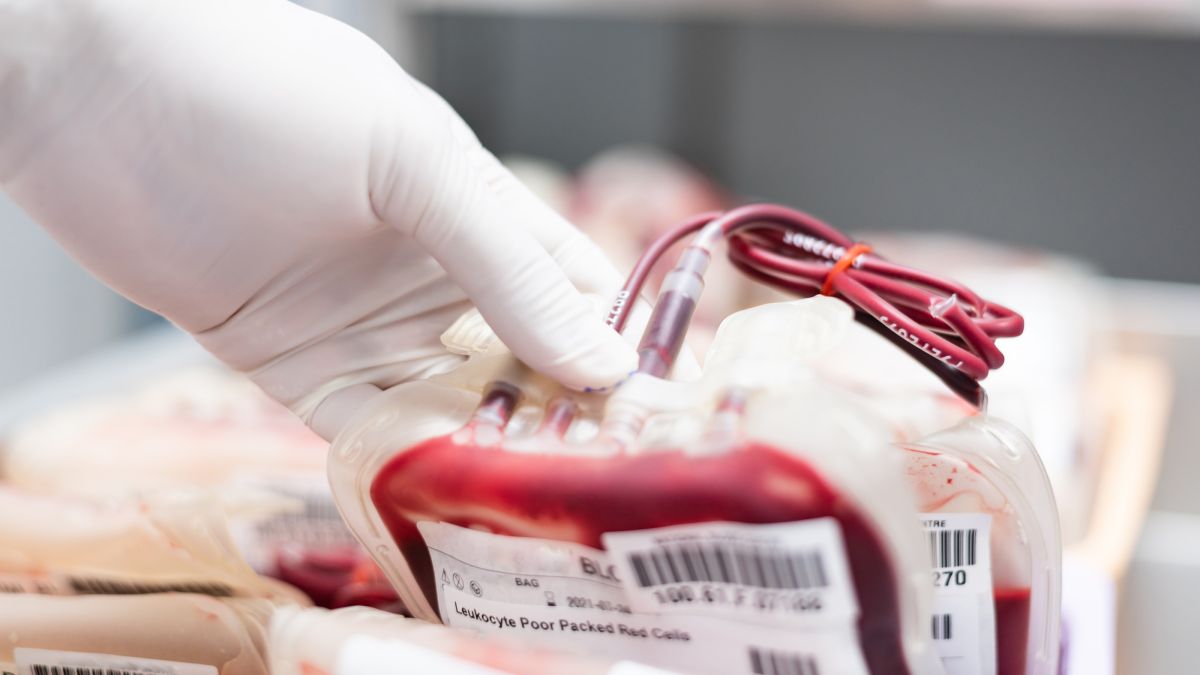

The coronavirus, which causes the disease COVID-19, has created enormous anxiety, uncertainty, and disruption to our lives. Much has already been written about potential shortages of medicines and face masks, but little has been said about something only you and I can provide — lifesaving blood.
Our nation’s blood supply is essential to our health care security. Blood transfusions are integral parts of major surgeries. Blood is used in the treatment of diseases, particularly sickle cell anemia and some cancers. Blood is needed for victims who have injuries caused by accidents or natural disasters. Every day, the U.S. needs 36,000 units of red blood cells, 7,000 units of platelets, and 10,000 units of plasma.
I am a professor and director of the Virtual Center for Supernetworks at the University of Massachusetts Amherst. Because of the escalating coronavirus health care crisis, I am deeply concerned the U.S. blood supply chain is under stress. The timing could hardly be worse; the COVID-19 outbreak coincides with our seasonal flus and colds.
Patients need blood in many states
Many states, including Washington, California, Kansas, Pennsylvania, the Carolinas, Massachusetts and Rhode Island, are now calling for blood donations. At the same time, some states are closing schools and other sites that typically host mobile blood drives; even prior to the coronavirus, some events had been canceled. In Massachusetts, the Red Cross announced last September it would no longer be hosting blood drives in the central and western parts of the state. Obviously, this makes it even harder for people to donate.
Even in the best of times, less than 10% of the U.S. population donates blood in a given year, although 38% are eligible. And these are not the best of times. Other than donations, there is no way to maintain a sufficient supply of blood. It cannot be manufactured, and no substitute for it has yet been invented. What’s more, it’s perishable. Red blood cells last 42 days, and platelets only five. Regular replenishment of the supply is imperative. On top of that, the blood banking industry was already facing major challenges before COVID-19; the U.S. supply chain is now undergoing major economic transformations. This includes increased competition among blood service organizations.
Our blood supply chain is stunningly complex. It requires altruistic donations, collection, testing, processing and distribution to hospitals and medical centers. All along the way, the coronavirus can disrupt any of these essential steps. If donors are ill, they cannot donate; if the staff is ill, they cannot collect, test and process. If our health care workers are compromised, they cannot transfuse.
Our recent study on the blood supply chain offers some possible solutions. We developed a multi-tiered, competitive supply chain network model for the industry, focused on the United States. The model addressed the very relevant scenario of a major disease outbreak accompanied by significant donor drops and decreased capacity due to limited testing, processing and storage. Our computer-based tool reveals that blood service organizations may gain by cooperating rather than competing. Another study of ours also supports this conclusion.
To avoid shortages, the American Red Cross is encouraging healthy, eligible individuals to schedule a blood or platelet donation at Redcrossblood.org. Donating blood is safe, and there is no evidence that COVID-19 can be transmitted by blood transfusion. This was also the case for other major coronaviruses, SARS and MERS-CoV.
That said, blood service organizations may implement donation deferrals for those who have traveled to certain countries or been in contact with someone with the coronavirus. These extra efforts ensure the environment is safe for donors.
In China, where the coronavirus originated, blood donations have dried up. Its medical professionals, already under major stress, are trying to take up the slack themselves by donating their own blood. Let’s make certain that doesn’t happen in the United States. Instead, as blood service organizations recognize the need to cooperate, let’s make an appointment to donate. Do that, and we can battle this outbreak together.
[Like what you’ve read? Want more? Sign up for The Conversation’s daily newsletter.]
This article was originally published at The Conversation. The publication contributed the article to Live Science’s Expert Voices: Op-Ed & Insights.
Recent Comments