


Slugs usually cause the reaction “Yuck!”
They are slimy (that’s for their protection), and many destroy the same garden plants that we do, without even thanking us for providing them with dinner. However, it’s good to learn a bit about them and realize that not all slugs are the bad guys.
As with most animals in their native habitats, native slugs are not considered pests. They help decompose rotting material, they spread around spores and seeds, and some eat small pests.
As usual, it is the non-native critters that cause the most damage.
If your plants show damage from being nibbled or eaten, look carefully. Other chewers also like our plants. But if there are slime trails on the plants and a line of “squiggly” feces, it probably is from slugs. Try to find the slug to identify.
In our area, the most common and easily recognizable native slug is the banana slug. This large slug (up to 9 inches) is found along most of the West Coast in various colors. It is named for the bright yellow colors and the shape. In the Northwest, however, our banana slug is olive-green with dark blotches.
They are good recyclers, eating debris from the forest floor. Remains are returned to the forest floor as fertilizer for plants. Like all slugs, they are most active at night and spend days in shaded areas because they dehydrate easily. Occasionally they will leave the forest and feed in your garden, especially if the garden adjoins the forest, as ours does.
Banana slugs are considered benign, or beneficial. When I find them in our yard, I always carefully move them back to the woods.
Another interesting specimen is the leopard slug. It is large with a keel along its back, gray with dark markings. It moves fast for a slug and, as a carnivore, will eat almost anything it can catch, including other slugs. That is good, except that its favorite meal is a banana slug.
The most common one I find is a large, reddish-brown slug, with a bright orange skirt around the foot. I believe it is Arion ater, or A. rufus, a non-native chocolate or reddish-brown slug. It can stretch to about 6 inches and has a bulky body. These devastate gardens! They destroyed my lettuce this year.
To control slug damage, try to make your garden area less hospitable to them. Master Gardeners use Integrated Pest Management, which is based on using the most humane eradication methods and least toxic materials first. Start by selecting plants that are not slug favorites. You can find the names of these from many sources. Slugs, like deer, will eat almost any plant if desperate, but there are many they will avoid if they can.
In late summer and early fall, rake up the first few inches of soil. This exposes eggs that have been laid. The eggs dry out quickly and will be easily visible to predators.
Try bordering your garden beds with a material slugs do not like. Copper tape or rows of pennies around the edges may be helpful. Cheaper borders include rough materials such as lava rock or sandpaper strips.
If these deterrents are not enough, move up to the next level: Kill them, but humanely. Try collecting slugs by using damp cardboard, rolled-up damp newspaper or carpet scraps. Check these for slugs each morning and remove any native slugs, such as banana slugs. Relocate those to a wooded area and dispose of the others.
A win-win strategy is to increase homes for natural predators like birds, toads and a few insects that eat slugs. If you do this, you should eliminate chemical pesticide use.
You can drown slugs using soapy water, or you can cut them in half. My husband has a dedicated “slug knife” and is always happy to help. Ammonia or salt kills them, but slowly and painfully. Another way is a beer-filled plastic lidded container, with a hole in the side. Slugs are attracted to it, fall in and drown. However, this also kills harmless critters.
The final step, if all else has failed, is to use chemical pesticides. Do this only if you are sure the plant damage is from slugs, and please choose a bait that is not harmful to birds, children or pets. Read the label!
Ann Morris, an emeritus Master Gardener, lives in Grays Harbor City.
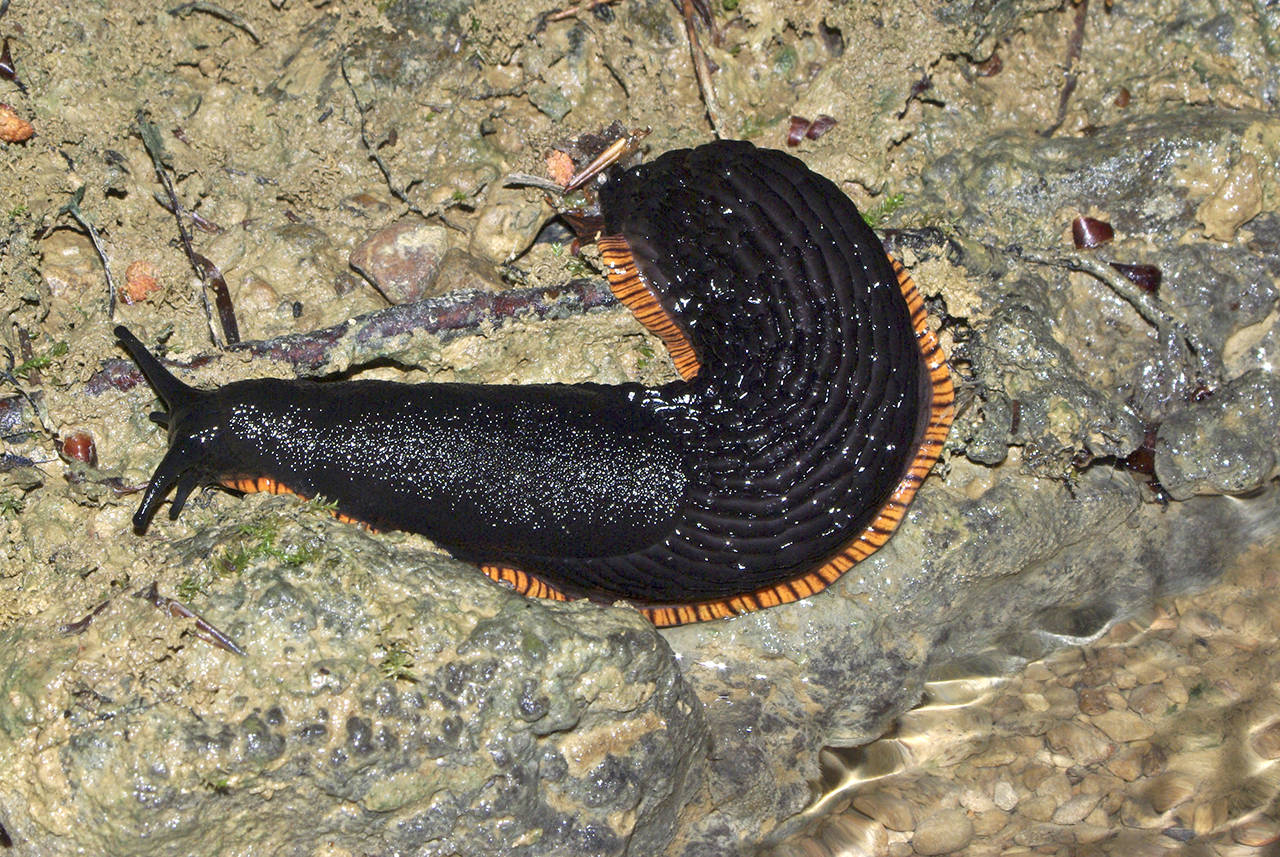
Arion ater, a common non-native slug, can devastate gardens.
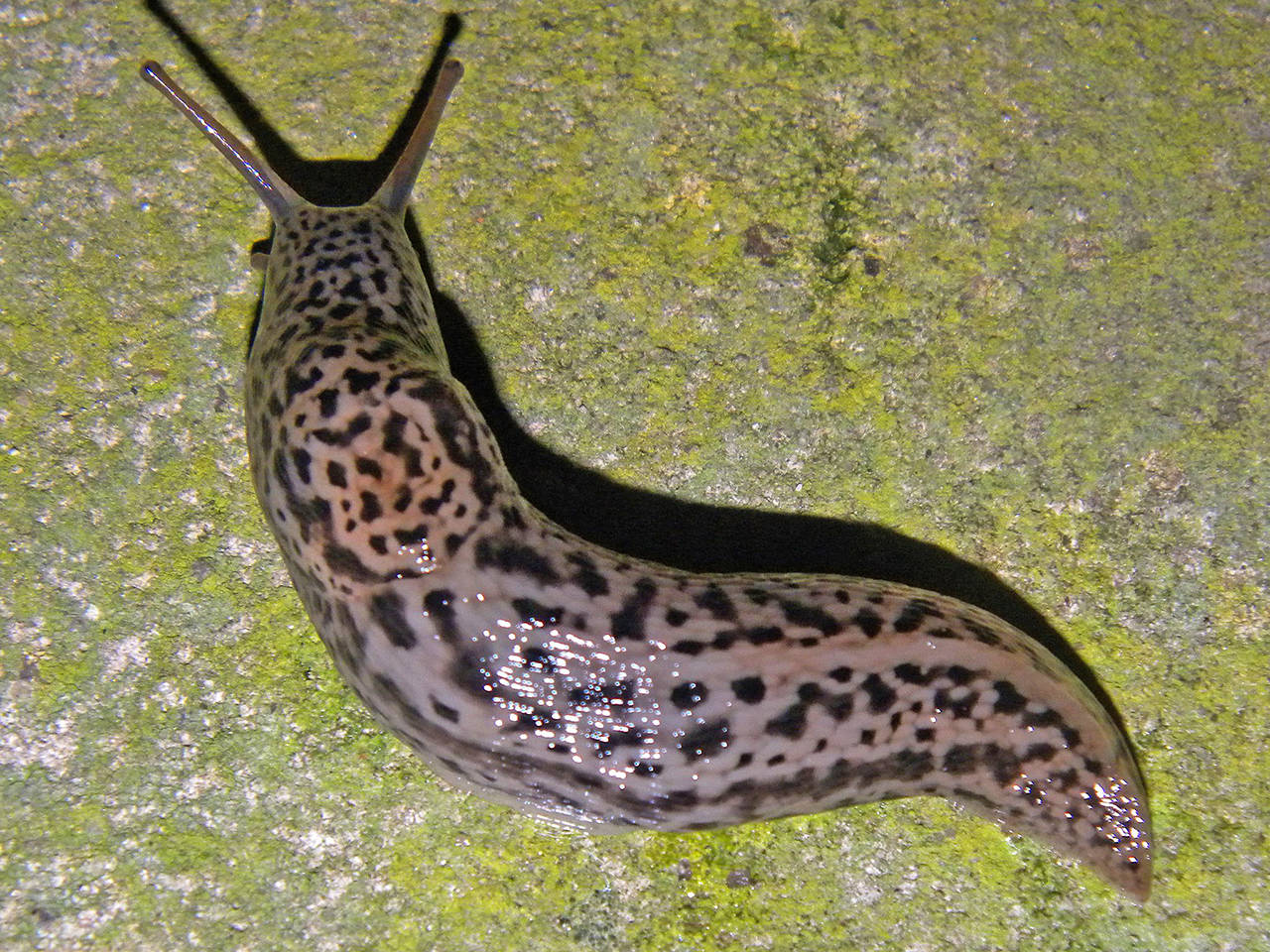
The leopard slug moves fast and will eat almost anything it can catch, including other slugs.
Recent Comments