

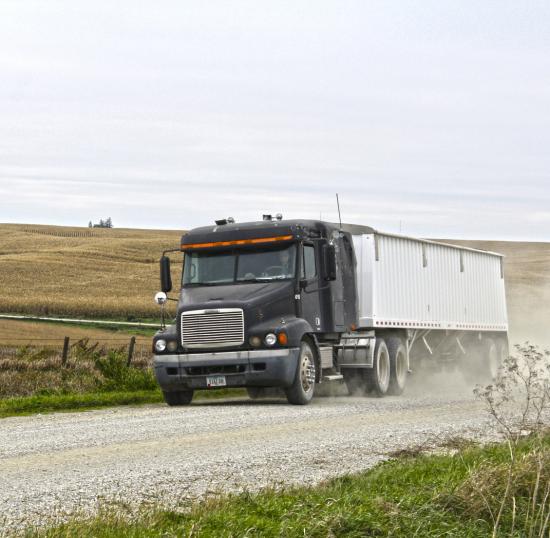

Agricultural economists at the University of Illinois, repeated that phrase, Friday, during a webinar outlining the COVID-19 virus and its impacts on agriculture.
It just so happens to be the same message coming from USDA Secretary Sonny Perdue.
“Food supply chain is sound, it’s stable & there’s plenty of food available. To the folks working in grocery stores & driving trucks full of products: Y’all are the heroes in the food supply chain,” Secretary Perdue tweeted on Friday.
Ag Sectors Impacted
Nick Paulson, University of Illinois director of graduate programs, says the run on groceries from the consumers is putting pressure on grocery supplies at the stores.
“Delivery of food is changing because consumers are coming into stores more often, making the effort to keep shelves stock difficult,” Paulson says. Between staff having to sanitize shelves, special hours for the at-risk population, this end of the food chain is changing.”
Hoarding is self-fulfilling, prompting experts to ask consumers to resist being a part of the problem.
“There is no need for more than a few weeks worth of groceries and other household items,” Paulson says. Be good humans.”
Meanwhile, Gary Schnitkey, farmdoc’s soybean industry chair in agricultural strategy, says that keeping the supply chain operational during the COVID-19 virus pandemic is key.
“Where will be short-term changes in product demands and how it’s delivered,” Schnitkey says.
With restaurants and Universities closing, that food will be shifting and being transported to other areas of the economy.
“The transportation companies are working overtime to handle this big shift,” Schnitkey says.
Overtime, we’ll see a shift in ethanol demand and ethanol exports, Schnitkey says. “With lower fuel use, ethanol consumption and exports will change, overtime, as well.”
Meat, dairy, egg and produce supply chains are the most important.
“Our biological units; hogs, cattle and dairy have to be fed. We have to keep feed and veterinary supplies moving to those animals. The USDA is responding to the fact that as draconian measures are taken (to combat the spread of COVID-19), the importance of keeping transportation systems running is well known.”
Ag officials are watching processing plants and remain concerned when employees report infection of the COVID-19 virus.
“Given that we are trying to slow the spread of the virus, instead of stopping it, it seems likely that we will see packing plant employees contracting the virus,” Schnitkey says.
Schnitkey added, “We are likely to see some spiky, erratic prices at some supply points.”
Crop Sector
It appears that seed, fertilizer and chemicals are in place, for the U.S. 2020 planting season, the farmdoc experts say.
“However, we need to maintain a solid transportation system and a virus-free workforce. Washing hands, social distancing, and restricting travel, is very important,” Schnitkey says.
Because there are time-sensitive activities, during planting season, be careful of working with COVID-19 infected staff, Schnitkey says.
It’s too early to see acreage shifts, as a result of the pandemic’s impacts on grain prices.
Regional Illinois corn prices are down 50¢, while soybeans are off 60$, since the outbreak of the COVID-19 virus.
“Profitability in Illinois may favor soybean planting, but it’s still too early what the market will look like, for this year,” Schnitkey says.
Grain Markets Hold Up
Scott Irwin, U of I farmdoc economist, says since the first of the year, the agricultural markets, energy and equities have felt the impact of the pandemic and an oil war between Russia and Saudi Arabia.
“Since the beginning of the year, the U.S. crude oil market is down 65%. After reaching an all-time record high in January, the S & P 500 stock market is off 30%. On the ag side, Live cattle futures prices have dropped by 30%, and corn is down 15%,” Irwin stated on the webinar.
So, where do we go from here?
“Although we may never reach a technical economic recession, which is two consecutive quarters of negative gross domestic product (GDP) growth. It’s conceivable that we can experience a contraction of economic activity in the second quarter of 2020, equal to the Great Depression era. It would be a flash recession with recovery at the end of the second quarter,” Irwin says.
Todd Hubbs, farmdoc economist, says that concerns with the crop outlook, during the COVID-19 virus, involve how the EU and South America supply chains hold up.
“If we see a breakdown in those parts of the world, our summer crop market could benefit,” Hubbs says.
Hubbs added, “It looks like China, Japan and some other Asian countries are starting to come out of this pandemic. So, there could be some buying (of U.S. ag commodities) there.”
Meanwhile, the question that everyone is asking is whether China will meet its trade obligations with the U.S., as a result of the pandemic.
“Based on the start of the year purchases from China, it doesn’t look like it. They are way behind, due to their own COVID-19 outbreak. But, I do think they will be significant buyers of U.S. ag products as we move through 2020.”
Selling Old Crop Corn
Regarding marketing crops, a lot of farmers are holding basis contracts.
“Some of these contracts have been rolled forward,” Hubbs says. That may turnout to be a good move. We have seen basis weaken dramatically since the start of the COVID-19 virus. A lot of that weakness is due to ethanol plants cutting bids, following a drastic drop in gas consumption. Gasoline demand may drop 20% or worse.”
In the short-run, if this pandemic situation lasts two months and ethanol plants experience a 15% retraction in gasoline demand, it may result in a drop of 120-150 million bushels of corn, Hubbs says.
“It may take awhile for the ethanol industry to gear back up, if there is more idling at plants. So, this situation may get worse. And, the basis market will reflect that,” Hubbs says.
For corn exports, the U.S. still needs to expand its base market.
“If Brazil has a supply chain breakdown, this would help the U.S. exports,” Hubbs says.
He added, “If we can keep the supply chain in place, there are still a lot of livestock out there to feed. The first indication of how much corn is being used will show up in the USDA’s March 31 Grain Stocks Report. But, if livestock production scales back appreciably in the summer, we could see more impacts on the corn market.
USDA’s Long Arm
Jonathan Coppess, farmdoc ag policy director, says that it’s important to point out that during times such as a pandemic, the USDA and Defense Production Act, gives the government the ability to coordinate food resource priorities.
“For instance, the Farm Service Agency (FSA) is a purchasing agent for the USDA. If there are localized shortages or food supply challenges, we do know that FSA can purchase, deliver and prioritize supplies to c certain regions,” Coppess says.
This includes everything from food to farm equipment and farm supplies, Coppess says. If shortages occur during this spring’s planting season, the FSA can jump in and help solve those problems, under this Defense Production Act.
Recent Comments