

By Our Representative
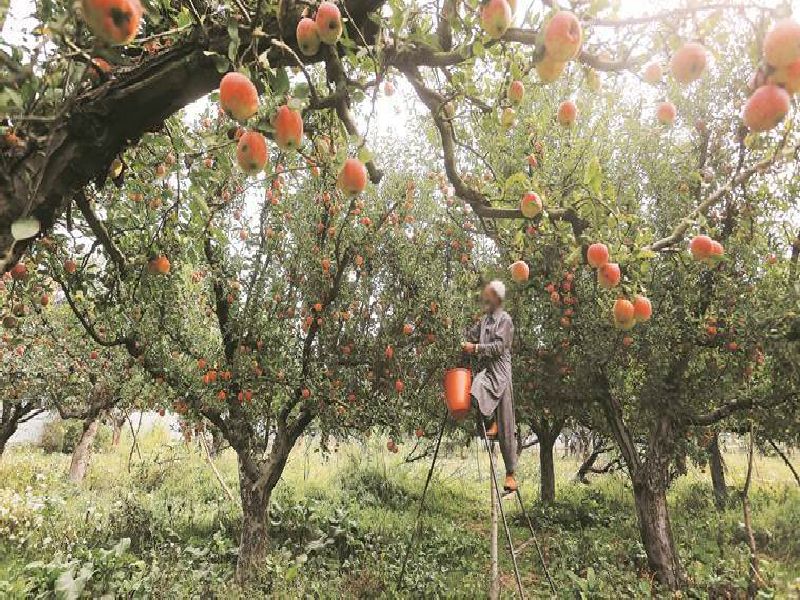
Publicised as a measure to ensure better economic development in the newly formed union territory of Jammu and Kashmir (J&K) and corruption-free procurement, there appears to be little clarity at the highest level on the apples bought J&K growers under the Market Intervention Scheme (MIS) that the Central and State/UT level governments claimed to have implemented through the National Agricultural Cooperative Marketing Federation of India Ltd (NAFED).
A senior Right to Information (RTI) activist Venkatesh Nayak of the Commonwealth Human Rights Initiative said, soon after the legislative changes downgrading J&K from a full-fledged State to a Union Territory (UT) came into effect, i.e. on November 1, 2019, he filed an RTI plea with the Department of Agriculture (DAC) seeking the information about the implementation of the apple MIS in J&K.
While the procurement target was fixed at 13,000 metric tonnes, the delayed reply received by Nayak from DAC on February 28, 2020 said, a total of 1,56,120.470 quintals (7,642 metric tonnes or MT) of apples were bought under the MIS during the 2019-20 season at a cost of Rs 69.55 crore.
It further said, a total of 1,054,169 boxes containing three grades of apples — Delicious, American and Maharaji – were despatched during this season up to January 30, 2020 from five districts, namely, Anantnag, Srinagar, Sopore, Shopian and Kulgam.
Interestingly, in response to a question raised in the Lok Sabha on February 4, 2020, 24 days before the RTI reply was sent, the Government of India replied that it had purchased 15,769.38MT of apples at a cost of Rs 70.45 crore under the scheme!
Pointing towards the “huge discrepancy” in the figures tabled in Parliament and the reply given under RTI, Nayak said, interestingly, on November 12, 2019, the Government of India provided a figure of 7,940MT of apples were purchased under the MIS, though in February 2020, this came down to 7,642MT under RTI!
Yet another figure of the apple procurement data was given the Supreme Court of India in the Anuradha Bhasin case last year, under which it was claimed by the J&K government that NAFED had procured 8,960MT of apples during the season at a cost of Rs 38 crore under MIS.
“So, the Government of J&K claimed that NAFED had procured more apples than what Parliament was told in November 2019 and at just about 45% less cost than what I was informed in reply to my RTI application”, Nayak said in an email alert to Counterview.
Govt told Parliament it procured 15,769MT apples, but RTI reply says it was 7,642 MT, lower than last year’s claim, 7,940MT
“The huge discrepancy in figures, including the cost of procurement, raises several questions about the credibility of claims being made before Parliament, the highest court of the land and under the RTI Act”, Nayak said, adding, “Two of my own contacts in J&K have revealed that many farmers had to watch their apple crop rot away because there were simply no vehicles to pick them up from orchards, thanks to the restrictions on vehicular movement imposed August 2019 onwards.”
“So”, said Nayak, “If the actual figure is in the range of 7,000-8,000 metric tonnes, the actual procurement has fallen way too short of the target of 13,000 metric tonnes set in September 2019, lending credibility to the claims of people in J&K that a large portion of their apple crop might have just rotted away this season.”
“If on the other hand, the figure of 15,769.38MT reported in the Lok Sabha this February is correct, DAC has provided a much lower and misleading figure under the RTI Act”, Nayak said, adding, in the process, what appears to have actually happened is, “the authorities have not only failed the growers in J&K but also the millions of under-nourished and hungry citizens, particularly mothers and children who could have been fed these fruits through the ICDS and mid-day-meal schemes at nominal procurement, transportation and handling cost.”
Recent Comments