
Tech News, Magazine & Review WordPress Theme 2017
  • Home
  • Supply Chain Updates
  • Global News
  • Contact Us
  • Home
  • Supply Chain Updates
  • Global News
  • Contact Us
No Result
View All Result
No Result
View All Result
Home Supply Chain Updates

Coronavirus: Shippers struggle to move freight in global knock-on

usscmc by usscmc
March 24, 2020
Coronavirus: Shippers struggle to move freight in global knock-on
Share on FacebookShare on Twitter

Freight forwarders say finding containers and space on planes and ships is getting harder and costlier, as the coronavirus disrupts global networks.

One agent said a client air-freighting in a consignment of health products had to pay four times the normal rate, as capacity shrank with airlines cutting flights. 

Another is struggling to get building materials on a ship from the United States, as shipping companies shuffle routes and sailings to adjust to changing trade volumes.

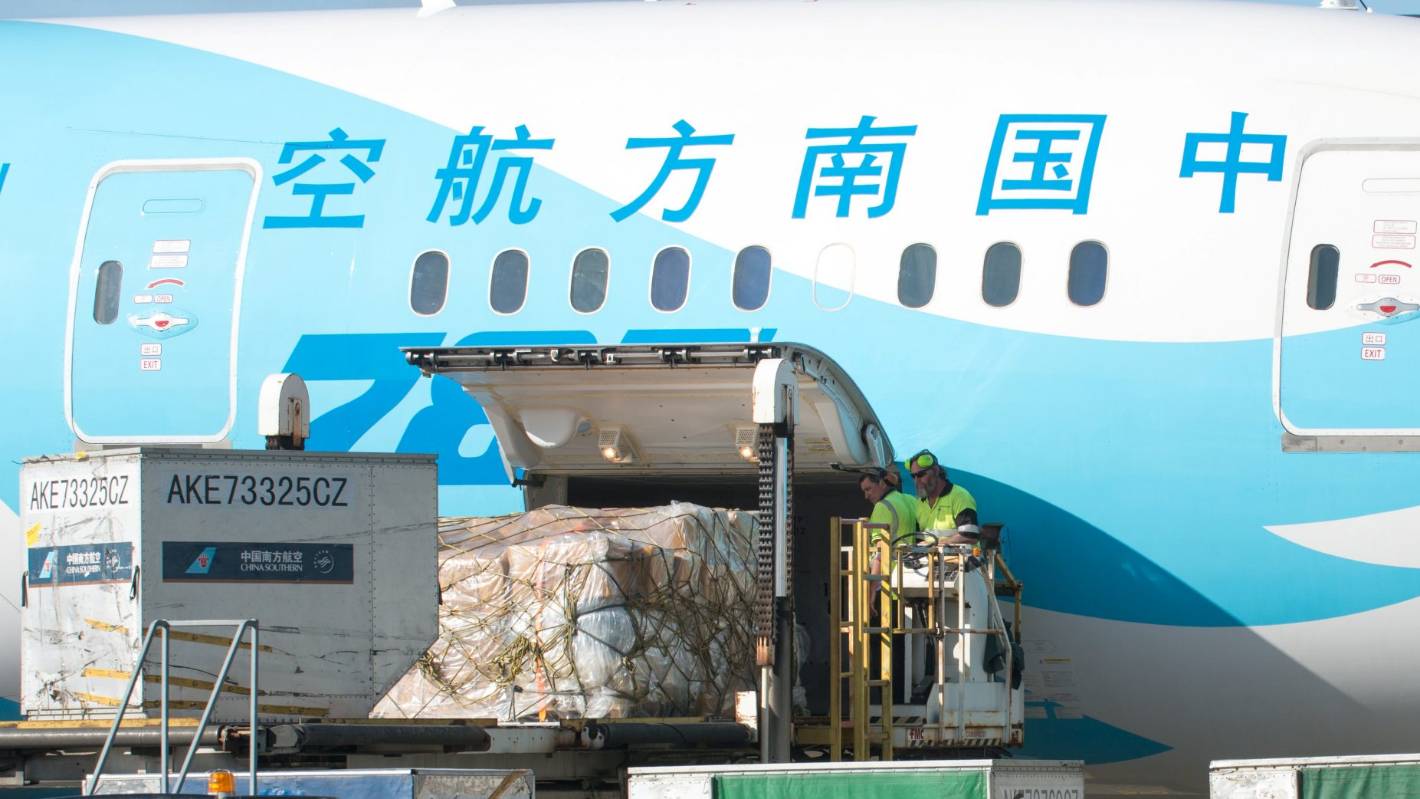
Passenger flights like this Southern China one, have a big role in carrying airfreight.

SUPPLIED

Passenger flights like this Southern China one, have a big role in carrying airfreight.

While major exporters like the Kiwifruit industry and dairy co-operative Fonterra have large locked-in shipping arrangements, other are having to wait for space as perishable exports take priority.

READ MORE:
* Coronavirus: Full coverage*
* ​Internet shopping and seafood industry recovery may be hampered by air cargo disruption
* Coronavirus: Log shipment to leave Timaru for China in April
* ​Coronavirus: Delivery delays from Chinese are hurting Kiwi businesses

Bob McIntyre whose Auckland firm Lloyds Shipping, specialises in “project cargo” such as machinery and building materials, said empty 20-foot containers were hard to get.

One client needs building material from the United States, for installation in April or May.

Ports of Auckland has experienced a 15 per cent fall in container volumes

DAVID WHITE/STUFF

Ports of Auckland has experienced a 15 per cent fall in container volumes

“The factory said it can make it, but we’ve tried through three different ports in the United States and each has a shipping problem,” he said.

McIntyre said at this end, shipping lines are skipping some scheduled port calls if loadings don’t warrant a stop, meaning some goods having to wait, or perhaps be dropped of elsewhere.

Trevor Duxfield, a 30 year veteran in the freight industry, said air freight space was one problem.

The container terminal at Lyttelton's port

CHRIS HUTCHING/STUFF

The container terminal at Lyttelton’s port

In sea freight, because the global flow of containers was out-of-kilter, shipping lines were charging a $US100 – 200 container “imbalance” fee in many cases.

Duxfield said the flow had been disrupted firstly as exports dried up out of China and it became hard there to get empty containers taken to clients.

McIntyre said the problem was now most acute in the United States, where coronavirus took hold as China was beginning to return to production.

The industry umbrella body, the Customs Brokers and Freight Forwarders Federation of New Zealand (CBAFF), said air freight could get more difficult.

“Capacity out of New Zealand is already reduced and that situation will become acute when Air NZ cuts to international and Tasman capacity come into force at the end of the month,” said CBAFF chief executive Rosemarie Dawson, in a statement. 

“Currently only Singapore Airlines and Qantas operate dedicated air freight services into New Zealand,” she said.

“The Government could offer incentives to encourage them to increase services in the short term, such as waiving landing fees. However, we would (still) be competing against huge international demand.”

McIntyre said the picture could change as freight reflected an economic climate three to four months earlier.

He said the current problems were “unprecedented” in his 25 years in the industry – normally you placed an order for a container and shipment, and that was that.

Now he said freight that might previously have been flown, is looking for space on ships.

“The reality for the duration of this crisis, is that many importers and exporters will need to factor in extra time to enable their products, where feasible, to be transported by sea,” said CBAFF’s Dawson.

usscmc

usscmc

No Result
View All Result

Recent Posts

  • How Hapag Lloyd captured a major market share in the Container Shipping Industry in USA
  • Why USA’s East Coast is the Favorite Destination for Manufacturing Companies
  • How Trade Relations Between the USA and UK Improved After Keir Starmer Became Prime Minister
  • Tips and Tricks for Procurement Managers to Handle Their Supplier Woes
  • The Crazy Supply Chain of Walmart Spanning Across the Globe

Recent Comments

  • Top 5 Supply Chain Certifications that are in high demand | Top 5 Certifications on Top 5 Globally Recognized Supply Chain Certifications
  • 3 Best Procurement Certifications that are most valuable | Procurement Newz on Top 5 Globally Recognized Supply Chain Certifications

Archives

  • July 2024
  • June 2024
  • May 2024
  • April 2024
  • March 2024
  • February 2024
  • January 2024
  • December 2023
  • November 2023
  • October 2023
  • September 2023
  • August 2023
  • July 2023
  • June 2023
  • May 2023
  • April 2023
  • March 2023
  • February 2023
  • January 2023
  • December 2022
  • November 2022
  • October 2022
  • September 2022
  • August 2022
  • July 2022
  • June 2022
  • May 2022
  • April 2022
  • March 2022
  • February 2022
  • January 2022
  • December 2021
  • November 2021
  • October 2021
  • September 2021
  • August 2021
  • July 2021
  • June 2021
  • May 2021
  • April 2021
  • March 2021
  • February 2021
  • January 2021
  • December 2020
  • November 2020
  • October 2020
  • September 2020
  • August 2020
  • July 2020
  • June 2020
  • May 2020
  • April 2020
  • March 2020
  • February 2020
  • January 2020
  • December 2019
  • November 2019
  • September 2019

Categories

  • Global News
  • Supply Chain Updates

Meta

  • Log in
  • Entries feed
  • Comments feed
  • WordPress.org
  • Antispam
  • Contact Us
  • Disclaimer
  • Home
  • Privacy Policy
  • Terms of Use

© 2025 www.usscmc.com

This website uses cookies to improve your experience. We'll assume you're ok with this, but you can opt-out if you wish. Cookie settingsACCEPT
Privacy & Cookies Policy

Privacy Overview

This website uses cookies to improve your experience while you navigate through the website. Out of these cookies, the cookies that are categorized as necessary are stored on your browser as they are essential for the working of basic functionalities of the website. We also use third-party cookies that help us analyze and understand how you use this website. These cookies will be stored in your browser only with your consent. You also have the option to opt-out of these cookies. But opting out of some of these cookies may have an effect on your browsing experience.
Necessary
Always Enabled
Necessary cookies are absolutely essential for the website to function properly. This category only includes cookies that ensures basic functionalities and security features of the website. These cookies do not store any personal information.
Non-necessary
Any cookies that may not be particularly necessary for the website to function and is used specifically to collect user personal data via analytics, ads, other embedded contents are termed as non-necessary cookies. It is mandatory to procure user consent prior to running these cookies on your website.
SAVE & ACCEPT
No Result
View All Result
  • Home
  • Supply Chain Updates
  • Global News
  • Contact Us

© 2025 www.usscmc.com