


Intensive care units are in race against time: “If forecasts come to pass the level of care will be much less than we normally provide”
While the number of severe cases of COVID-19 keeps climbing, hospital intensive care personnel are in a race against time, in an attempt to prepare as much as possible for extreme-case scenarios, which until recently seemed imaginary. Even as more moderate-case scenarios begin to unfold, these units will have to take in complicated patients in serious condition, many of them with background illnesses, and many may require respiratory support. The numbers will be much higher than the quantity of units capable of handling these cases under normal conditions or during localized emergency situations.
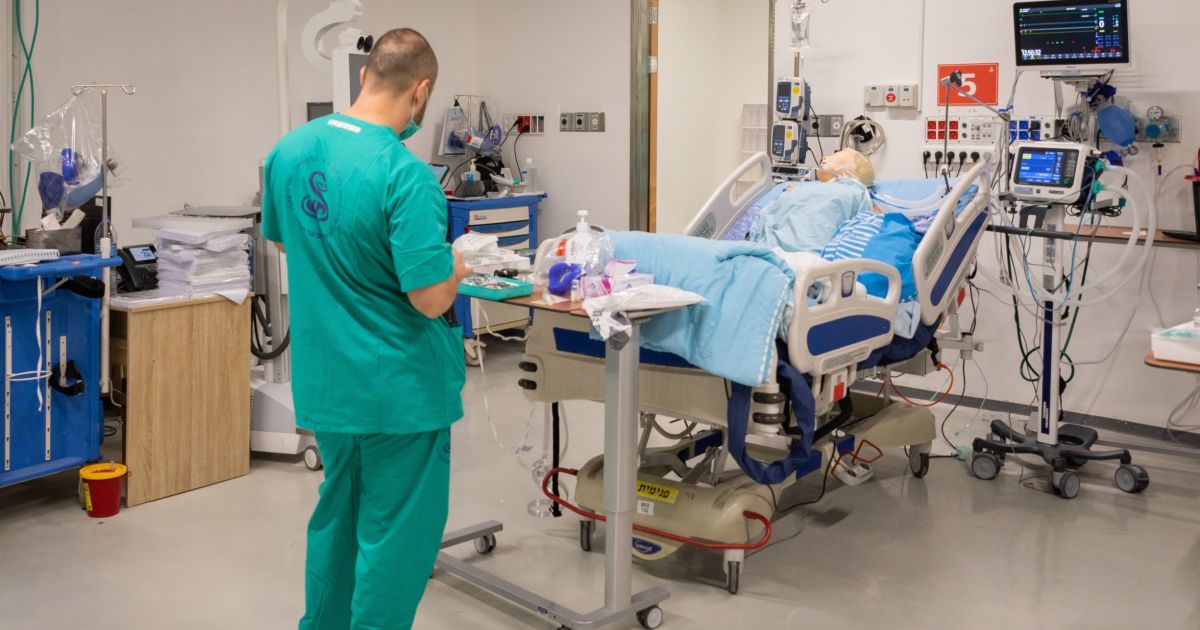
Public and media attention are focused on the number of respirators, which does constitute the most critical and significant bottleneck, but the infrastructure for handling such patients in large numbers requires additional skilled personnel, additional medical monitoring equipment, more beds, and other components.
“If these forecasts come true, the level of care will be less than half the level of care we know how to provide for individuals in critical care units, due to expected shortages in resources such as equipment, with less attention provided to each patient, partly due to the skill levels of some of the staff when we’re at that point. You have to take into account the shortage in personnel, with some staff in isolation at home or in hospital, or in a state of exhaustion,” says Dr Lion Poles who is responsible for emergency services and a member of the team combating epidemics at Kaplan Hospital.
He adds that operating an intensive care unit under these conditions requires several components, including respirators and monitoring systems, as well as pumps for delivering medications and pumps for withdrawing patients’ excretions, in order to avoid infecting their surroundings. Also needed are specialized beds for preventing pressure sores, as well as other attendant equipment.
Respirators are the most vital components. Israeli hospitals have several thousand of them. In a press briefing, the Ministry of Health’s deputy director-general, Prof. Itamar Grotto, said that there were 3,300 such machines. There are a few hundred additional ones in emergency warehouses and an unknown number (apparently not high) in IDF facilities. The ministry announced at the outset of the crisis that it had ordered an additional 1,000 respirators, but these have not arrived in hospitals as yet.
According to Dr Yaron Bar-Lavie, the director of the critical care division at the Rambam Medical Center and chairman of the Israeli Society for Critical Care Medicine, there are 400 respirators in emergency storage, with the purchase of 1,000 additional ones underway. Their acquisition is urgent, he says.
TV Channel 13 has reported that at the end of a discussion at the Health Ministry earlier this week about the supply of respirators and monitors, it turned out that so far, hospitals have received 192 respirators and 95 monitors, and that the intention is to leave 50 respirators in warehouses so that they can be used later, as needed. The urgent need for more respirators is difficult to meet, since many countries are competing for these items. The health system is hoping that the 1,000 purchased machines will arrive soon.
“Regrettably, there is no proven effective treatment for these patients. The few drugs under investigation are unproven, and some of them are dangerous. Most of the treatment will focus on trying to keep the patient on a respirator for one to three weeks, in the hope that complications don’t set in and that the lungs recover on their own so that the patient can be taken off the respirator,” Poles says. According to Bar-Lavie, the average time corona patients need to be on a respirator is greater than that needed by patients with other illnesses. “Usually, it’s eight to 10 days, but here we’re talking about 2 weeks,” he says.
The intensive care unit usually treats patients with respiratory insufficiency who require being respirated. Often this is associated with a background of other illnesses, which will probably be true for COVID-19 patients as well.
“Most patients coming here will probably be older, with attendant illnesses, who will also show deterioration and require more complex treatment. A complicating factor will be that some of the staff will lack the required skills, in addition to the shortage of other necessary equipment, such as dialysis machines,” says Poles.
This will lead to a situation in which a large number of complicated patients will require multi-systemic treatment which is likely to be unavailable. “In extreme circumstances we may not have enough respirators for new patients and we’ll have to make difficult decisions and provide inferior treatment, making sure patients don’t suffer,” he says.
In extreme cases, Poles describes a situation in which nurses or family members may have to continuously operate a manually-operated bellows as an alternative to a respirator. “Such cases have been described elsewhere, under different circumstances, but our situation may be horrifically more extreme,” he says.
Accordingly, Poles feels that a tight closure is essential for the next 14 to 28 days so that infection rates remain low, in order to reduce the peak number of patients arriving in hospitals. “The higher the number of people requiring respirators, the higher the number of patients we won’t be able to help,” he says.
Recent Comments