


Australian warehouse workers strike over COVID-19 safety demands
By
Patrick O’Connor
31 March 2020
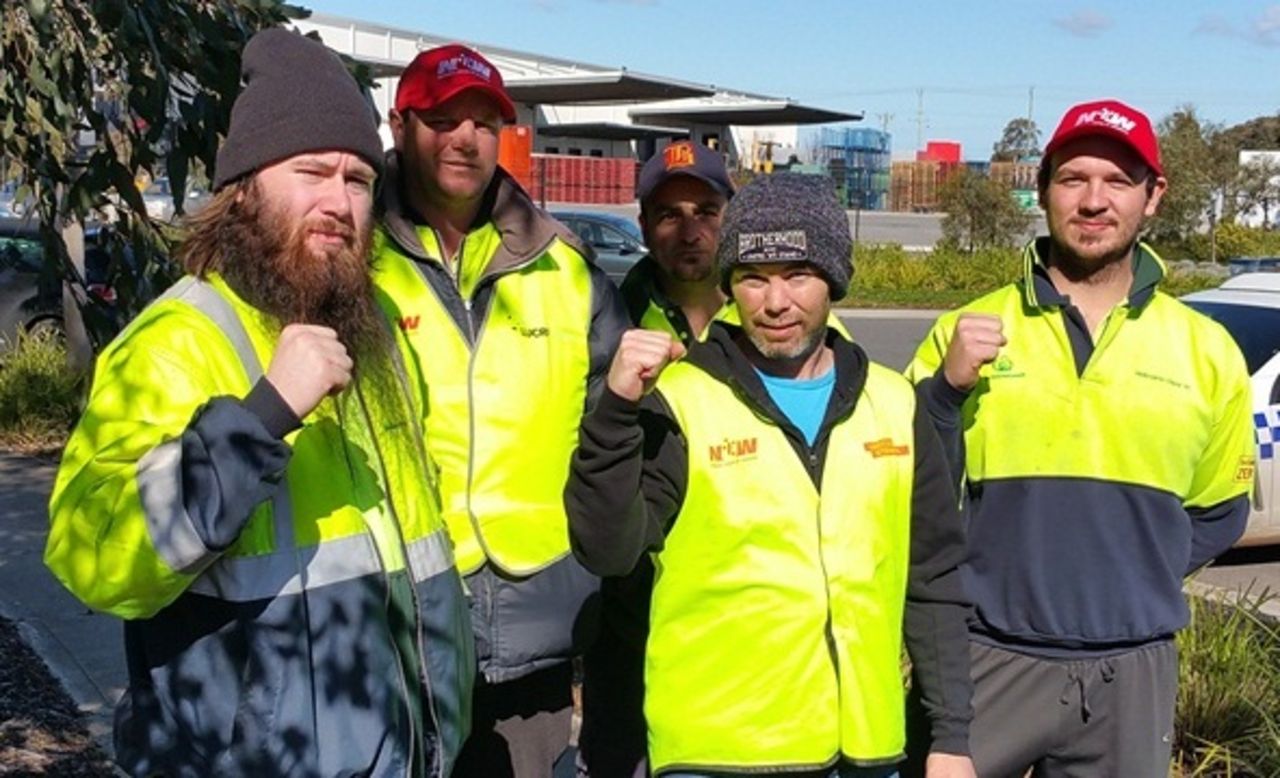
About 80 warehouse workers supplying Coles Supermarkets went on strike last Friday, demanding proper safety measures in the face of the COVID-19 pandemic.
The industrial action occurred at the Coles distribution centre in Laverton, a working class suburb in the west of Melbourne. Video distributed on social media showed dozens of workers in high-visibility uniforms gathering in the carpark before daybreak on Friday morning, discussing the situation and resolving to strike until their demands were met.
Their central demand was for proper social distancing inside the warehouse. Government advice is for the maintenance of a 1.5 metre distance between people, but this has been disregarded inside the Coles warehouse, where hundreds of workers are employed. Workers were reportedly given two alcohol wipes each day, one going into the warehouse and another at the end of shifts. Machinery and headsets inside the plant are not properly cleaned.
The strike lasted several hours, only ending after management promised to improve social distancing and sanitising.
One worker at the plant told the World Socialist Web Site after the strike that he had not been involved because he was on a different shift. “I am a casual so if I don’t work I don’t get paid,” he explained. “I work nights, 12-hour shifts, 5 p.m. to 5 a.m. The company keeps us separated in the lunchroom [social distancing] but not on the job. We have to wash our hands in the toilets. There are no masks or handwash. We swap forklifts after an hour but they aren’t cleaned between drivers.”
Most workers in the plant are covered by the United Workers Union (UWU, formerly National Union of Workers), but the casual worker who spoke with the WSWS explained: “I’m not a member of the union. I used to be but then they didn’t help me. You pay membership fees but they don’t help you.”
The UWU shares responsibility for working conditions in the giant warehouses operated by the Coles and Woolworths corporate grocery giants, which were unsafe before the coronavirus crisis. Numerous enterprise bargaining agreements negotiated by the union across the industry have done nothing to mitigate the dangers involved in the heavy lifting, repetitive physical movements, and constant management demands for speed ups and greater output.
The trade unions are working hand in hand with the federal Liberal-National government to keep workers functioning as usual, including in the building industry, schools, retail sector, and other non-essential industries.
Prime Minister Scott Morrison has insisted that everyone with a job is an “essential worker” and should continue as normal. His priority is not public safety, but ensuring the ongoing generation of corporate profit, regardless of workers’ safety.
Coles’ failure to enact basic safety precautions for its warehouse workers reflects the wider contempt of the ruling elite for the wellbeing of the working class.
The grocery corporations are raking in record profits with people stockpiling food and other necessities in preparation for wider lockdown measures. Coles last year took in $38 billion in revenue. Only a pittance has been allocated to ensuring the safety of the company’s 110,000 workers.
Two Coles workers yesterday tested positive for COVID-19. They worked at a Coles supermarket in the south-eastern Melbourne suburb of Mulgrave. A company spokesperson said the store had undergone “extensive cleaning” and would remain open, on the advice of health officials. Workers who had been in contact with the two confirmed virus carriers have been told to self-isolate for two weeks.
Other retail workers across the country remain at risk of exposure to coronavirus. Inconsistent official advice, and differing federal and state government measures, has led to widespread confusion. Some industries and small businesses have closed their doors in an attempt to minimise the spread of the virus. Numerous other non-essential shops and workplaces remain open, including those in which social distancing is impossible, needlessly endangering workers.
Yesterday McDonald’s reported that one of its workers in the western Sydney suburb of Gregory Hills had reported positive for COVID-19. Only 20 of the restaurant’s 100 staff were informed of this, and the store has been kept open. One worker told ABC News: “I left the shift shaking, I was so scared. There’s a lot of workers who are really, really angry at [McDonald’s] for not telling us.”
Workers around the world are taking wildcat industrial action to protect themselves against the COVID-19 threat. This includes auto workers, grocery store and warehouse workers in the US, metal workers in Spain and Italy, postal workers in Britain, bus drivers in France, and food processing workers in Ireland. In each instance, workers have taken the initiative outside of the trade unions.
Workers in Australia need to likewise organise committees of action in every workplace and community, insisting on the most stringent safety measures in essential industries and the closure of all non-essential industries where the prevention of transmission of COVID-19 cannot be guaranteed. This must be connected to the fight for socialist policies, expropriating the vast wealth hoarded by the ultra-wealthy and allocating this to a planned pandemic response that makes public safety and not corporate profit the priority.
Recent Comments