


The novel coronavirus or Covid-19 is what epidemiologists term as “Disease X”, an unknown disease that emerges suddenly and races ruinously across the world. The impact of Covid-19 across the world has been as unprecedented as it has been devastating. Equally unprecedented has been the response of the nations of the world, with bans on travel, closure of borders, closure of businesses, and in several cases, complete lockdowns. The attempts at “flattening the curve” seems increasingly likely to lead to an international recession.
Considering the impact an exponential spread of Covid-19 can have on a country with high population density and relatively limited healthcare infrastructure as India, the Government of India found itself compelled to order a complete nationwide lockdown for 21 days starting March 25. The impact of this on an already beleaguered Indian economy, struggling with slowing growth and shrinking consumption, is a matter of acute concern.
Impact on supply chains
Even before the imposition of the lockdowns and the spread of Covid-19 across the world, the severe disruptions in China were having a ripple effect on global trade flows. Most companies across the globe had been working to make their supply chains leaner. The emphasis had been on minimisation of costs and “just in time” deliveries. This has led to reduction of inventory buffers and left no room for adequate buffers or safeguards. The vulnerabilities of this system has been brutally exposed by Covid-19.
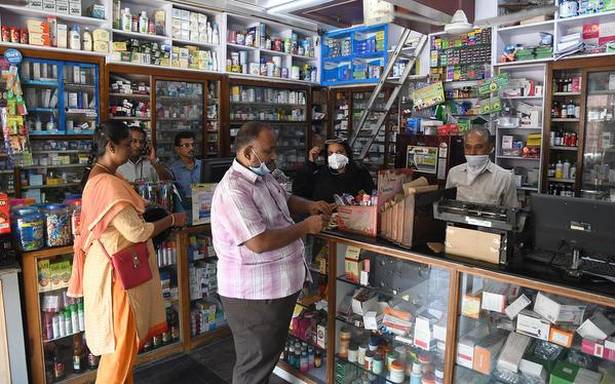
In India, certain industries have become more and more dependant on Chinese imports. These industries are under significant risk. This includes pharmaceuticals (China supplies almost 70 per cent of active pharmaceutical ingredients (API) requirement for the industry); automobiles (10-30 per cent of the raw materials and base components are imported from China); chemicals and textiles. The renewable energy sector relies on China for 80 per cent of the sector’s requirement of solar panels. Finally, and potentially most problematically, several micro, small and medium enterprises (MSMEs) are dependant on Chinese imports.
In early March, the Directorate General of Foreign Trade (DGFT) imposed restrictions on the export of 13 APIs and 13 formulations made from these APIs. Steps were taken to expedite customs clearances of Chinese imports. The Apparel Export Promotion Council (AEPC) has identified alternative sources of input suppliers to help diversify sourcing of raw materials and products.
Combating supply side concerns
The present outbreak provides valuable lessons for companies in general and Indian companies in particular. Lean supply chain strategies, while increasing short term profits, contribute to supply chain vulnerability. Covid-19 has taught corporate decision-makers that in formulating future supply chain designs, apart from cost, quality and delivery they would also need to stress-test the chains on new performance measures including resilience, responsiveness and reconfigurability.
Companies would also seek to diversify supply chains from a geographic perspective to reduce supply-side risk from one country. Multiple sources of key commodities or strategic components would be identified and protocols will be in place to activate alternative sources of supply in short notice.
It is likely that corporate strategy would also look to build a robust inventory as buffer against supply chain disruptions. The only silver lining for the present crisis has been that because of the anticipated Chinese New Year holidays, companies had stocked up inventory. In the absence of this, the situation would likely to have been worse.
Many companies would want to move at least a part of their supply chains locally. This would lead to increased investment in India’s local industries and act as a shot in the arm for an economy in crisis.
For example, with respect to pharmaceuticals, the Government of India’s has decided to promote domestic manufacturing of critical Key Starting Materials (KSMs)/Intermediates and Active Pharmaceutical Ingredients (APIs) in the country. The approved scheme will promote Bulk Drug Parks with financial investment of ₹3,000 crore in the next five years.
This is an urgent wake-up call for Indian industry to realise the need to develop its own local sourcing units and adopt alternative strategies for reducing the dependency on China.
The writer is Partner, Shardul Amarchand Mangaldas & Co. With inputs from Aishwarya Singh
Recent Comments