

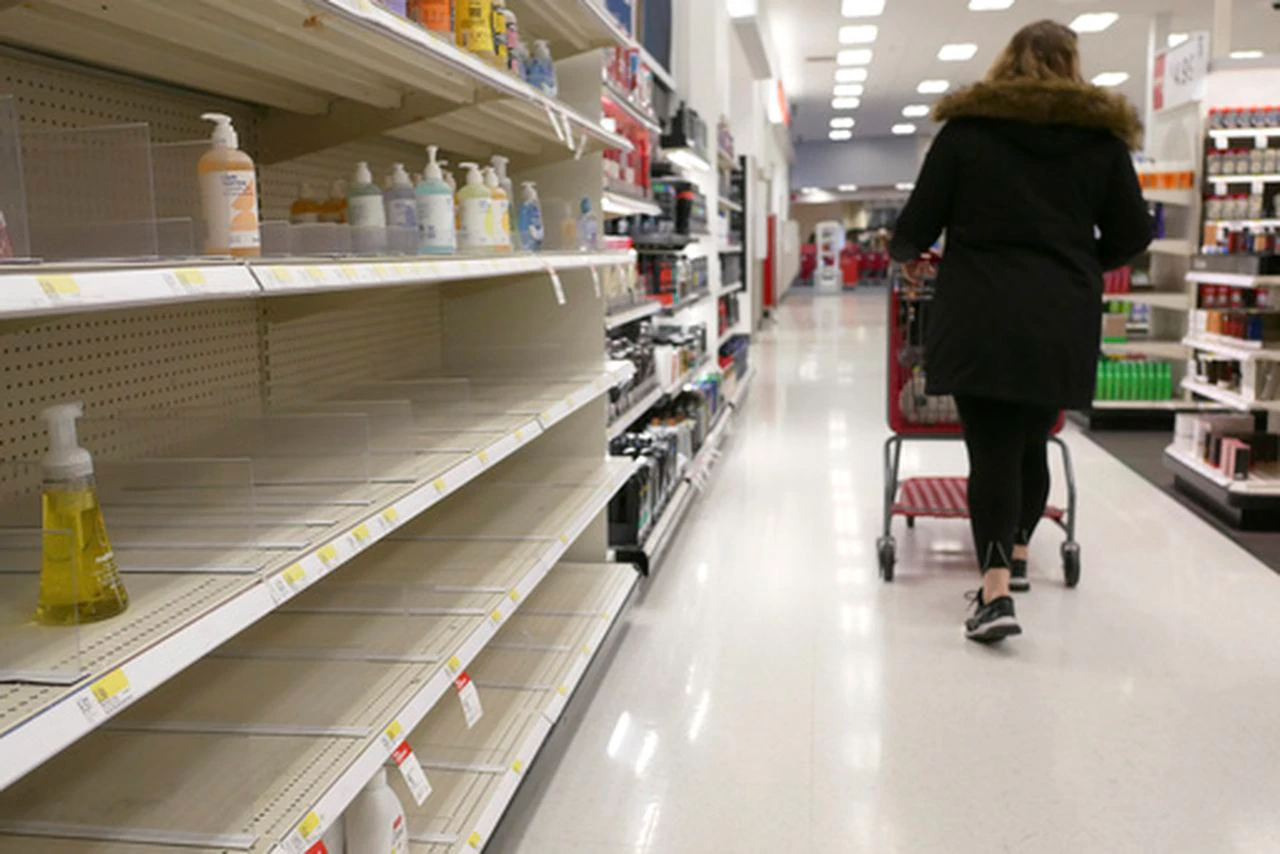

Barren shelves. Calls for a new wave of grocery store workers. Impossible quests to procure toilet paper.
They have all made headlines as New Jersey and other states enacted stay-at-home orders last month to combat the coronavirus pandemic. But they are not evidence of major disruptions to the food supply chain, experts say.
While the intricate web that connects food from farmers and manufacturers around the world to dinner tables in the Garden State will certainly feel the impact of the outbreak, it likely will not leave the average household struggling to find food.
“Immediately, it’s not a serious problem,” said Subodha Kumar, a professor of marketing and supply chain management at Temple University’s Fox School of Business. “People will not be starving, or be out of food. We will have supply, but certain types of product will be impacted or delayed.”
Many shoppers have posted photos of long lines and empty shelves that have incited mild panic.
Grocery stores like ShopRite have put out calls for thousands of employees. And there are many other workers — from farmers to meat packers, truck drivers to port workers handling imports — who must continue working to keep the supply chain running.
Last month, a port in Houston closed briefly after a worker tested positive for COVID-19. Pennsylvania initially closed rest stops, but reopened them after an outcry from truckers and shippers.
And the U.S. dairy supply chain has suffered disruptions due to a lack of truck drivers, the need to shift from wholesale markets to retail grocers with restaurants and schools closed and difficulties selling to major exporters.
Some farmers have been forced to dump milk, unable to get it to market. The dairy business has faced the logistical issues before other food supply sectors because its products are highly perishable.
As similar issues arise over the next few weeks, there could be small disruptions brought on by the pandemic’s global reach.
The U.S. imports about 15% of its food from other nations, according to the U.S. Food and Drug Administration. But products like produce, chicken, beef and dairy, produced in large quantities domestically, should remain widely available after the trade war between the U.S. and China led to large stockpiles of the products.
Domestically, infections could slow production at farms. The food industry relies on some 200,000 guest workers who come to the U.S. on H-2A temporary visas, which were put on hold when American consulates in Mexico closed. A limited staff is continuing to process them, but the delay could limit farm production in California, where farmers grow one-third of American produce.
It’s other imports, Kumar said, like cheese imported from Italy, that could disappear nearly entirely from U.S. shelves.
The largest disruptions could hit the food supply chain hardest in May, forecasters say. Already in March, food prices dropped globally due to demand-side contractions brought on by the pandemic, which also led to a decline in oil prices amid expectations of the economic slowdown, according to an analysis from the Food and Agriculture Organization of the United Nations.
Michael Rofman, leader of the New Jersey Transportation and Logistics Group at the accounting and consulting firm Mazars USA, said the volatility of the supply chain has been exposed by high shopper demand during the pandemic. Truckers can complete routes much faster because the roads are clear, but when they arrive with deliveries, stores are often overwhelmed, he said.
“They’re more efficient, but what’s happening, when they’re coming to the locations, they’re not ready for them,” he said. “They can’t unload the trailers fast enough.”
Those slowdowns could impact availability of products, and potentially lead to higher costs for consumers.
Truck drivers do not face the same risks of catching the coronavirus as grocery store workers, as they are largely isolated in their cabins. But they’re also harder to replace should they fall ill.
Rofman said he has not heard of any major outbreaks of coronavirus spreading through the New Jersey trucking community.
The grocery industry as a whole will likely benefit from its diversity, from the types of foods like diary to produce to meat, as well as the competing brands that provide it.
“A resilient supply chain is one that you have choices in it,” said Penina OrensteinIt, a professor in the Department of Computing and Decision Science at Seton Hall University. “It will not fail when one of the links goes down.”
So, if one farm or factory must close due to an outbreak, others unassociated with it can continue to supply food to grocers. As people recover or finish 14 days of quarantine, they can come back into the supply chain.
“We would hope that there is enough manpower, that people will always show up for work, and if they can’t work, they’ll hire new staff to replace the old staff,” she said. “I would think that that’s the type of situation that we’re going to see. That people are going to retool themselves.”
Amanda Hoover can be reached at [email protected]. Follow her on Twitter @amandahoovernj. Find NJ.com on Facebook.
Get the latest updates right in your inbox. Subscribe to NJ.com’s newsletters.
Recent Comments