

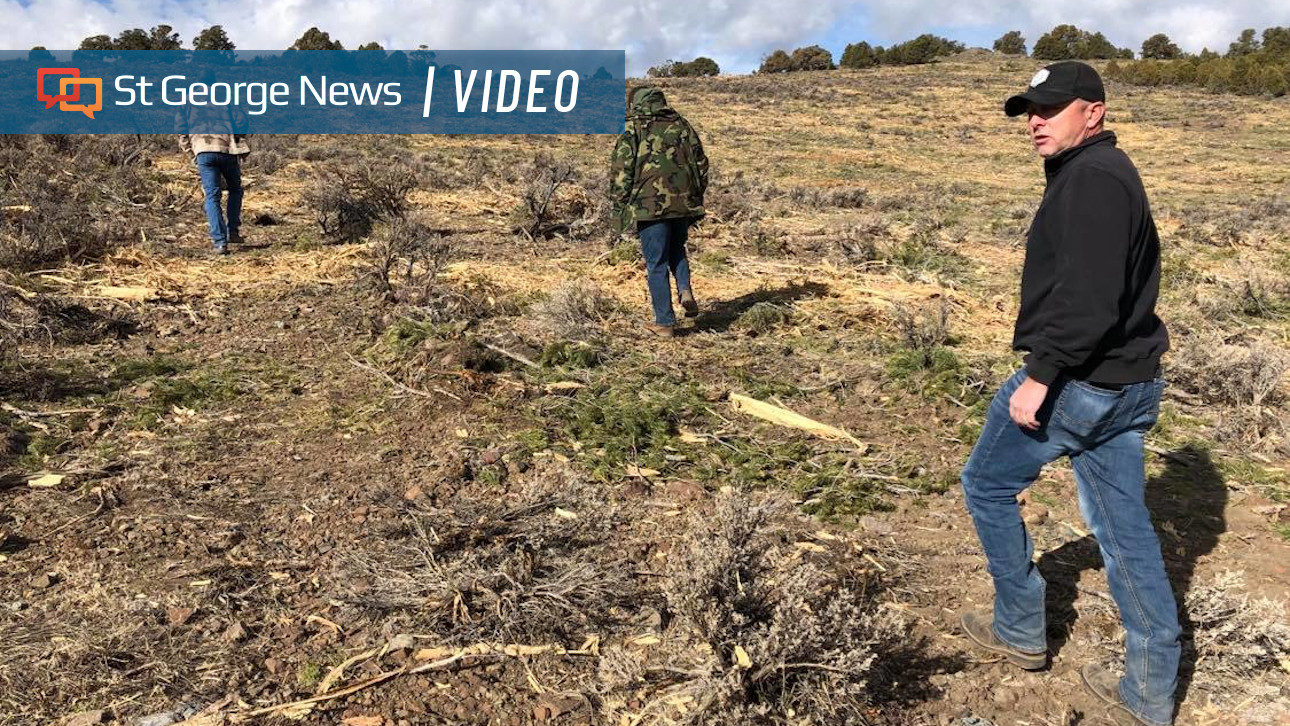

ST. GEORGE — On a chilly December morning, Paul Briggs, the acting district manager for the Bureau of Land Management’s Color Country District, points out fuel breaks in the pinyon juniper forests on the hillsides flanking the eastside of Interstate 15 between Beaver and Cedar City.
“Would you ever think that wasn’t natural?” he asks.
The land he points to features an ebb and flow of sagebrush grasslands and pinyon juniper forest, where the bureau has been involved in restoration projects in the past. Nothing about the landscape appears different than the surrounding lands, at least not to an untrained eye.
Briggs has been working for the BLM for some 32 years and he, along with fuels program manager Shawn Peterson and public affairs officer Christian Venhuizen invited St. George News out to observe some current and past restoration projects in Southern Utah.
While these projects are facilitated in conjunction with various partnerships, the focus of this trip had to do with fire: restoration of land after a fire and treatments in areas where there has been a lack of fire (in which efforts are made to both mimic effects of fire and suppress it.).

Addressing the seeming contradictory nature of these efforts, Briggs said the need for human intervention is due to the historical suppression of fire and overgrazing, which has caused sagebrush grasslands to slowly become dominated by pinyon juniper and thrown the balance of the ecosystem out of whack.
“Fires get bigger. Fire seasons get longer,” he said, adding that the vast spread of cheat grass, a nonnative species, has only further exacerbated an already out-of-balance system. “The reason they call it ‘cheat grass’ is because it’s an extremely successful competitor.”
Peterson told St. George News that before the excessive fire suppression efforts, fire would burn every 30 years or less at a lower intensity, which would allow for the forbs and grasses to return quicker.
But with the historical suppression of the last 150 years or so, when land managers essentially called a “war on wildland fire,” he said it caused a build up of fuels, such as cheat grass, where now when a fire burns, it doesn’t burn at a natural interval.
“They burn really, really hot, so you get a lot of soil sterilization,” he said.
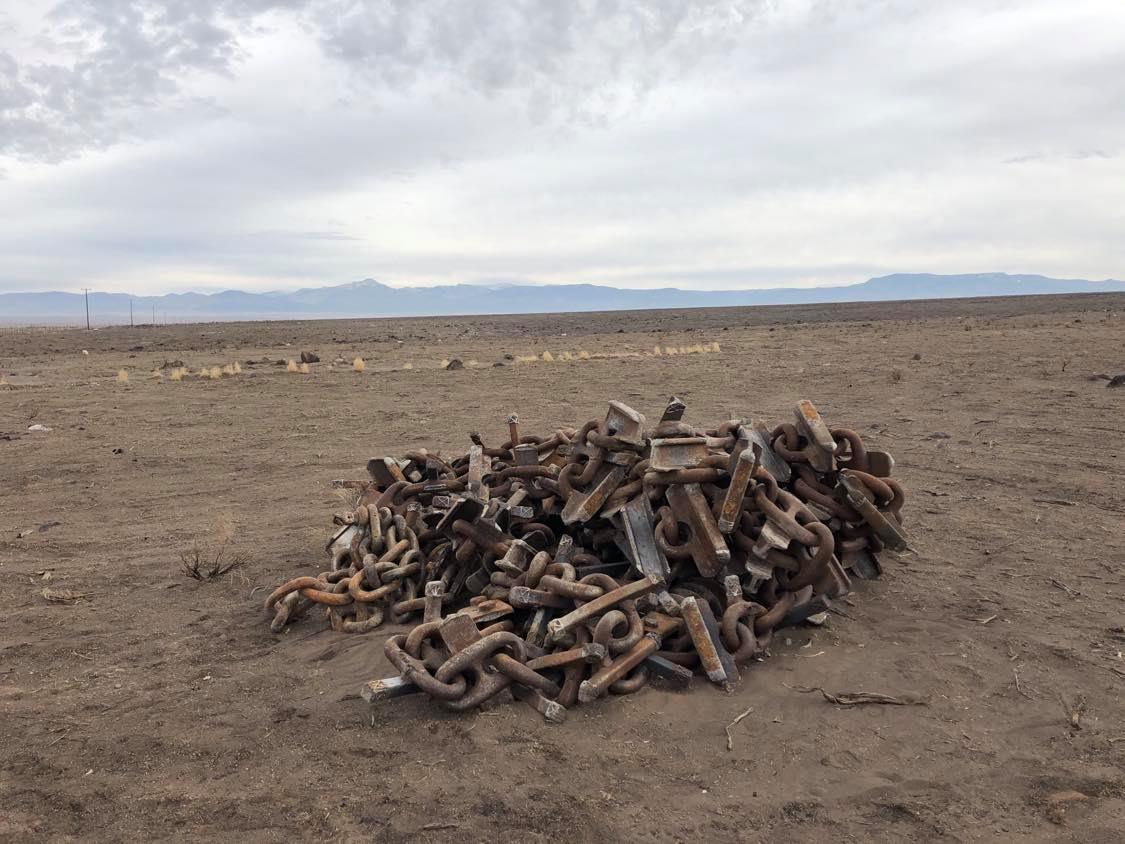
At the site of the Greenville Fire, a lightning-caused fire that ignited in Beaver County just south of Minersville Reservoir in late August, a large chain lies coiled on the burned ground.
Peterson said the chain is approximately 180-feet long, with 60 to 80-pound links, that is pulled between two bulldozers. A swivel causes the chain to turn and dig down about 8 to 10 inches. This process is used after aerial seeding to help bury the seeds.
The window of time to lay the seed and turn it into the soil is narrow. If the ground freezes, tilling the soil becomes nearly impossible, he said, even with the chain.
After planting the seeds, the area is rested from grazing for about two growing seasons. Once the land is restored, and with the allowance of the natural fire regime to occur, Peterson said the fire is not going to be nearly as “devastating.”
A shift in management
Briggs said the shift in managing fire came in the early 2000s when a National Fire Plan was developed. This caused a complete change in direction, he said, as up until then, funding was largely devoted to fire suppression.
“We kept putting more resources into fire suppression, more money into fire suppression, and we weren’t catching any more fires.”

After this shift, the land management community began to reassess their methods and develop a more proactive approach, he said, which led to “more aggressively” funding fuel management and fuels reduction rather than just trying to eliminate fires.
This is because fire is essential to the health of a sagebrush steppe ecosystem to regenerate life, Briggs said. Before the excessive fire suppression, after a fire the first thing to grow would be grasses and small green forbs, succulent plants, and then shrubs would return, he said. But without the natural fire cycle, the pinyon and juniper have come in and choked out other life.
“They’re so successful at competing for nutrients and water that they crowd out everything else,” Briggs said.
At a site just north of Cedar City, Briggs knelt down and grabbed onto a head of Indian Ricegrass, a native species, and gave it a hearty tug to illustrate the incredible strength of the root systems. The roots are necessary to maintain the topsoil and avoid soil erosion.

In areas where the pinyon juniper grow thick, the soil around their trunks is bare, which creates little resistance when the rain comes, he said.
In addition, without intervention and tree mastication, Briggs said the land becomes in danger of turning into a monoculture.
The idea is not to eliminate fire, he said, but to reduce catastrophic fire that causes severe resource damage or threatens to burn into communities as the risk-management of just letting fires burn is a little too high.
“What we’re essentially trying to do here is mimic the effects of fire before we got to the fuel loading and the catastrophic fire events that we see today,” he said.
Opposing views
Kya Marienfeld, a wildlands attorney for the Southern Utah Wilderness Alliance, said in an email written to St. George News that this type of human intervention isn’t always needed and can disrupt the benefits of natural recovery.

“Oftentimes the response from the BLM, Forest Service, or state land manager following a wildfire is to think that in every single instance you need to go do something extremely heavy-handed or else the area won’t recover,” she wrote.
These “heavy-handed” measures, she said, include chaining, mastication and seeding with an aggressive mix of non-native seed.
“This isn’t always needed,” she said. “The condition of the area prior to a burn is really the key — if the fire occurred in an area that was, ecologically, in good shape before it burned, these communities are fire-adapted and can benefit from being left to recover naturally.”
As an example, she said on the Colorado Plateau, in an area dominated by healthy, native plants prior to a fire, the best thing to do can be nothing: leaving the remaining biological soil crust intact, the natural seed bank that remains, and the nutrient-rich burned material.
“However, even in areas that weren’t ‘in bad shape’ before a fire, we see land managers going out, scraping the soil crust and natural seed bank away, and seeding with these aggressive, non-native forage grasses.”
Marienfeld said that these large-scale treatment actions post-fire can be the cause of worse fires in the future, when the natural resistance to invasive species is lessened by surface-disturbance and removal of remaining native vegetation, like pinyon and juniper trees, and then something like cheat grass moves in.
The desire to ‘get out and do something’ is understandably strong, but there is absolutely a need to take a closer look at the condition of the area pre and post-fire before deciding that each burned landscape needs immediate, heavy-handed action in every instance. I think we’d see better resistance and resilience to dangerous fires in the future if this kind of evaluation became more commonplace.
Click on photo to enlarge it, then use your left-right arrow keys to cycle through the gallery.
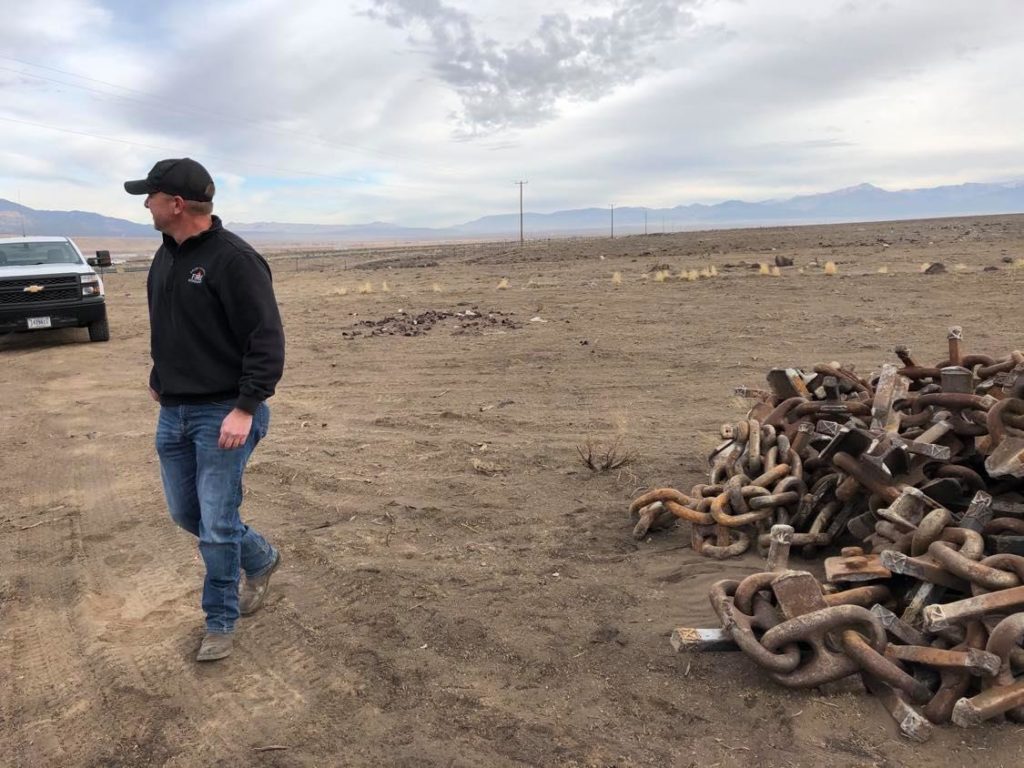
Shawn Peterson talks about chaining on the grounds of the Greenville Fire site, Iron County, Utah, Dec. 10, 2020 | Photo by Aspen Stoddard, St. George News
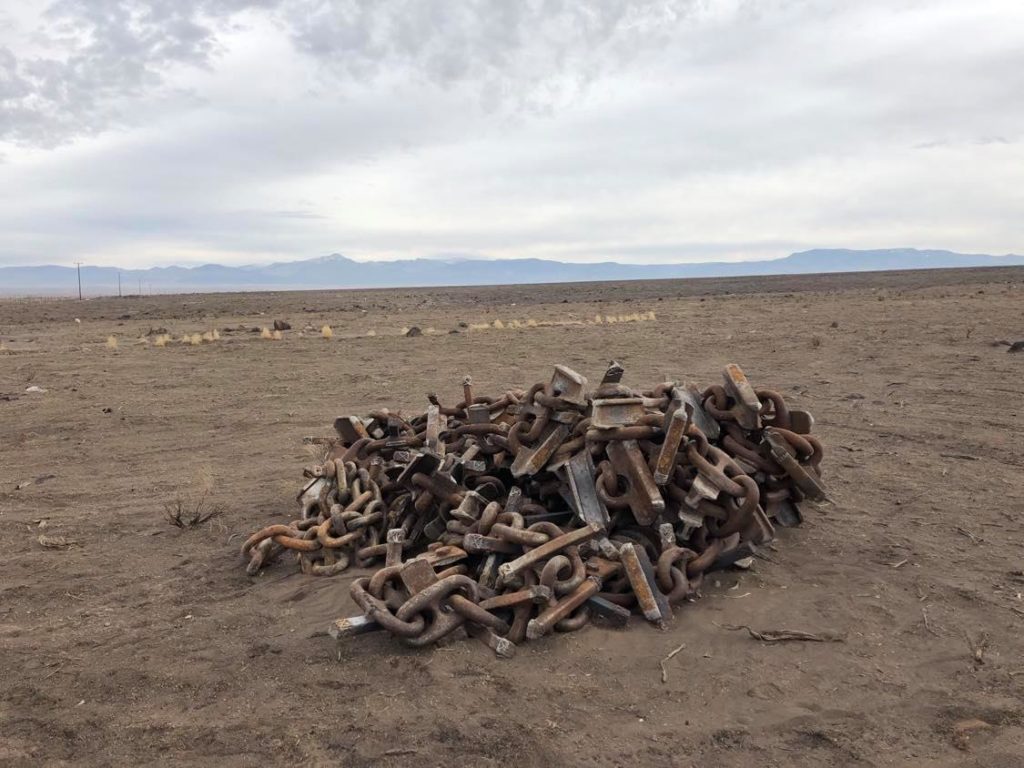
Just before aerial seeding, a chain lies on the grounds of the Greenville Fire site, Iron County, Utah, Dec. 10, 2020 | Photo by Aspen Stoddard, St. George News
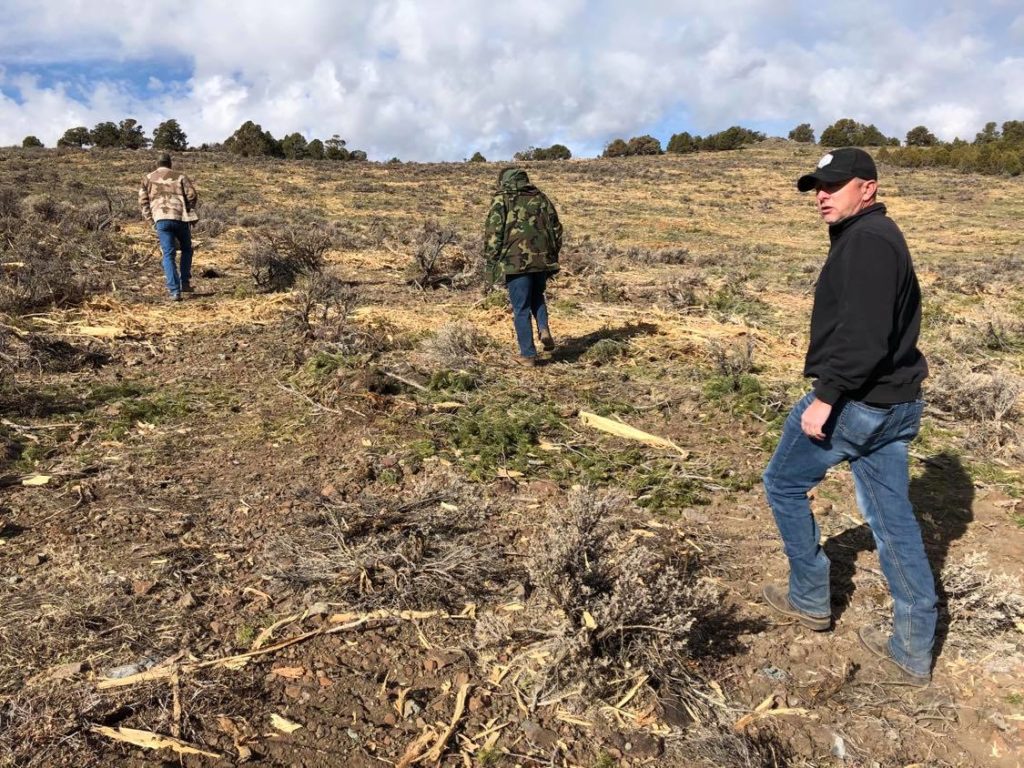
L-R: Paul Briggs, Christian Venhuizen and Shawn Peterson hike up a hill at the Greater Fremont Plateau Habitat Restoration Phase III site, Iron County, Utah, Dec. 10, 2020 | Photo by Aspen Stoddard, St. George News
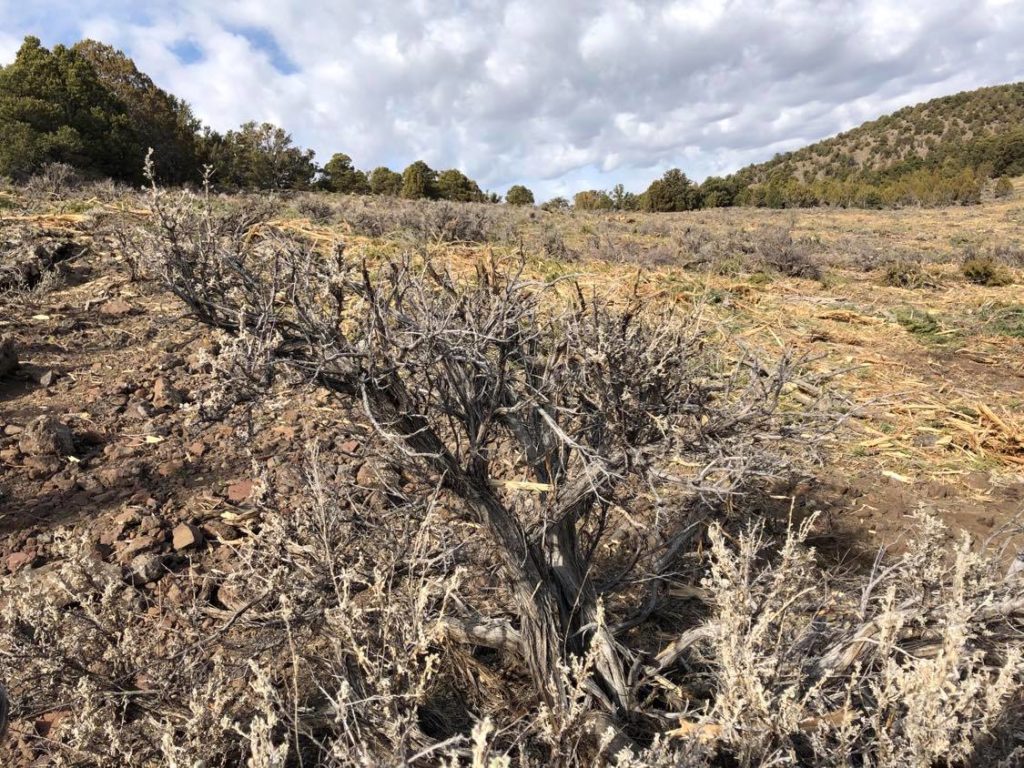
Mulch lies on the ground after tree mastication at the Greater Fremont Plateau Habitat Restoration Phase III site, Iron County, Utah, Dec. 10, 2020 | Photo by Aspen Stoddard, St. George News
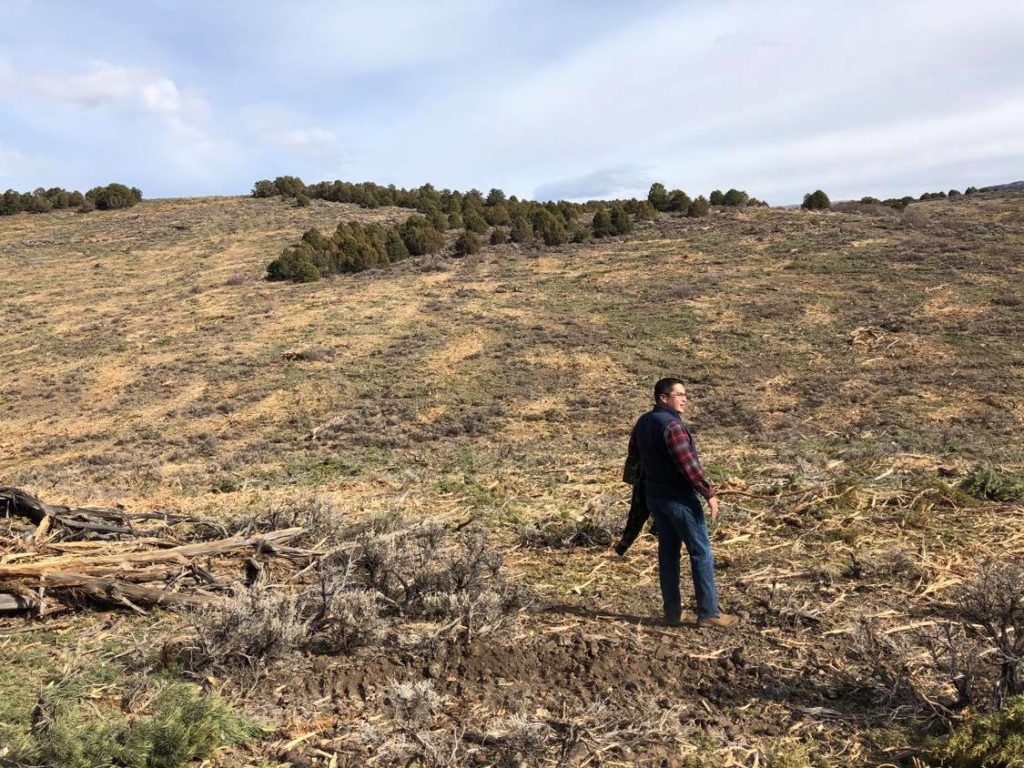
Christian Venhuizen hikes up a hill at the Greater Fremont Plateau Habitat Restoration Phase III site, Iron County, Utah, Dec. 10, 2020 | Photo by Aspen Stoddard, St. George News
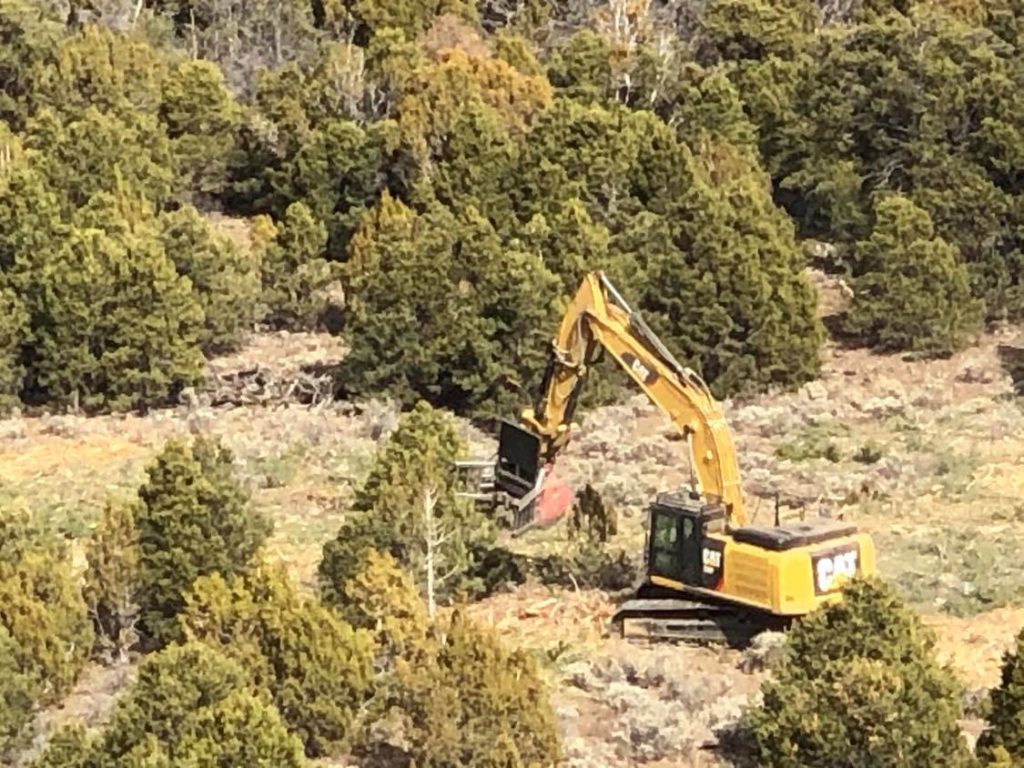
A bull hog masticator cuts down pinyon juniper at the Greater Fremont Plateau Habitat Restoration Phase III site, Iron County, Utah, Dec. 10, 2020 | Photo by Aspen Stoddard, St. George News
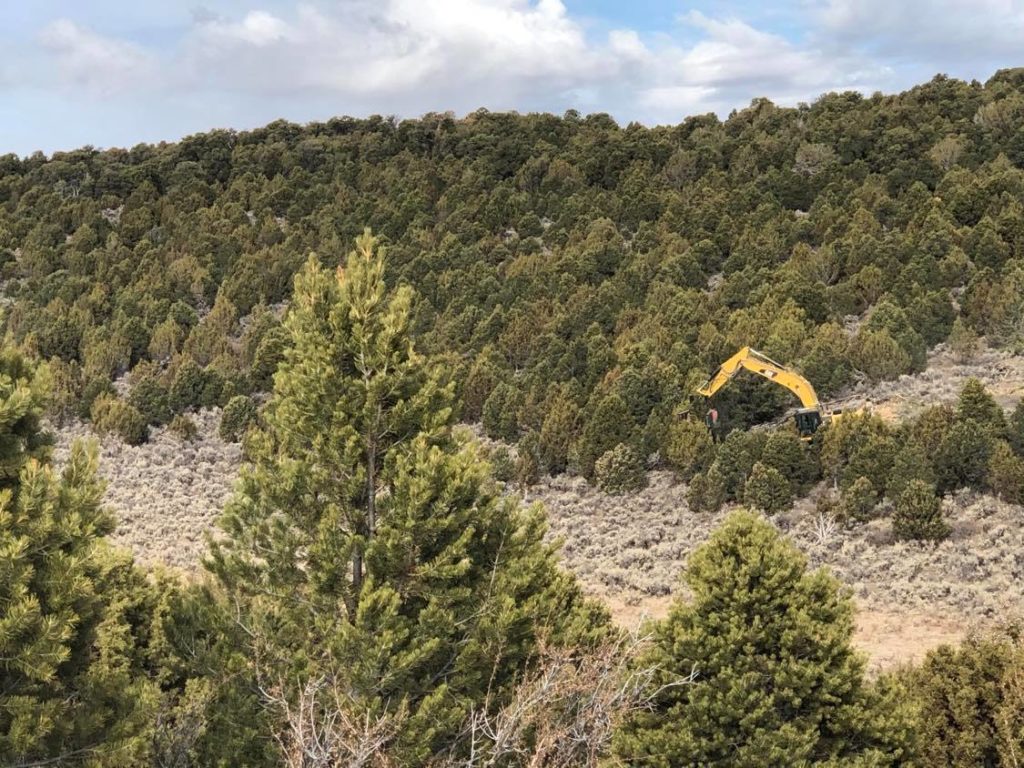
Bull hog masticators cut down pinyon juniper at the Greater Fremont Plateau Habitat Restoration Phase III site, Iron County, Utah, Dec. 10, 2020 | Photo by Aspen Stoddard, St. George News
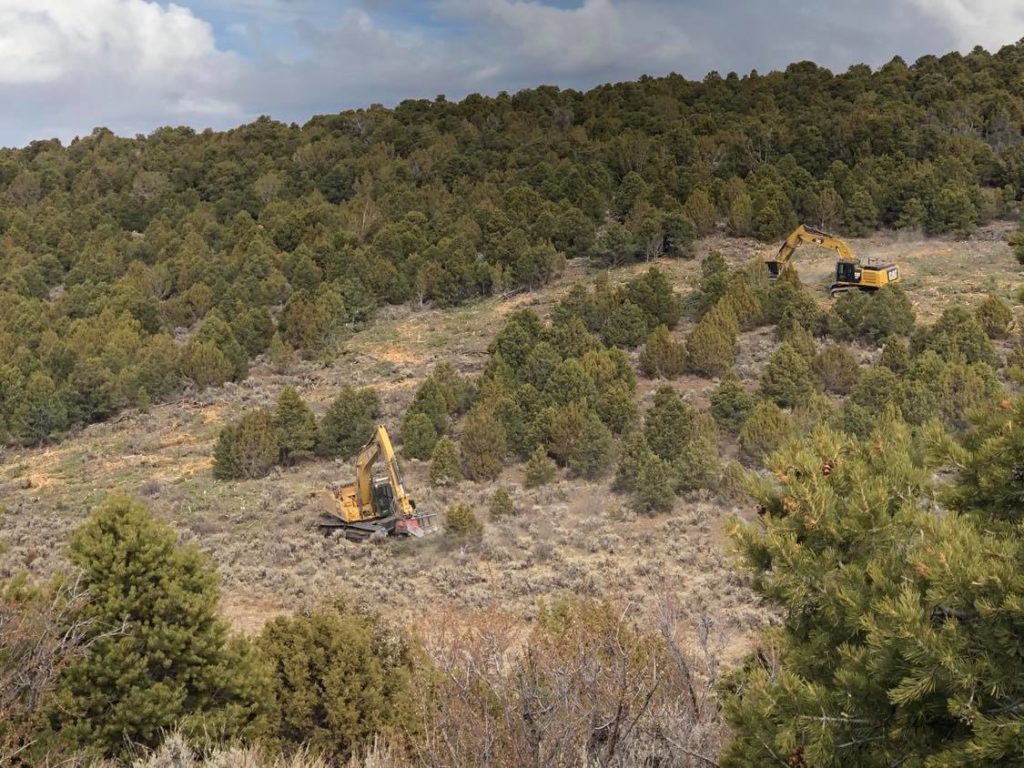
Bull hog masticators cut down pinyon juniper at the Greater Fremont Plateau Habitat Restoration Phase III site, Iron County, Utah, Dec. 10, 2020 | Photo by Aspen Stoddard, St. George News
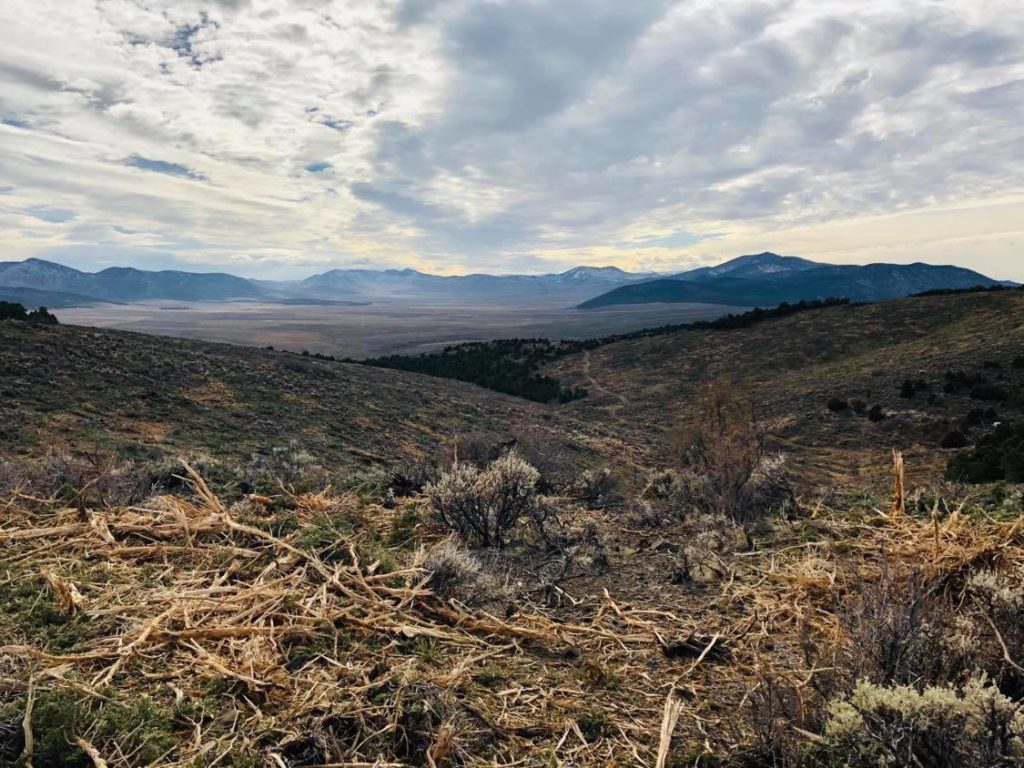
Mulch lies on the ground after tree mastication at the Greater Fremont Plateau Habitat Restoration Phase III site, Iron County, Utah, Dec. 10, 2020 | Photo by Aspen Stoddard, St. George News
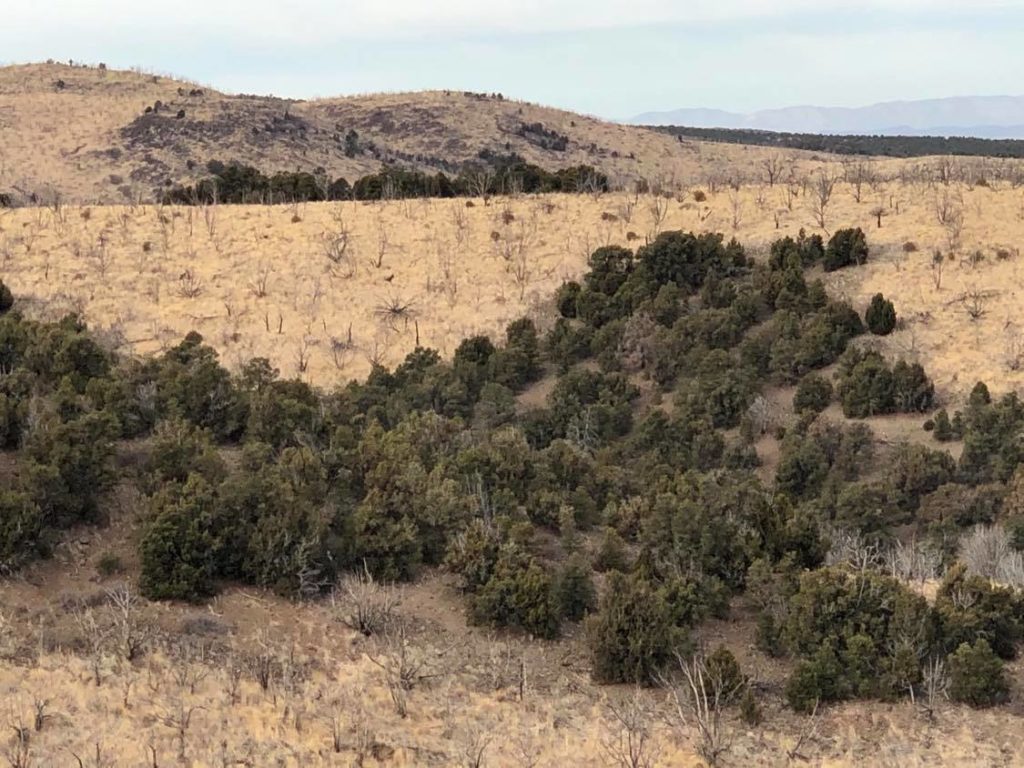
Pinyon Juniper are competitive and can outcompete other vegetation for nutrients and water, which leaves bare soil around their perimeter, Iron County, Dec. 10, 2020 | Photo by Aspen Stoddard, St. George News
Copyright St. George News, SaintGeorgeUtah.com LLC, 2020, all rights reserved.
Recent Comments