

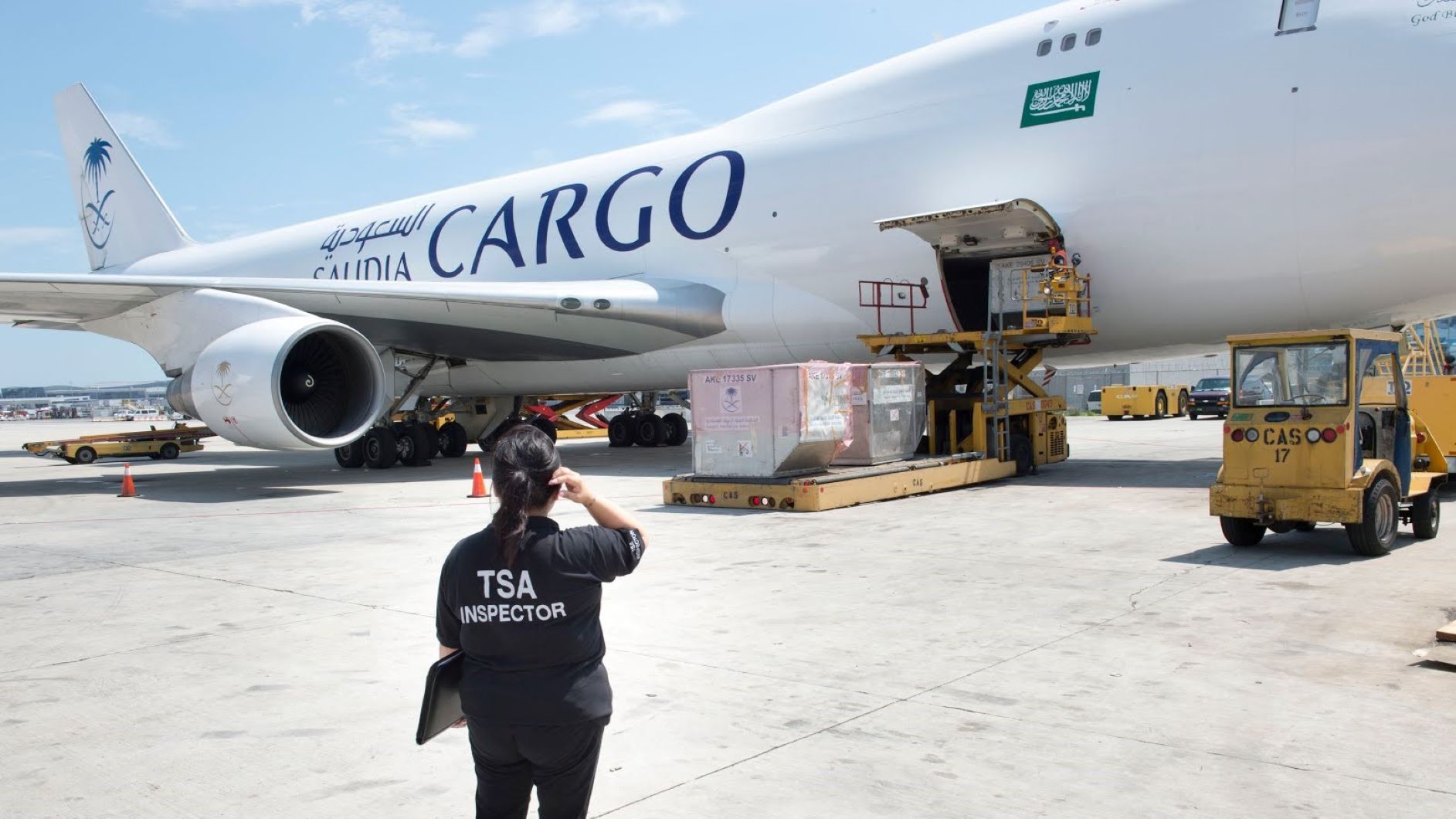

The Transportation Security Administration will unveil how it plans to meet new international requirements for screening 100% of exports on freighter aircraft during a meeting next month with e-commerce shippers and logistics providers.
The international standards, scheduled to go into effect June 30, require all cargo on dedicated freighter aircraft to be physically screened for explosives, as has been done the past decade for shipments traveling on passenger aircraft. Other governments could block flights or subject cargo to lengthy inspections upon arrival for countries that don’t comply.
The extra obligations are expected to raise shipping costs for cargo owners.
The rulemaking pits industry sectors against each other over whether certain entities, such as large online retailers, should receive a carve-out from shipment screening on the basis of having secure facilities. Many shippers and all-cargo carriers argue a risk-based approach is more effective than inspecting every shipment.
The TSA invited e-commerce fulfillment centers, manufacturers, shippers, suppliers, warehouses and third-party logistics providers to discuss its alternative to screening at a closed, virtual meeting Jan. 13, according to a notice scheduled to appear in Wednesday’s Federal Register.
Only representatives from companies and trade associations in those industries with approved access to sensitive security information will be allowed to participate.
“We hope the TSA will stand by our viewpoint as presented in recent comments, which advocate for equal security for all air cargo entities,” said Brandon Fried, executive director of the Airforwarders Association.
The TSA has publicly indicated this year that it hopes to reduce the compliance burden on U.S. and foreign all-cargo carriers by finding a way to move security controls further up the supply chain in a way “that provides a level of security commensurate with the screening of cargo before air transport.”
In fact, the International Civil Aviation Organization standard provides two optional substitutes for physical screening. Governments can establish a Known Consignor program for entities that demonstrate they have secure facilities and follow top security protocols, or they can allow approved businesses to screen shipments themselves or use certified third parties.
In the current passenger environment, airlines are ultimately responsible for cargo screening and use a mix of X-ray and other detection technology, as well as TSA and third-party canine teams. To prevent airport backlogs, the TSA allows upstream screening by certified freight forwarders, ground handlers and independent security firms, as well as shippers that pack each consignment in a secure portion of their warehouse. Entities in the Certified Cargo Screening Program must ensure a secure chain of custody for road transport to the airport.
Inspect everything or trust secure premises?
Some freight forwarders and security experts are concerned that the TSA is more interested in easing the burden for online retailers, many of whom presumably favor having their tightly controlled facilities certified as secure as an alternative to physical inspection of every international air shipment. Opponents say a trusted-shipper approach could create an uneven playing field and potential security loopholes.
In comments filed with the TSA last summer, the Airforwarders Association said that “another cargo-related security program would only serve to create additional inconsistencies in the market, as entities struggle to adhere to multiple handling and administrative requirements throughout the complete supply chain. Such confusion would not only create a fertile ground for perplexity and mishandling but potentially open the door to acts of terrorism which leads to a higher level of risks.”
It called for the TSA to expand the CCSP to allow greater participation by manufacturers, suppliers, e-commerce fulfillment centers and others.
Competition issues are at play, as well, with the opportunity for forwarders to further build income streams from security services. To date, only a few hundred companies are enrolled in CCSP. Many shippers have outsourced screening to logistics partners rather than deal with the hassle of joining the program themselves.
Air cargo carriers, however, are advocating a flexible approach that spreads out responsibility for shipment security.
“While some types of cargo and methods of shipping may necessitate normal screening methods, we strongly believe a risk-based approach requires an alternative framework to handle the large variety of cargo and shippers in the system,” the National Air Carrier Association said in a formal response to the agency. It noted that some types of cargo — hazardous materials, live animals, perishable foods, pharmaceuticals and items in steel drums — can’t be screened by any existing method.
And even if screening is “practicable,” it may not be the best method, or even necessary, for ensuring air cargo security. Screening every piece doesn’t make sense, the trade group argued, when a shipper has chartered an entire aircraft and paid substantial fees upfront or established a letter of credit for the cost of the flight.
NACA members include Miami-based Amerijet, Air Transport International, Atlas Air (NASDQ: AAWW), Kalitta Air, Lynden Air Cargo, Northern Air Cargo and Western Global Airlines.
NACA said a one-size-fits-all approach doesn’t work and that different shippers should have individualized security plans for meeting TSA standards.
When a shipment poses little security risk, a screen-all approach simply adds extra cost with little gain in security, the trade association said, noting that there have been no known attempts by terrorists or criminals to put explosives in outbound cargo from the U.S.
“Given this extremely low risk we strongly believe the TSA should implement a robust and option-rich alternative framework,” NACA stated. Atlas Air separately suggested that the program should be loosely modeled on the Customs-Trade Partnership Against Terrorism under which importers with vetted supply chain security programs enjoy fewer container inspections and other trade facilitation benefits.
The TSA currently doesn’t consider C-TPAT commensurate with air cargo security requirements. And opponents of a flexible framework argue that without screening the cargo itself, bad actors could slip improvised explosive devices into a box or container at a temporary storage facility.
UPS Airlines (NYSE: UPS) agreed that manufacturers, warehouse operators, and other shipping and logistics providers with proven security controls for infrastructure, people and data should be recognized by TSA as having secure premises and exempt from 100% screening.
It pointed to the CCSP, under which pre-secured shipments are accepted by airlines, as a successful example of supply chain security through regulated parties.
Additional security screening would slow millions of e-commerce and other shipments that express carriers rapidly move daily through their hub-and-spoke networks, UPS said. “A vast majority of express shipments will be transshipped at least once in their fast journey from pick-up to delivery. The introduction of U.S.-export screening controls or requirements will disrupt this model, driving additional costs and delays to serve,” the company said.
UPS recommended that companies seeking equivalent security status as physical screening should have:
- Physical security plans for vehicles and buildings, including contracted security, security alarms, CCTV and key control.
- Personnel security to include background checks, reference checks, employee screening, theft prevention and identification media.
- Chain of custody in the form of tamper-evident seals, cargo manifests, ID verification of motor carrier personnel and verification of the consignment piece count.
- Robust employee security awareness training to identify fraudulent activity and security threats.
UPS estimated it would have to invest more than $135 million in screening equipment and facility upgrades to meet a 100% screening requirement, with an additional annual spend of $5.3 million for extra staff and vendors services such as third-party canine teams.
Click here for more FreightWaves/American Shipper stories by Eric Kulisch.
RECOMMENDED READING:
TSA seeks enhanced screening capabilities for air cargo
New air cargo security standards could gum up e-commerce exports
Recent Comments