


The modern car carrier could not have evolved without the period of dual-purpose and converted ships.
Today, a car carrier is referred to as a pure car carrier (PCC) or a pure car and truck carrier (PCTC). Looking like a floating garage, the largest of these can carry up to 8,500 automobiles. The difference between the two is the size and strength of the ramps and the layout of the decks. On a PCC, the distance between the decks may only be 5 feet, thereby allowing a maximum number of cars to be carried.
The worldwide transport of vehicles experienced constantly increasing volumes, resulting in today’s large fleets of specialized car carriers. The ships are employed in a variety of trades transporting cars to destinations worldwide. Prior to 1960, the transport of cars was accommodated on traditional tween-deck ships. Each car was lifted on and off using derricks or cranes. However, the origin of the mass transport of cars can be traced to bulk shipping.
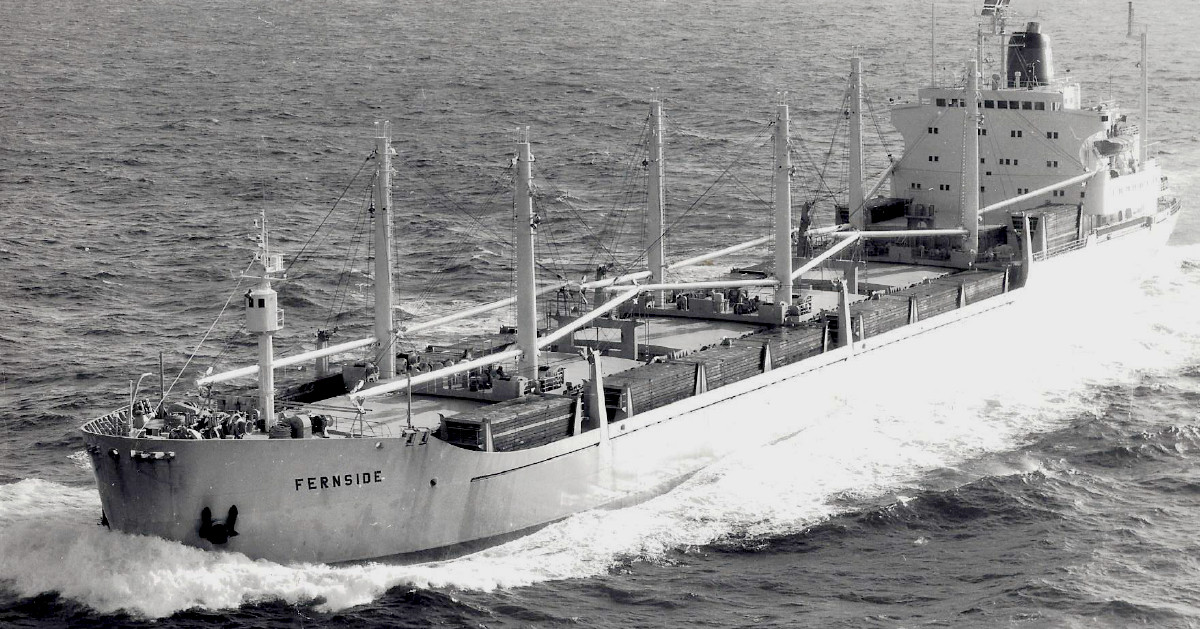
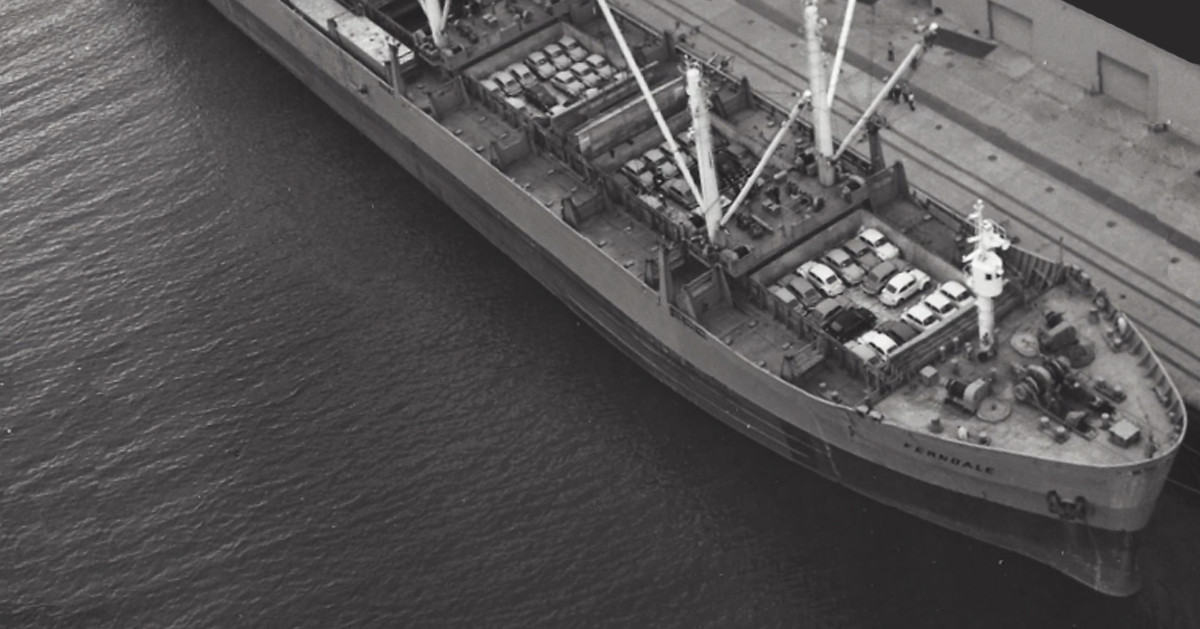
By the early 1960s, the export volumes of European and Asian car companies had reached numbers that were beyond the capacities of conventional cargo ships. Many thousands of cars had to be shipped, and it was the geared bulk carriers that proved attractive and economical for this growing trade. Along with the shipment of coal, grain or soybeans from the U.S., these ships were to become the ideal transporters of cars on the return ballast voyages. It was not long before large European and Asian fleets of auto-carrying bulk carriers were built or converted for the trade.
In order to accommodate as many cars as possible, bulk carriers intended for this transport were fitted with special decks in their cargo holds. Lowered on chains, the decks provided sufficient space to clear the height of the cars. During the transport of bulk cargoes, the decks were lifted and secured under the ceiling of the holds. The car decks below the hatches were removed and placed in racks on both sides of the ship’s main deck. The loading and discharge were handled by the ship’s cargo gear or cranes based on shore.
In the 1970s, two such ships known as auto/bulk carriers, the Norse Variant and Anita, were lost in the stormy North Atlantic. They were fully loaded with coal and had their car decks properly secured in fixed steel racks on deck. As both ships had limited freeboard, boarding seas were common and were presumably lost by having one or more of the car decks washed off their racks and slammed through the hatch covers, which flooded the cargo holds and ultimately sank the ships.
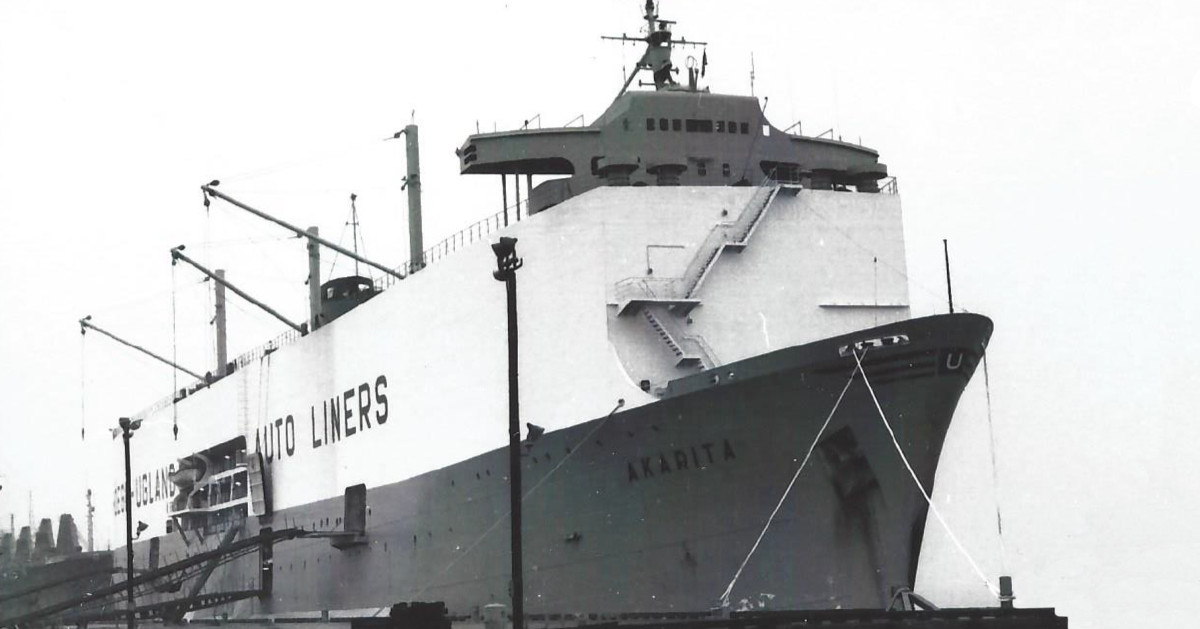
This structural deficiency, in addition to the time-consuming handling of the portable car decks and hold cleaning after discharge of bulk cargoes, hastened the end of the auto bulk carriers. Additionally, the international car trades had reached a scale that made the employment of large purpose-built car carriers economical. Instead of being handled by cranes or derricks, the cars were to be driven aboard the ships and back ashore via special side or stern ramps.
Roll-on/roll-off (ro-ro) ships have been a common sight in the coastal trades for many years, and the successful military use of landing ship tanks (LSTs) was proven in World War II. Then, in 1958, the USNS Comet proved the ro-ro concept for the ocean transport of wheeled cargo.
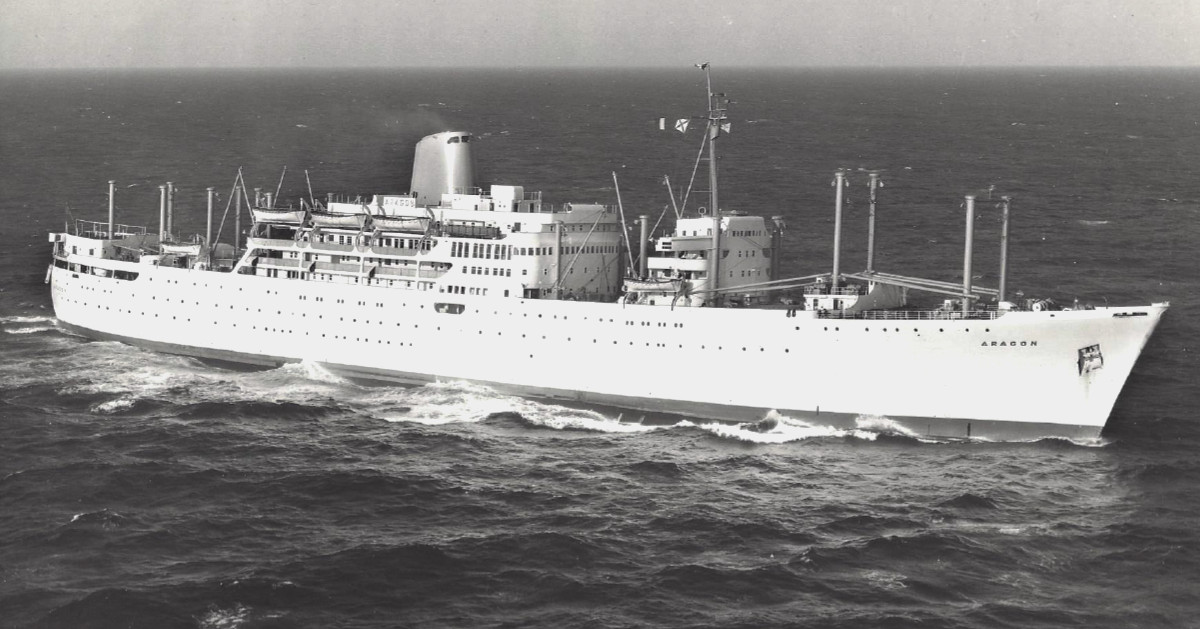
In the early 1970s, the trade continued its explosive growth. In addition to bulk carriers and tankers, even a few passenger ships were converted to carry automobiles. This was accomplished by the permanent fitting of car decks and internal and external ramps. One of the most unique conversions was that of the three 20,000-ton Royal Mail passenger liners Amazon, Aragon and Arlanza, built in the late 1950s in Belfast, Ireland.
Due to the high cost of fuel, crew and maintenance coupled with competition from the airlines, the ships were sold in 1969. The three ships were purchased in 1971 for a near scrap value and sent to Yugoslavia for rebuilding into car carriers. The luxurious accommodations were mostly removed and a large garage was erected above the hull. The original bridge was relocated atop the garage and a new funnel and sponsons were fitted. The 584-foot-long ships could now carry 3,000 cars each. Only the former first-class cabins clustered midship were retained for crew accommodations.
By the 1980s, the converted car carriers were rapidly being replaced by the new economical buildings we see today. This interesting period of transition lasted for about 15 years and, although mostly forgotten, was an indispensable step in the evolution of the massive car carriers we see today.
Related Stories:
Maritime History Notes: Tankers landed for Apollo program
Maritime History Notes: ‘Jumboized’ T-2 tankers
Maritime History Notes: Misdeclared cargo and the fabled Rock Island Line
Recent Comments