
Tech News, Magazine & Review WordPress Theme 2017
  • Home
  • Supply Chain Updates
  • Global News
  • Contact Us
  • Home
  • Supply Chain Updates
  • Global News
  • Contact Us
No Result
View All Result
No Result
View All Result
Home Supply Chain Updates

Statewide ban on single-use plastic bags now set to begin at the end of January

usscmc by usscmc
January 1, 2021
Statewide ban on single-use plastic bags now set to begin at the end of January
Share on FacebookShare on Twitter


The legislature could still decide to further delay implementation when it meets in January

A ban on single-use plastic grocery bags set to take effect in 2021 has been delayed until at least the end of January.

While issuing a proclamation on the delay, Gov. Jay Inslee noted supply issues for retailers caused by the ongoing pandemic, as well as some retailers asking customers not to bring bags from home due to concerns over worker safety during the pandemic.

A ban on single-use plastic bags for all of Washington is now expected to take effect Jan. 30, 2021. Image courtesy Washington Dept. of Ecology

When the state legislature meets beginning Jan. 11, they could decide to further delay implementation of the ban, depending on whether supply chain issues have been ironed out.

Either way, at some point a statewide ban on single-use plastic grocery bags will go into effect at some point in 2021.

Approved by the legislature in March, 2020, the bill restricts retailers, restaurants, takeout, as well as farmers markets and food trucks to only paper bags with at least 40 percent recycled content, or thicker reusable plastic bags with at least 20 percent post-consumer recycled material.

If customers don’t bring their own reusable bags, they’ll have to pay a fee of 8 cents per bag for anything provided by the store. The only exceptions being thin-film plastic produce bags, or bags used by flower shops or dry cleaners.

While most of the fee will be retained by retailers to offset the cost of the more expensive paper and reusable plastic bags, the sale will be taxable. The state Department of Revenue anticipates the ban will bring in $3.8 million during the first year, rising to $7.4 million in 2021-23.

The state also hopes to see cost savings in waste management. Single-use plastic bags are notorious for gumming up sorting machines at recycling centers, and have greatly reduced the value of recycled materials, largely eliminating sales to China over the contamination issue.
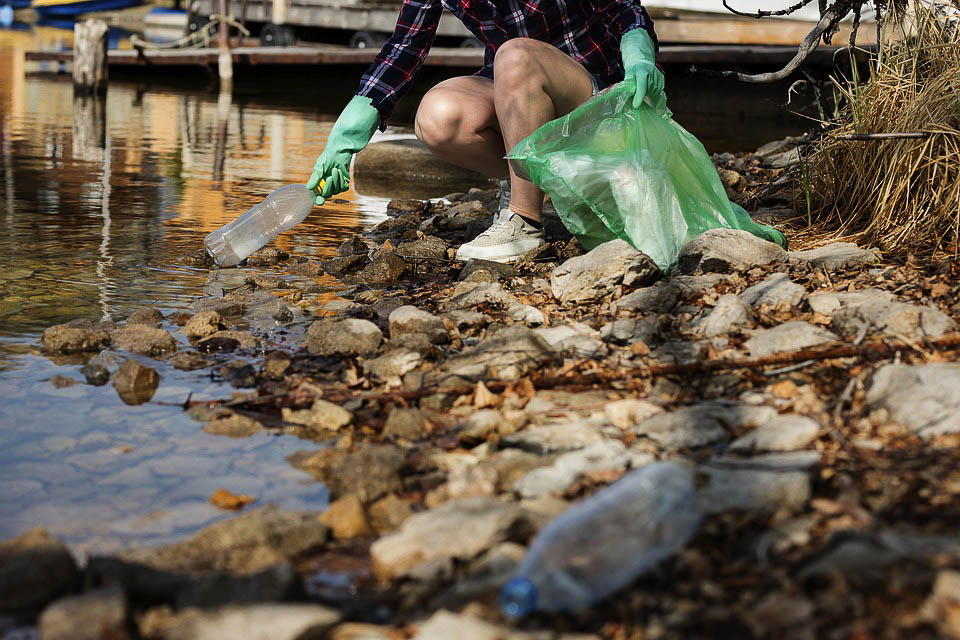
Single-use plastic bags are a main source of pollution, and contamination for recycling programs. Photo via Washington Dept. of Ecology

“Used for about 12 minutes, they cost retailers nationwide upwards of $4 billion annually,” said Shannon Jones, a materials management coordinator with the Washington Department of Ecology. “These bags are also the number one contaminant and a major safety issue in recycling material recovery facilities, and are estimated to take up to 1,000 years to break down in a landfill.”

According to a survey conducted by the Northwest Progressive Institute, more than two-thirds of Washingtonians supported the statewide ban.

Many retailers also spoke out in favor of the new law, says Jones.

“I think that businesses have had a hard time with the piecemeal ordinances across the state, especially larger businesses that have multiple locations where they have to adjust their practices based on where an ordinance is,” Jones says. “Also, there has previously been no mechanism for businesses to recoup any of the costs of providing the plastic bags.”

Even if the legislature allows the ban to go into effect at the end of January, retailers will have some time to adjust. 

“There is a grace period for those businesses that are using plastic bag inventory from 2020,” says Jones. “They can continue to distribute these bags until June 11, 2021. However, this grace period only applies to those areas that did not previously have a bag ban ordinance in place.”

The state also plans to launch a website where consumers can file complaints if they believe a business is operating in violation of the new law.
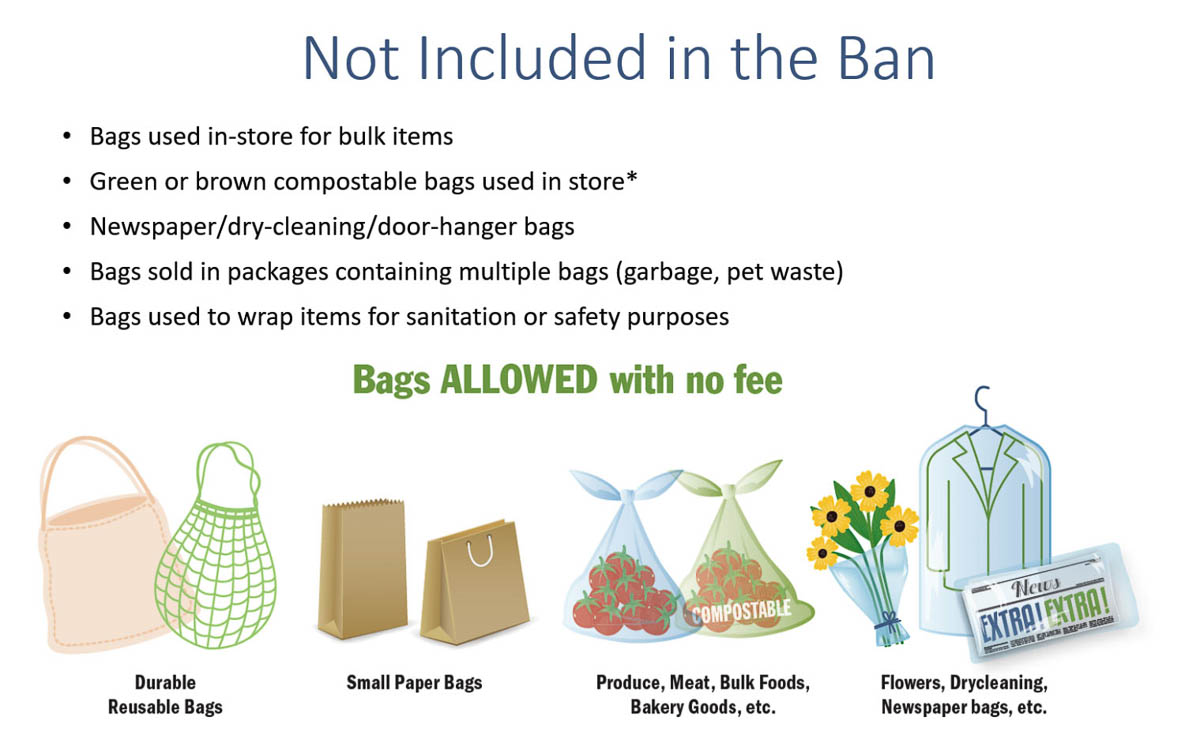
Some bags will be exempted from the ban when it takes effect in 2021. Image courtesy Washington Dept. of Ecology

Jones says the state will initially take an educational approach for retailers caught using the plastic bags after June 11, but further violations could result in fines of up to $250.

Regarding concerns that reusable cloth bags could be a vector for the spread of COVID-19, Jones called that a misconception put forward by the plastics industry “in the first few months of the pandemic,” which has since been proven to be largely unfounded.

Jones said the state will continue to monitor the program and submit a report in 2024 on any recommended changes. 

The per-bag fee is currently expected to increase to 10 cents in 2026.

usscmc

usscmc

No Result
View All Result

Recent Posts

  • How Hapag Lloyd captured a major market share in the Container Shipping Industry in USA
  • Why USA’s East Coast is the Favorite Destination for Manufacturing Companies
  • How Trade Relations Between the USA and UK Improved After Keir Starmer Became Prime Minister
  • Tips and Tricks for Procurement Managers to Handle Their Supplier Woes
  • The Crazy Supply Chain of Walmart Spanning Across the Globe

Recent Comments

  • Top 5 Supply Chain Certifications that are in high demand | Top 5 Certifications on Top 5 Globally Recognized Supply Chain Certifications
  • 3 Best Procurement Certifications that are most valuable | Procurement Newz on Top 5 Globally Recognized Supply Chain Certifications

Archives

  • July 2024
  • June 2024
  • May 2024
  • April 2024
  • March 2024
  • February 2024
  • January 2024
  • December 2023
  • November 2023
  • October 2023
  • September 2023
  • August 2023
  • July 2023
  • June 2023
  • May 2023
  • April 2023
  • March 2023
  • February 2023
  • January 2023
  • December 2022
  • November 2022
  • October 2022
  • September 2022
  • August 2022
  • July 2022
  • June 2022
  • May 2022
  • April 2022
  • March 2022
  • February 2022
  • January 2022
  • December 2021
  • November 2021
  • October 2021
  • September 2021
  • August 2021
  • July 2021
  • June 2021
  • May 2021
  • April 2021
  • March 2021
  • February 2021
  • January 2021
  • December 2020
  • November 2020
  • October 2020
  • September 2020
  • August 2020
  • July 2020
  • June 2020
  • May 2020
  • April 2020
  • March 2020
  • February 2020
  • January 2020
  • December 2019
  • November 2019
  • September 2019

Categories

  • Global News
  • Supply Chain Updates

Meta

  • Log in
  • Entries feed
  • Comments feed
  • WordPress.org
  • Antispam
  • Contact Us
  • Disclaimer
  • Home
  • Privacy Policy
  • Terms of Use

© 2025 www.usscmc.com

This website uses cookies to improve your experience. We'll assume you're ok with this, but you can opt-out if you wish. Cookie settingsACCEPT
Privacy & Cookies Policy

Privacy Overview

This website uses cookies to improve your experience while you navigate through the website. Out of these cookies, the cookies that are categorized as necessary are stored on your browser as they are essential for the working of basic functionalities of the website. We also use third-party cookies that help us analyze and understand how you use this website. These cookies will be stored in your browser only with your consent. You also have the option to opt-out of these cookies. But opting out of some of these cookies may have an effect on your browsing experience.
Necessary
Always Enabled
Necessary cookies are absolutely essential for the website to function properly. This category only includes cookies that ensures basic functionalities and security features of the website. These cookies do not store any personal information.
Non-necessary
Any cookies that may not be particularly necessary for the website to function and is used specifically to collect user personal data via analytics, ads, other embedded contents are termed as non-necessary cookies. It is mandatory to procure user consent prior to running these cookies on your website.
SAVE & ACCEPT
No Result
View All Result
  • Home
  • Supply Chain Updates
  • Global News
  • Contact Us

© 2025 www.usscmc.com