

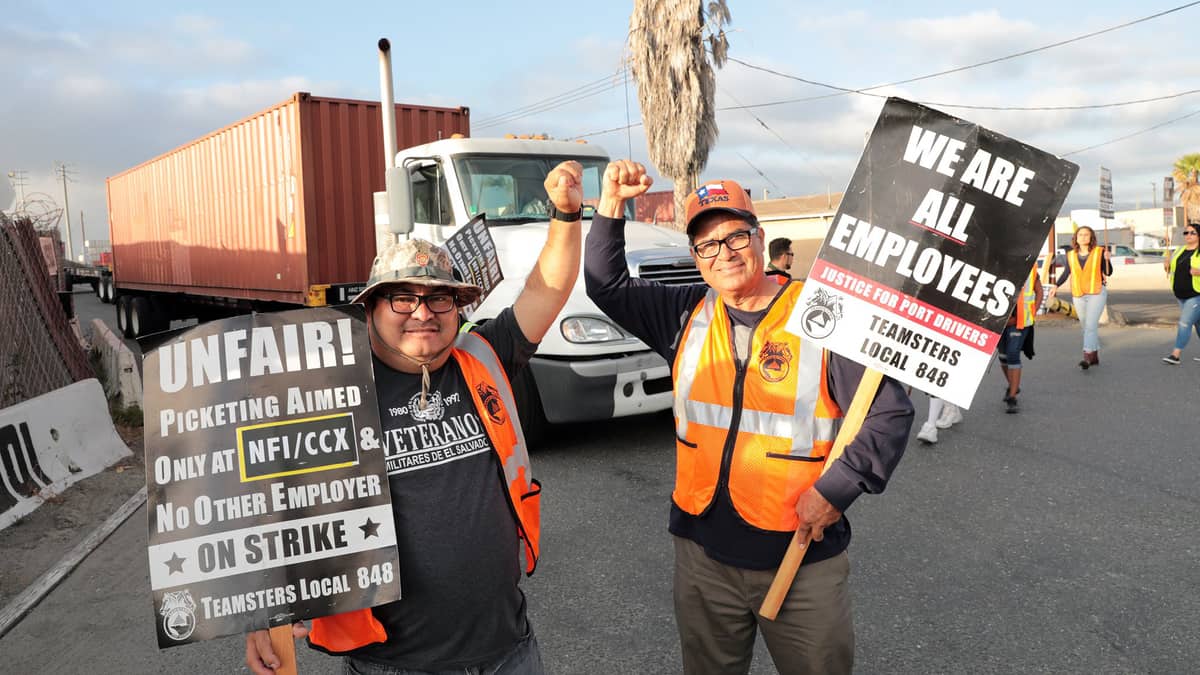

Drivers at Universal Intermodal Services at the Ports of Los Angeles and Long Beach have voted to join Teamsters Local 848, marking the seventh company at the ports to employ workers represented by the union.
There are 28 drivers in the bargaining unit. Workers say they are seeking affordable health insurance, wage increases and retirement benefits.
“Every single one of us, my coworkers, we all have different reasons for joining the union,” said Universal driver David Lopez. “My first and foremost reason is because of dental insurance.”

Lopez, 50, spoke to FreightWaves through an interpreter. He said he doesn’t have health or dental insurance because the Universal plan is too expensive. The pay is inadequate, he added and in addition to other benefits a Teamsters contract would ensure workers had access to due process.
Representatives from Universal Intermodal and its parent company, Universal Logistics (NASDAQ: ULH), did not respond to FreightWaves’ requests for comment.
In total, about 600 of the approximately 12,000 drivers working the Southern California ports are Teamsters members, Fred Potter, director of the Teamsters Port Division, told FreightWaves.
In addition to Universal, the other drayage companies with union contracts or representation at the California ports are Toll Group, Sea-Logix, HLT, EcoFlow, Weber Logistics and Pacific 9 Transportation.
Teamsters Port strategy: a complicated history
Between 1980 and 2010, the Teamsters had signed zero union contacts at the Southern California ports, said Scott Cummings, a professor of law at UCLA, where he focuses on public interest law and social movements.
The contracts signed since then reflect a new organizing strategy launched by the Teamsters after California’s Clean Truck Rule took effect a decade ago, according to Cummings. That rule banned trucks that did not meet the latest emissions standards from entering the ports.
The original clean truck program, backed by the Teamsters, included a labor component requiring trucking companies working at the ports to hire the drivers as employees, rather than treating them as independent contractors. The idea was to make the companies and not the drivers bear the cost of buying new rigs.
The American Trucking Associations sued and the 9th Circuit Court of Appeals tossed the requirement.
After the union tried but failed to convince the city of Los Angeles to mandate that trucking firms couldn’t access the port without employee drivers, Cummings explained, the Teamsters decided to target directly the drayage operators that had misclassified employees as independent contractors.
“The strategy shifted from trying to get a government agency to mandate reclassification to asserting misclassification was an illegal act and that the drivers were legally speaking employees,” Cummings said.
Given the significant forces — economic, political — arrayed against the Teamsters, he added, “winning even one contract is really, really significant.”
AB5 and misclassification
The union’s efforts to organize port drivers fits into a broader campaign on the part of the Teamsters and other labor groups alleging that truck drivers at the ports have been misclassified as independent contractors rather than employees.
The passage of the California labor law AB 5 has emboldened that effort, as has Senate Bill 1402, a law that took effect this year making retailers and other customers of port trucking companies liable for contracting with or using port drayage motor carriers who have unpaid wage, tax and workers’ compensation liability.
“It is good legislation,” Potter said, and it is is one of the reasons more companies this year have converted their alleged independent contractors to W-2 employees.
Industry groups are vehemently opposed to the new labor laws. In November, the California Trucking Association (CTA) filed a legal challenge against AB5, saying it will result in 70,000 drivers in the state losing their jobs and that the state legislation violates federal law.
For its part, the Teamsters plans to target other Universal Logistics subsidiaries, Potter said. Universal Logistics has been on an intermodal acquisition spree, and several of the companies have been accused of misclassifying employees as independent contractors.
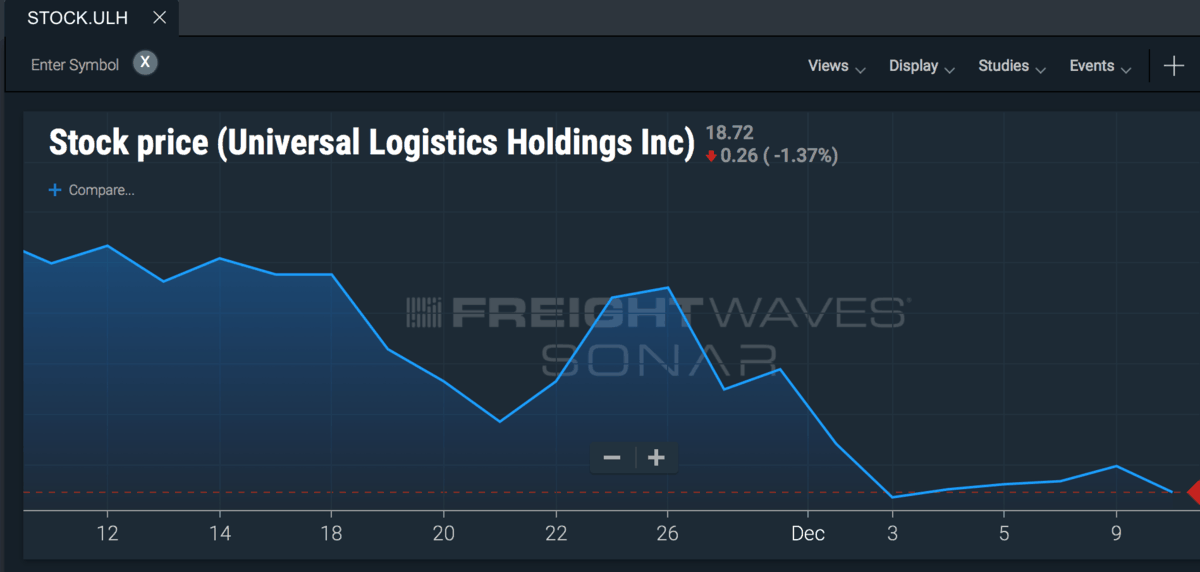
Reeling from a softened freight market, Universal Logistics’ earnings took a hit in the third quarter. Intermodal services were a bright spot, increasing $39 million to $93.9 million in the second quarter, up from $54.9 million during the same period last year. The increase was attributed in part to revenues generated from acquisitions.
Now that Universal drivers have voted to join the Teamsters local, the next step is to negotiate a contract, Lopez said.
Recent Comments