

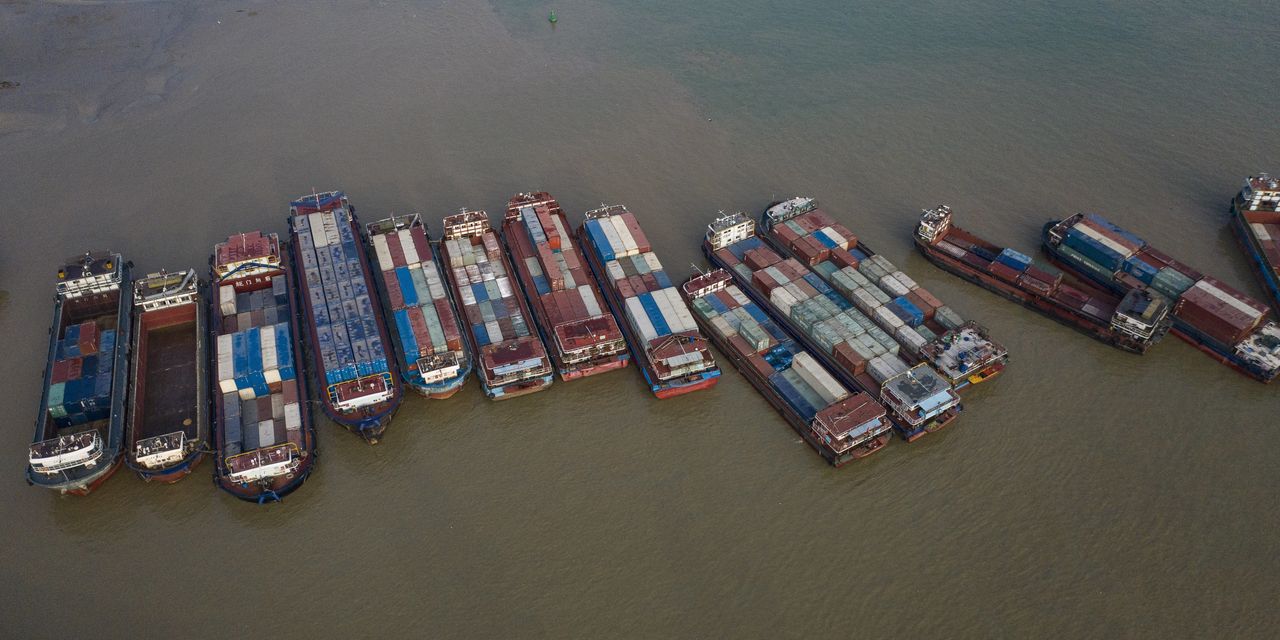

HONG KONG—A logjam in the global shipping industry is testing the resilience of China’s exporters, who have driven the country’s economic recovery by churning out goods to meet surging global demand during the Covid-19 pandemic.
That demand in recent months has outpaced the capacity of a global shipping industry that has been slowed by pandemic safety measures. Chinese exporters have been paying sharply higher rates and struggling to find containers for their goods.
Chen Yang,
who runs a textile trading unit at a state-owned enterprise in the southern city of Hefei, said the business, which mostly exports to the U.S., has weathered the pandemic and the China-U.S. trade war, but he expects to lose money this year in part because of a sharp rise in shipping costs.
A 40-foot container arriving at the port of Charleston, S.C., in December cost Mr. Yang around $7,500, up from $2,700 in April, he said. He also has to book space on the vessel at least 20 days in advance, more than double the usual time.
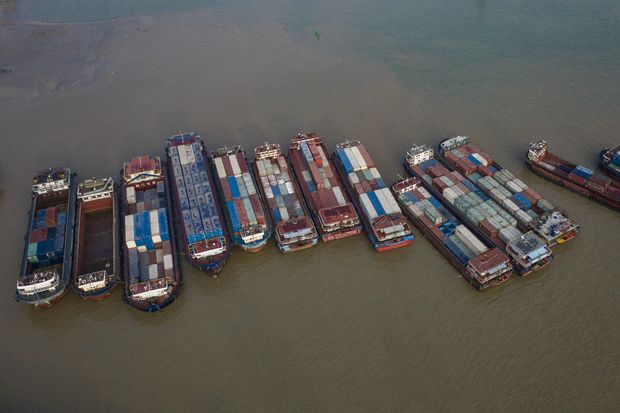
Container ships moored near Guangzhou, China, in November.
Photo:
Qilai Shen/Bloomberg News
“I have never seen anything like this in my 18 years of experience as an exporter,” said Mr. Yang. “We’ve been operating at a loss since August.”
The problem has been aggravated by a worsening imbalance in global trade. In November, China logged a record trade surplus of $75 billion, fueled by strong consumer demand from Western countries ahead of the holiday season for everything from electronic gadgets to furniture and bikes.
Major U.S. ports imported 2.21 million 20-foot containers in October, up 17.6% from a year earlier and setting a record since the National Retail Federation began tracking imports in 2002. Container freight rates from Asia to the U.S. surged to a record in September and rates from Asia to Europe reached a 10-year high in December.
Pandemic-related safety measures have lowered efficiency at ports, leading to delivery delays and containers getting stuck all over the world. In November, only half of global carriers managed to stay on schedule, compared with 80% a year ago, according to a service-reliability index from Sea-Intelligence.
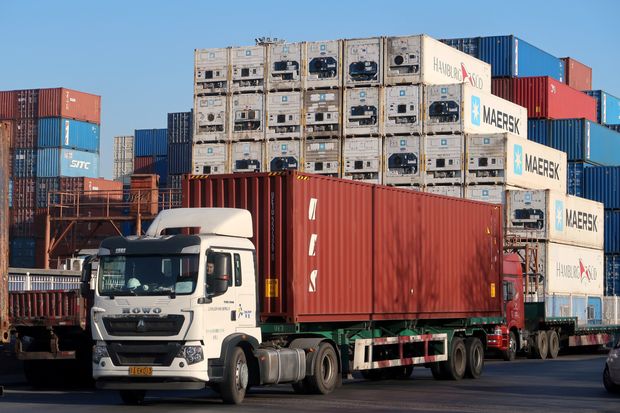
A logistics center near Tianjin port.
Photo:
sun yilei/Reuters
The average turnaround time for containers returning to China was up to 100 days in December from the more typical 60 days, according to the China Container Industry Association.
“The logjam is completely unprecedented, both in terms of the scale of the surge and the duration,” said Tan Hua Joo, a Singapore-based consultant at Liner Research Services.
While economists say that shipping problems haven’t derailed China’s solid recovery yet, they pose a challenge to sustaining the export growth that has driven it.
China’s official manufacturing purchasing managers index, a gauge of China’s factory activity, suggested that growth slowed in December. A subindex for new export orders edged down from the previous month to 51.3%, though still in expansion territory.
China’s rapidly appreciating currency, the yuan, which has risen more than 8% against the U.S. dollar in the past six months, is also eroding the profit margins for Chinese traders, most of whom still accept payments in U.S. dollars.
Bruce Pang,
head of macro and strategy research at China Renaissance Securities, said that high shipping costs would likely remain a major headache for most Chinese exporters until the Lunar New Year holiday in February, when most factories will close for at least two weeks.
“It will certainly strain cash flow for some smaller exporters, especially those trading in low-margin goods,” said Mr. Pang. Many manufacturers have been reluctant to expand capacity and are cautious about taking new orders, he added.
Tony Chen, a toy exporter in the southern Chinese city of Shantou, said many of his clients in the U.S. and Europe have told him to halt delivery, because the hefty logistics costs have eroded their profit margins.
“It has been very frustrating,” he said, adding that he has stopped accepting new orders from customers in recent weeks because he can’t guarantee when he will be able to deliver.
In early December, China’s ministry of commerce vowed to increase production of containers to ease the supply shortage, as well as monitor the shipping market more closely to stabilize costs.
But fixing the problems won’t be easy.
China International Marine Containers
(Group) Co., the world’s largest container producer, told investors in November that its factories are fully booked until the end of March. More than 95% shipping containers are built in China.
Churning out more container boxes could lead to a glut down the road, but some say that is the only viable option to ease the shortage now.
SHARE YOUR THOUGHTS
What impact could the current logjam have on the global shipping industry in 2021? Join the conversation below.
“You are damned if you do and you are damned if you don’t,” said
Charles Du Cane,
commercial director at Seastar Maritime Ltd., which operates dry bulk vessels. “The real solution to all of this is to deal with the pandemic and the global logistics system.”
The logistics challenges are also prompting some exporters to rethink their supply chains. Shenzhen Xuewu Technology Co., an e-cigarette producer based in the southern Chinese city of Shenzhen, sells mostly to consumers abroad. While 90% of its vaping products are shipped by air, those rates had risen by about 30% in December compared with a year earlier, with the shortage of shipping containers forcing more exporters to send their goods by air, said Fiona Fu, who leads the company’s overseas logistics. Logistics costs now account for about 5% of the company’s overall costs, up from 1% to 2% before the pandemic, she said.
Demand in existing markets such as Canada and Southeast Asia has grown during the pandemic as more people spend time indoors, according to
Derek Li,
co-founder of Shenzhen Xuewu. That has accelerated the company’s plan to source more products locally to reduce reliance on exports from China.
“We want to be closer to our consumers as well as be subject to less pressure in logistics,” said Mr. Li, “We won’t let the pandemic stop us from expansion.”
Write to Stella Yifan Xie at [email protected]
Copyright ©2020 Dow Jones & Company, Inc. All Rights Reserved. 87990cbe856818d5eddac44c7b1cdeb8
Recent Comments