


Text Size:
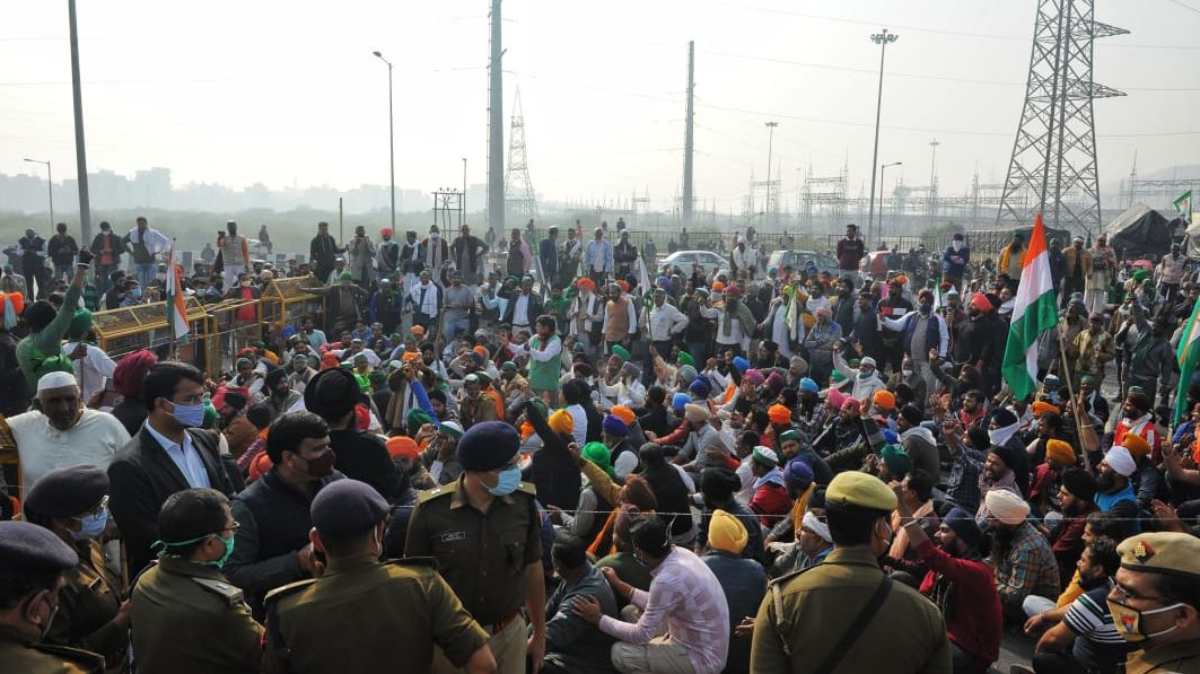
New Delhi: On the evening of 2 January, Brajraj Singh headed to Delhi from Hapur, Uttar Pradesh, in a caravan of 100 tractors and trolleys, carrying at least 50-55 farmers each, to join the farmer protests in Ghazipur against the three new farm laws.
The Ghazipur protest, which started in late November after the Singhu border protest, has been constantly growing in size since. The protest, which started as a blockade on the Delhi-Ghazipur border near the Ghazipur landfill, now covers a 2-3 km stretch of the Delhi-Meerut Expressway.
But unlike the Singhu border protests, which are led by farmers from Punjab and Haryana, the Ghazipur protests are being led primarily by farmers from Uttarakhand, Madhya Pradesh and Uttar Pradesh.
Yudhvir Singh, general secretary of Bharatiya Kisan Union (BKU), said that what started as an agitation by 2,000-2,500 farmers has now grown into a protest with more than 40,000 farmers within six weeks.
“Mainly, farmers from Uttarakhand, Uttar Pradesh, Delhi rural, and Madhya Pradesh have joined the protests here, and the number of protesters is only increasing by the day,” he said.
Keeping in mind the biting cold, some young farmers volunteered to install tents at the protest site.
“We have installed some 800-900 tents over here since they offer better protection from the cold. It cost us Rs 3 lakh, which we raised by asking for donations in our community,” Vikramjeet Singh, a protester from Bazpur in Uttarakhand, told ThePrint.

The concerns of the protesters at Ghazipur are, however, a bit different from those agitating at Singhu or Tikri borders.
While Punjab farmers are protesting to not lose MSP (minimum support price) on their produce, the Ghazipur farmers are protesting against less government procurement, which often leads them to sell crops at rates below the MSP, and delayed payment for crops. Both the groups, however, want the Centre’s farm laws to be scrapped and MSP be made a legal provision.
The UP government, meanwhile, denied there was less procurement of crops and delayed payment, saying they have procured a record number of crops this year.
Also read: NH-9, NH-24 passing through Ghazipur border reopen amid farmers protest
‘Payments made after a year’s delay’
Farmers at Ghazipur told ThePrint they were forced to sell their produce at rates much below the MSP as the government procured less from them in 2020.
“The MSP for rice was set at Rs 1,868 per quintal, but we were able to sell our rice for only Rs 800-1,000 a quintal. The MSP for wheat had also been set at Rs 1,925, but we didn’t get more than Rs 1,400 a quintal for our produce in the mandis,” a protesting farmer from UP, who didn’t want to be named, told ThePrint.
According to reports, Punjab accounted for 69.83 per cent and 91.99 per cent of the Centre’s wheat and rice procurement, respectively, in 2019-20, while Uttar Pradesh accounted for 24.42 per cent of rice and 11.15 per cent of wheat procurement.
Between April and May 2020, the Uttar Pradesh government had procured just 5.6 per cent of the state’s total wheat production, which was only 37 per cent of its target.
Sugarcane farmers from UP, meanwhile, claimed that there has been a delay of more than 14 months in getting their payment from the government.
“The promised price for a quintal of sugarcane (early crop) is set at Rs 325, but most farmers sell their crop (to government-owned and private mills) for only Rs 250-300 approximately, and that too the payments are made after over a year’s delay,” said Nishant Singh, a native of Rampur in UP, protesting at Ghazipur border.
Farmers are also protesting against the rising cost of diesel and pesticide.
“Why do you think so many farmers are dying by suicide? Farming is expensive. A small bottle of pesticides ends up costing anywhere between Rs 3,000-5,000. Diesel prices are sky-rocketing too. Where do we go?” said Lakhan Shiaga from Madhya Pradesh.
The average income of farmers from UP, MP and Uttarakhand are also lower than their Punjab counterparts.
According to a NABARD survey of 2017, the average income of an agricultural family in Punjab was Rs 23,133 per month, while the income of Uttarakhand, Madhya Pradesh and Uttar Pradesh farm families stood at Rs 10,855, Rs 7,919 and Rs 6,668, respectively.
‘Have no pending payments’
The UP government, however, denied the claim of delayed payment and less crop procurement.
Uttar Pradesh Agriculture Minister Surya Pratap Shahi told ThePrint, “We have already paid Rs 1,10,000 crore to the farmers. We have no pending payments for the year 2019-20, and only a small amount is due for the year 2020-21. These payments are also being processed. All in all, 95 per cent of the dues have been cleared.”
He also said the government has procured more wheat and rice, and that more crops have been bought at MSP this year than ever before.
“We procured 50 lakh metric tonne (LMT) rice this year. This was 10 lakh metric tonne earlier. Our procurement of wheat stood at 55 LMT. In lockdown, the procurement was at a historic high. We even ran more than 8,000 procurement centres,” he told ThePrint.
Also read: What Modi govt can offer in a new deal to restive farmers to end the stalemate
Subscribe to our channels on YouTube & Telegram
Why news media is in crisis & How you can fix it
India needs free, fair, non-hyphenated and questioning journalism even more as it faces multiple crises.
But the news media is in a crisis of its own. There have been brutal layoffs and pay-cuts. The best of journalism is shrinking, yielding to crude prime-time spectacle.
ThePrint has the finest young reporters, columnists and editors working for it. Sustaining journalism of this quality needs smart and thinking people like you to pay for it. Whether you live in India or overseas, you can do it here.
Recent Comments