

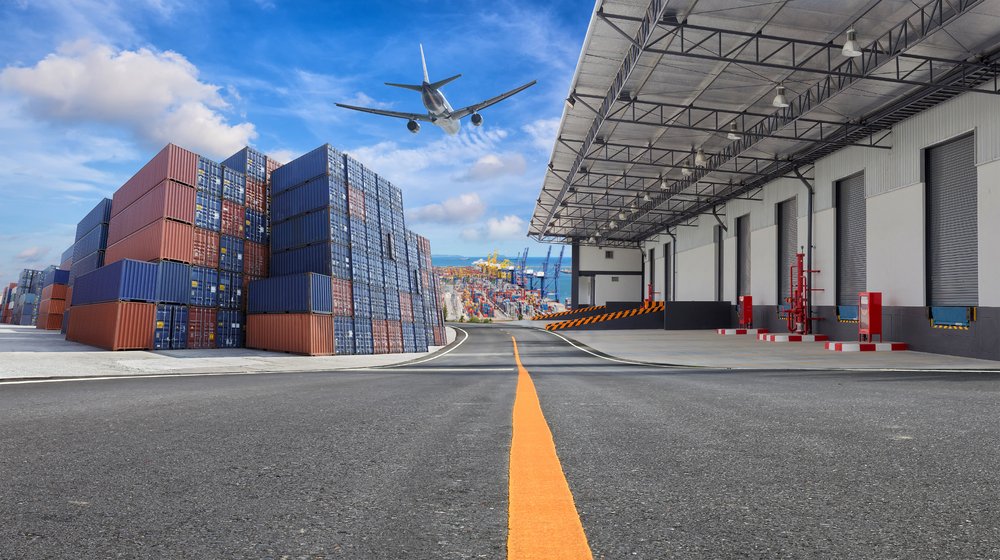

DUBAI: As COVID-19 threw fragile global supply chains into disarray, many companies were stunned by their own vulnerability. The risk of depending on a supply base that is concentrated in one geographic region has been increasing over the past 30 years, but the pandemic quickly demonstrated how much chaos and pain one unexpected event could inflict.
It was a powerful wake-up call. The disruption triggered by COVID-19 has prompted leadership teams to confront a new era of supply chain volatility.
Bracing for an era of increased turbulence, leading multinationals are rethinking their supply chain strategies to lower the risk of disruption. In a recent survey of 200 global manufacturers by Bain & Company and the Digital Supply Chain Institute, executives ranked flexibility and resilience as their top supply chain goals. Only 36 per cent of senior executives ranked cost reduction as a top three goal, down from 63 per cent who saw it as a priority over the past three years.
To improve supply chain resilience, 45 per cent of respondents plan to shift production closer to home markets in the coming years. The good news is that automation has reduced the cost of manufacturing, eroding the labor arbitrage advantage that fueled decades of investment in offshore production. The cost of humanoid robots is comparatively lower now, which means companies with processes capable of being automated such as consumer electronics can opt to move supply chains closer to home without raising costs significantly.
For the past 30 years, manufacturing companies have wrung out supply chain costs by disaggregating the various steps of the value chain, concentrating each step with a limited number of companies and geographies to improve economies of scale. As a result, most leadership teams lack sufficient supply chain visibility to assess their geopolitical and geographical risks. Before investing in a new supply chain strategy, successful leadership teams evaluate their supplier and contract manufacturer risk according to two factors: The country where goods are produced and the location of the supplier’s headquarters.
Once leaders understand their risk exposure, they start building resilience into their value chains in a two-step process. First, they quickly add flexibility to the supply of finished goods and high-risk subcomponents where possible, to limit immediate risks and satisfy customers. Second, they take a strategic approach to rethinking the value chain from end to end. That includes deciding the pace of change and periodically reviewing decisions based on external conditions and internal capabilities. Below are three steps to help companies pioneer the shift to supply chain resilience.
1. Boost flexibility
Supply chain flexibility is becoming an increasingly important concept for gaining competitive advantages. The first priority in making supply chains shockproof is increasing flexibility for supplying finished goods and high-risk subcomponents. This would open the possibility for companies to respond to short-term changes in demand and supply situations as well as structural shifts in the environment of the supply chain on an immediate basis.
Not many countries have the capacity and infrastructure to handle all the volume, so manufacturers often have to piece together a solution across multiple neighboring countries. For many companies, aligning a new production location with demand can deliver significant benefits, particularly in industries where demand is rising even through the downturn, including medtech and certain consumer products.
2. Rethink end-to-end network strategy
For each value chain, leadership teams need to properly balance risk and resilience at the lowest total landed cost. This includes decisions on single versus multiple sourcing, where to manufacture at each stage of assembly, and proximity to customers. They also need to determine whether to produce in-house or outsource, taking into account variables such as national incentives and declining manufacturing costs. Successful companies revisit their value chain choices regularly, especially in turbulent times.
3. Balancing cost and risk
Resilience does not eclipse every consideration. As leadership teams start to understand where they need flexibility, they face important trade-offs on cost. Investing in too much flexibility can render a company uncompetitive. As they look to reshape supply chains for the future, successful companies determine how much resilience they need, where it matters most, and what they can afford.
Resilient and flexible supply chains can be a powerful defensive hedge, but also a source of competitive advantage. Leaders make the most of options such as capacity buffers, digital infrastructure and nimble teams to react faster and more efficiently than their peers.
The investment to build and maintain these capabilities varies, depending on a company’s need for responsiveness and efficiency, as well as the level of industry competition. This is why the roadmap for resilient supply chains must be linked to a company’s long-term business strategy. For example, a high-growth business that has high margins and short product life cycles, and is dependent on components coming from widely distributed sources such as high-end cell phones, will require a different type of supply chain resilience than a hypercompetitive low-margin business, such as clothing or toys, which relies on imported finished goods.
Geopolitical volatility and market turbulence will transform supply chain management in the coming decade. Leadership teams that invest in strategies to increase supply resilience will simultaneously create a new source of competitive advantage.
* Karim Shariff is a partner at Bain & Company Middle East
Recent Comments