


Viewpoint: Hypersonics Illustrate Supply Chain Vulnerabilities
1/7/2021
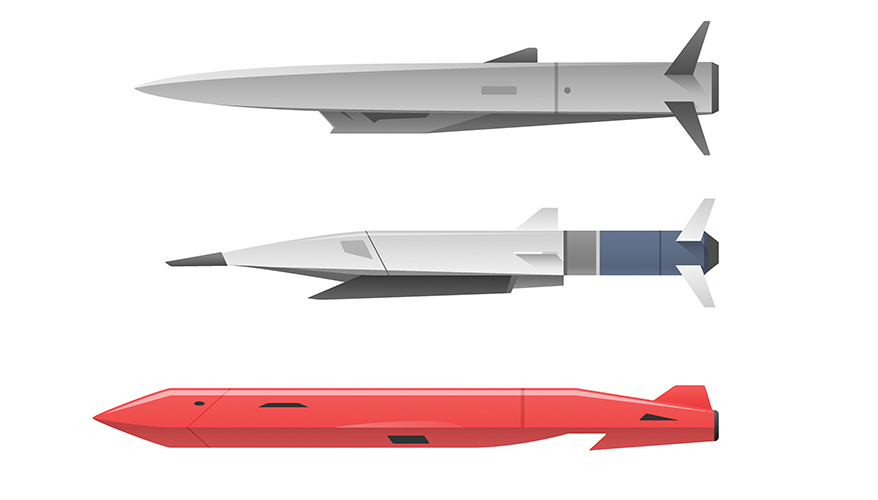
iStock illustration
Hypersonics — the science behind missiles that travel in excess of Mach 5 and can quickly change trajectory mid-flight — illustrate the challenges faced by U.S. companies working on emerging technologies.
Contractors engaged in these areas must be vigilant about their supply chain vulnerabilities. They also need to be aware of the regulatory risks posed by foreign investment, including review and potential intervention by the Committee on Foreign Investment in the United States (CFIUS).
Because hypersonic weapons are an emerging critical technology vital to future warfighting capabilities, nation-states are aggressively pursuing them. Several countries, including U.S. allies and competitors, are independently developing hypersonic technologies.
This competition has led some to fear a coming arms race. Notably, both China and Russia have been touting their growing hypersonic capabilities. The U.S. government worries that these countries may take advantage of “a lull in U.S. modernization” to improve their capabilities in this area, including through surreptitious means.
The international market for hypersonic technology is expected to grow at a compound annual rate of over 7 percent over the next five years.
The increase in demand for hypersonic technology components does not come only from abroad. According to a May 2020 article in Design and Development Today, as recently as 2017 the Pentagon spent about $800 million on hypersonic weapons programs, rising to $3.4 billion in 2020. The administration’s 2021 budget request seeks $3.6 billion.
While most investment in hypersonic technology is defense-related, venture capital investment has exceeded $300 million over the past five years, including support for commercial ventures.
Despite the market demand, smaller suppliers of defense technology are struggling to keep up as their supply chains are impacted by the COVID-19 pandemic and an increasingly tense U.S.-China trade war. Large industrial providers and small research-and-development operations alike have had to face stay-at-home orders, travel restrictions and delivery delays. This issue has been especially acute for hypersonics. Many of the companies involved in this technology tend to be smaller, and those conducting R&D work could be more vulnerable to the economic effects of the pandemic and trade restrictions.
The effects of the pandemic and trade conflict with China come on the heels of increasing U.S. government restrictions on the use of Chinese products, based on concerns that China could infiltrate the U.S. defense industry by embedding its technology in weapon systems. As a result, the Pentagon is increasingly focused on the origin of components used in weapons systems.
Many defense contracting supply chains are global and have deep roots in China. Defense officials have highlighted the need to ensure that foreign nations cannot cut off U.S. companies’ access to vital materials or buy their way into the defense-industrial base.
As part of this effort, agencies have increased their scrutiny of the supply chain to include even small companies developing components that could be incorporated into hypersonic technologies.
A recent analysis of the hypersonic supply chain conducted by big data analytics firm Govini noted that “the risk of supply chain infiltration by foreign adversaries to hypersonic technology exists at deeper levels than are typically visible” by the Defense Department and prime contractors. The report noted that the average exposure to Chinese suppliers in tiers 3 to 5 of the supply chain, where visibility of component origin is decreased, reached 11 percent, and indicated that contractors likely share suppliers at lower levels of their chain, thereby increasing the risk of foreign influence.
Undersecretary of Defense for Acquisition and Sustainment Ellen Lord recently highlighted the Pentagon’s challenges, stating, “Our biggest sustainment concerns with hypersonics are ensuring that subcomponents have a resilient supply chain with secure microelectronic components and that the … military services have a strategy for spares and repairables that provide sufficient annual quantities to ensure predictability for suppliers and readiness for the warfighter.”
To address these vulnerabilities, the Defense Department has rewritten acquisition policies to focus on “creative compliance,” including providing the Adaptive Acquisition Framework to deliver technology more quickly and help acquisition professionals design strategies to minimize risk. It has implemented rules restricting the use of some Chinese equipment and is increasing cybersecurity requirements. Pending legislation incentivizes companies to source materials domestically.
On the foreign investment side, CFIUS has long scrutinized foreign acquisitions of U.S. companies that present national security concerns. In February 2020, new regulations expanded the committee’s authority to cover noncontrolling transactions involving foreign investors. Parties are now required to submit a declaration to CFIUS for review of a transaction if the U.S. business must obtain a U.S. regulatory authorization to export its critical technology to the foreign party involved in the transaction.
In 2018, the Department of Commerce identified hypersonics as a category of emerging technology subject to export controls. Emerging technology also serves as part of the definition of critical technologies for CFIUS purposes.
Additionally, CFIUS regulatory changes in October require companies to file mandatory declarations in certain cases if a foreign investor could acquire control of a U.S. business that produces, designs, tests, manufactures, fabricates, or develops one or more critical technologies for which a U.S. regulatory authorization would be required for export.
As a result, foreign investment in companies working with hypersonic technology could be subject to mandatory CFIUS declarations. U.S. companies involved in hypersonic-related technology must be proactive about mitigating potential concerns. Manufacturers and suppliers should seek counsel to conduct proper due diligence and CFIUS analysis ahead of any potential foreign investment transactions, especially those involving Chinese or Russian investment.
Similarly, foreign investors in such companies should conduct sufficient due diligence, including confirming export control classifications, to determine whether their target companies are creating or using critical technologies.
Even if a mandatory declaration is not required for components throughout the supply chain, due to the heightened national security concerns around protecting hypersonic technology, impacted companies and investors should consider filing a notice with CFIUS to obtain a safe harbor ruling that it does not object to the transaction.
Parties choosing not to file for review remain vulnerable to future unilateral review, as there is no limit on when the committee can review a transaction. Obtaining a safe harbor ensures that the committee will not later review the filing and impose penalties, force the foreign party to divest from the U.S. business, or require the parties to adhere to conditions mitigating specific national security concerns.
One of the few topics that both Democrats and Republicans agree on is an urgent need to stop the flow of critical technologies to adversarial foreign powers and any diminishing role of U.S. military global technological superiority.
Although the term national security is undefined in CFIUS and related legislation, and evolves to address a changing threat environment, U.S. policymakers from both parties have been very clear that executive and legislative efforts must remain focused on stopping and eliminating foreign party access to emerging technology and technical data.
Thus, the incoming Biden administration likely will maintain the same policy stance on addressing national security supply chain vulnerabilities as well as CFIUS investigations and enforcement. In addition, we may see even more regulatory controls monitoring supply chains to ensure that foreign component products cannot affect the supply chain of emerging technologies and other defense and military items.
These regulatory controls may require additional due diligence of the supply chains for military and defense items and their components. Companies should monitor these issues and ensure that product development, supply system management and regulatory lawyers work together to plan a strategy to account for these challenges.
Due to disruptions caused by the COVID-19 pandemic, trade conflicts and growing U.S. national security restrictions, companies involved in emerging technologies should examine whether vulnerabilities exist within their supply chains, and, if so, what alternatives may be available. Companies should also perform thorough due diligence on all foreign investment to best understand CFIUS risk.
This due diligence should include screening processes to identify foreign beneficial ownership or investors, and classification reviews of the technology or product to determine whether the company’s technology is considered an emerging technology, is export controlled, and/or requires an export license.
Be sure that counsel can identify any national security implications, conduct export classification reviews, raise alternative supply chain opportunities, explore applicable exemptions and craft deal documents to position the company to successfully complete transactions while facing CFIUS and other national security obligations. Developing the due diligence processes to fully identify supply chain vulnerabilities, technology classification and foreign investment risks can be time-consuming, but would go a long way toward mitigating supply chain and CFIUS risk.
Abbey Baker is counsel, Christian Contardo an associate and Doreen Edelman chair of the law office of Lowenstein Sandler’s global trade and policy practice.
Topics: Emerging Technologies
Recent Comments