



Globalisation of trade and decades-long innovation in supply chain networks have resulted in significant benefits for all stakeholders – greater efficiencies, lower costs, greater access to markets to name just a few. Yet, Covid-19 has exposed vulnerabilities in global supply chains. Dispersed supply chains offer more possibilities for shocks to penetrate and spread, and practices such as “just-in-time” and single sourcing can amplify shocks and lengthen recovery time.
Which begs the question: Why weren’t companies better prepared? After all, academics and practitioners have been stressing the importance of agility and resilience in the supply chain for decades. They have advocated for diversification so value chains can handle demand and supply shocks. The problem, however, is that in good times, companies are unwilling to make the larger investments that have always gone along with diversification, in the form of complexity and coordination costs. The choice is to either save money with a concentrated supply chain structure that increases crisis vulnerability, or build in expensive redundancies to prepare for a rainy day that may be a long way off. This cost-agility trade-off (Figure 1) leaves conscientious companies splitting the difference between present realities and projected future demands.
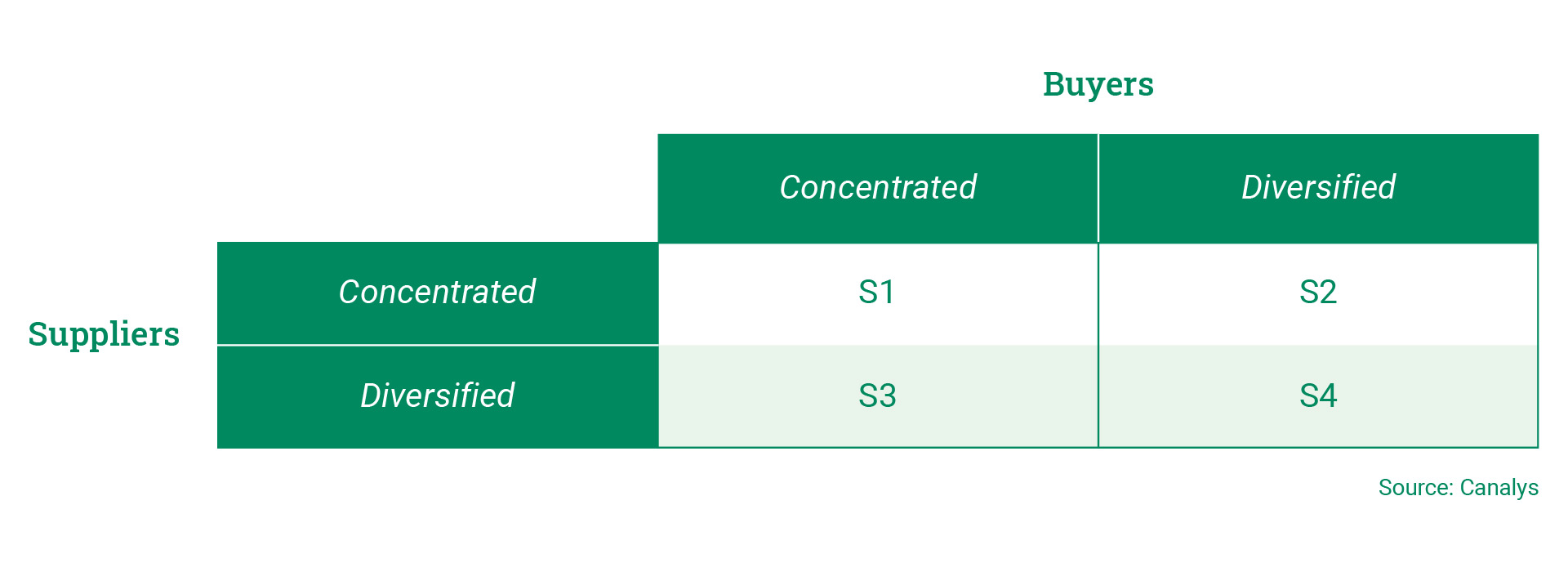
A careful look at how some firms effectively responded to the Covid-19 crisis reveals a new, more effective supply chain frontier. The simple framework presented in Table 1 illustrates this.

Table 1: Different supply chain structures
Supple supply chains
Is it possible for firms to enjoy the “best” operating model depending on the operating conditions of the moment, e.g. diversified during periods of high volatility and concentrated in stable periods? In other words, can firms swiftly and seamlessly shift their supply chain structure between S1, S2, S3 and S4, not just during crises but also after, without ruining their business due to the costs of pivoting and restructuring? The answer is yes.
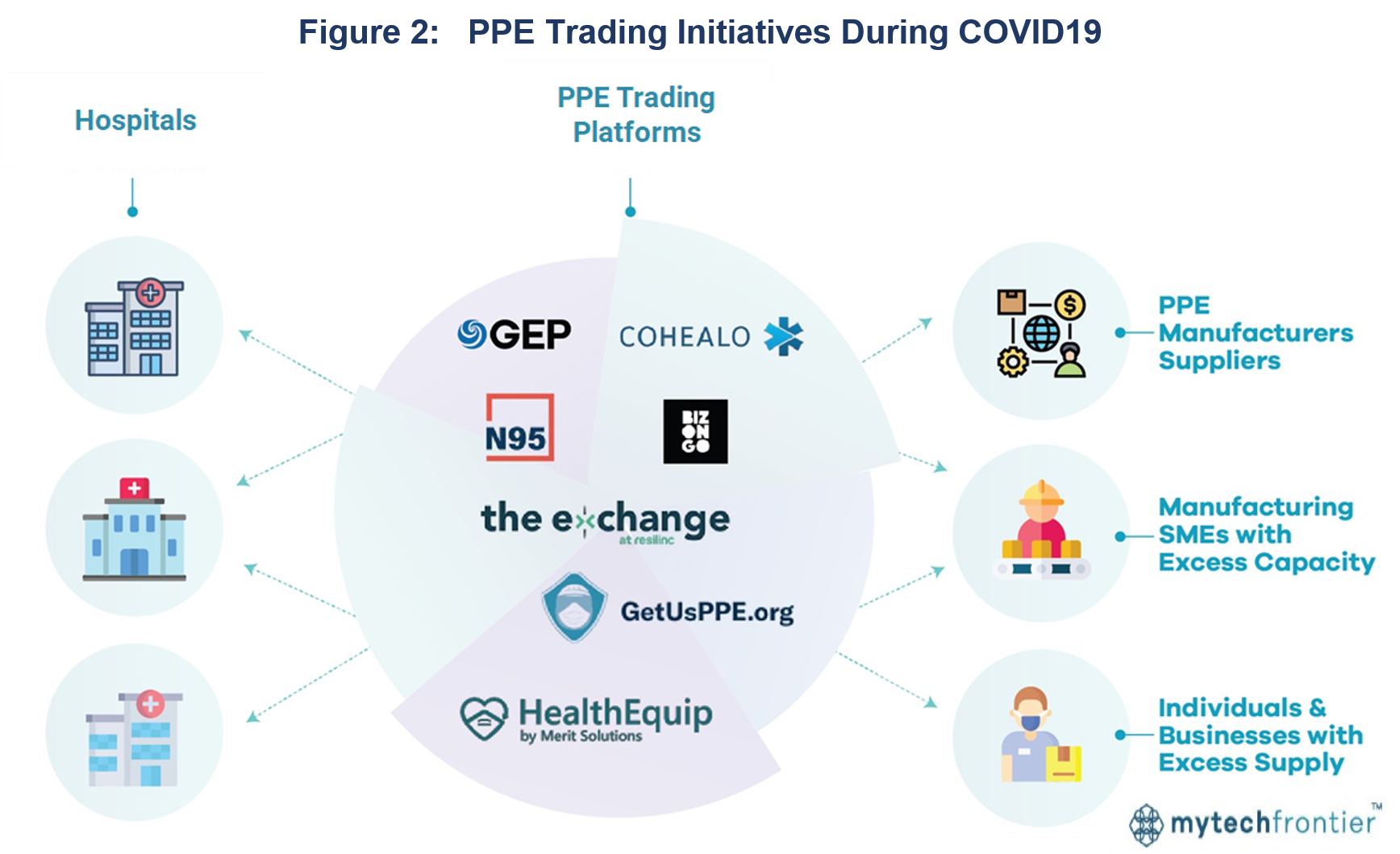
During Covid-19, hospitals were able to use online platforms to access and share crucial supplies of personal protection equipment (PPE) and ventilators (Figure 2), moving from S1 to S3 overnight. Tech giants like Alibaba used their shopping and logistics infrastructure to support farmers in Hubei to revive sales post-lockdown. Apple and Huawei partnered with delivery platform Meituan Dianping to deliver smartphones to customers’ doorsteps. At the same time, Alibaba itself tapped the online freight platform Freightos to serve its international buyers and sellers.
More examples? Take Rungis, one of the world’s most iconic food markets in Paris. It overcame the lockdown of its B2B business (connecting a diversified supplier base with a relatively concentrated pool of institutional food/hospitality customers) by starting a new B2C business, Rungis Livre Chez Vous (Rungis Delivered to Your Home) in partnership with a five-year-old start-up, moving from S3 to S4. The bond-market trading platform MarketAxess had struggled to break into the institutional bond markets that relied largely on personal contacts. It smartly leveraged both the supply spike in corporate bonds due to corporates rushing to shore up their finances and an ecosystem of traders and investors with no option other than work from home, moving from S1 to S4.
Platform integration
The common denominator is that these businesses tapped platform solutions to absorb demand and supply shocks and improve the agility of their supply chains. Platforms allowed these businesses to gain access to multiple, diverse and reliable suppliers and customers that were previously inaccessible, or were too costly to reach. Additionally, these businesses benefitted from platform-enabled policies and processes, focused on assuring quality and building trust among businesses and suppliers.
But are these observations enough to conclude that integration with platforms is the inevitable future for every supply chain? There is no doubt that platforms give participating firms the advantages of diversification, but they are not costless. Indeed, platforms offer lower coordination costs than a firm would incur on its own when attempting to diversify its supplier and/or buyer pools, yet the transaction fees charged by such platforms can be significant. Platforms acting as intermediaries also present a potential threat to participating firms by controlling the flow of information in the value chain. Moreover, in the post-crisis period when volatility declines, the economic advantages of platforms may disappear (e.g. Apple may not prefer to continue to use food delivery platforms to deliver iPhones in China post-Covid, especially when customers are ready to flock back to stores). Therefore, the next step in moving the supply chain frontier would be for firms to increase or decrease their degree of engagement with platforms depending on their current operating circumstances.
Firms can attain such a high degree of agility by proactively investing in a robust platform technology stack including cloud computing, API connectivity and integrated data systems. Firms that ensure that the platform technology stack (Figure 3) is integral to their IT and business strategy will be able to swiftly plug into multiple third-party platforms or build their own network of suppliers and buyers in the long-term. Note that these technologies independently provide firms with operational advantages such as cost savings due to automation, supply chain transparency, data-driven business intelligence and such. However, combined use of these technologies give firms platform-enabled agility without a substantial increase in their operating costs.

The platform technology stack has recently become a topic of interest due to its ability to provide firms with economies of scale, scope and learning (intelligent automation). An additional compelling advantage of such a stack is to permit firms to operate a digital, platform-enabled operating system, which gives them a swift and cost-effective way to shift their supply chain structure between S1, S2, S3 or S4 as needed to deal with the circumstances (Figure 4).

Platform-enabled firms have displayed markedly greater resilience during Covid-19. Africa’s leading B2C ecommerce firm Jumia and B2B agtech start-up Twiga Foods rapidly repurposed their supply chains including distribution networks and technology platforms to adapt to overnight shifts in demand and supply. Pre-pandemic, Twiga Foods supplied 3,000 outlets across Africa with fresh produce procured from a network of 17,000 farmers and 8,000 vendors. As the pandemic resulted in sudden demand disruption from its outlets, it partnered with Jumia to repurpose its fresh produce for Jumia’s end customers. Thanks to their platform technology, these firms were able to merge their diverse demand and supply pools in the face of unprecedented crisis.
Digital platform-enabled operating systems should be central to the strategy of firms planning and building an agile supply chain, one that can respond to supply and demand shocks and easily revert to steady-state operations when the crisis subsides. The future of agile supply chains lies in operational agility, which will be generated by the technological architecture of firms rather than an operational strategic choice alone.
This article was originally published at The Edge Malaysia.
Aarti Gumaledar is the Director of Emergentech Advisors and CxO at www.mytechfrontier.com.
Sameer Hasija is a Professor of Technology and Operations Management and the Shell Fellow in Business and the Environment at INSEAD.
V. “Paddy” Padmanabhan is a Professor of Marketing and the Unilever Chaired Professor of Marketing at INSEAD. He is the Academic Director of the INSEAD Emerging Markets Institute.
Don’t miss our latest content. Download the free INSEAD Knowledge app today.
Recent Comments