

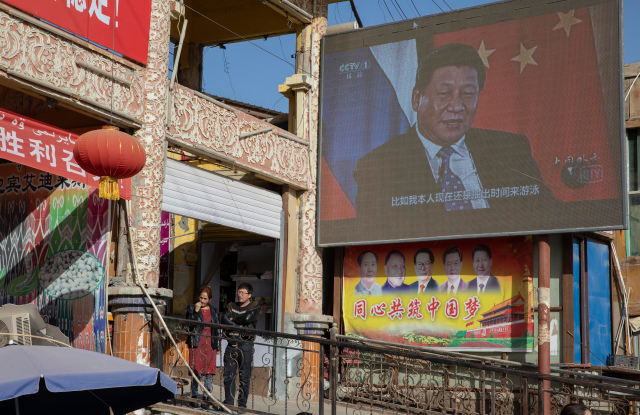

SHANGHAI–While troubling reports of forced Uighur labor in China have abounded for years, 2021 looks to be shaping up as the tipping point on the issue.
Both the U.S. and U.K. governments have moved this month to tighten up scrutiny of forced Uighur labor in goods coming into their countries, and on the last full day of the Trump administration, former secretary of state Mike Pompeo declared China’s oppressive practices in Xinjiang and its Muslim minority Uighur population to constitute “a genocide”.
While multinational companies across many sectors have been implicated in these troubling reports, these developments hold particular weight for the apparel and fashion industry as Xinjiang produces approximately 20 percent of the world’s cotton.
Investigations by the media and activists over the years have indicated the establishment of large-scale detainment camps housing over a million minorities as well as Uighur forced labor transfer programs. An ASPI report last year estimated that over 80,000 Uighurs have been unwillingly transferred to other parts of the country to work for little to no wages between 2017 and 2019 alone.
The Chinese government has always denied these claims, describing the camps as vocational training centers and labor programs as voluntary.
Author Amelia Pang, in her forthcoming book “Made in China: A Prisoner, an SOS, and the Hidden Cost of America’s Cheap Goods” disputes that Chinese government narrative, the latest voice to do so. Pang herself tracked down some of these forced labor sites– a problem that has spread from within Xinjiang to across China–and spoke to WWD regarding what measures foreign governments and individuals can take to help stamp out this practice.
WWD: What was the most surprising finding for you in researching this book?
A.P.: Just actually how easy it is to find forced labor in certain companies’ supply chains. I went to these labor camps and I talked to the guards. I posed as a business person who wanted to source from them. I said I was from an overseas company and they all readily agreed to export products to me. The guard would openly agree and admit that the people inside are prisoners and are not working via free will. I would follow the trucks from the camps to the official exporters. It wasn’t that hard to document. If people want to find out they can certainly more than what I was able to as an individual.
WWD: What are the most problematic product categories with forced Uighur labor?
A.P.: It’s hard to say because it seems like they are making everything. Clothing is a big one because Xinjiang supplies a lot of cotton. They are making everything from human hair extensions to PPE equipment. To some extent, you do have less exports going to some industries since the outbreak of COVID-19 [because of a drop in demand], but in others such as PPE equipment a lot of it is made in China. We’ve been learning that Uighur forced labor has been making them and Uighur forced labor has gotten a lot worse as the years go by.
WWD: Whenever the topic of supply chain accountability comes up, the brands say that they think they’re working with this company but that it is subcontracted–sometimes several times over–without their knowledge. What do you make of a response like that and is that good enough?
A.P.: I don’t think so. If you talk to the factory owners, it’s their sourcing practices that force the businesses to subcontract–not paying them enough to make the products or on an unrealistically short deadline or changes. They can’t make the products or changes that fast. If they’re late on the deadline, they’re often charged a very high fee. These are all policies and factors that the brands can change and control.
WWD: How do you square that with the fact that many countries around the world have experienced a big rise in levels of unemployment due to the pandemic? More than ever, consumers have tightened their purse-strings and many companies are struggling to stay afloat.
A.P.: It’s definitely a socioeconomic issue in the U.S. and there are a lot of people who simply cannot afford to pay higher prices but the issue doesn’t always come down to price. Even a lot of not inexpensive brands have been implicated in this like Abercrombie & Fitch or Nike.
I think it would need a cultural shift on the consumers part to be okay with buying less stuff. You might be paying more for one thing that you really love and you cherish and use over and over again, instead of buying 30 things in different colors.
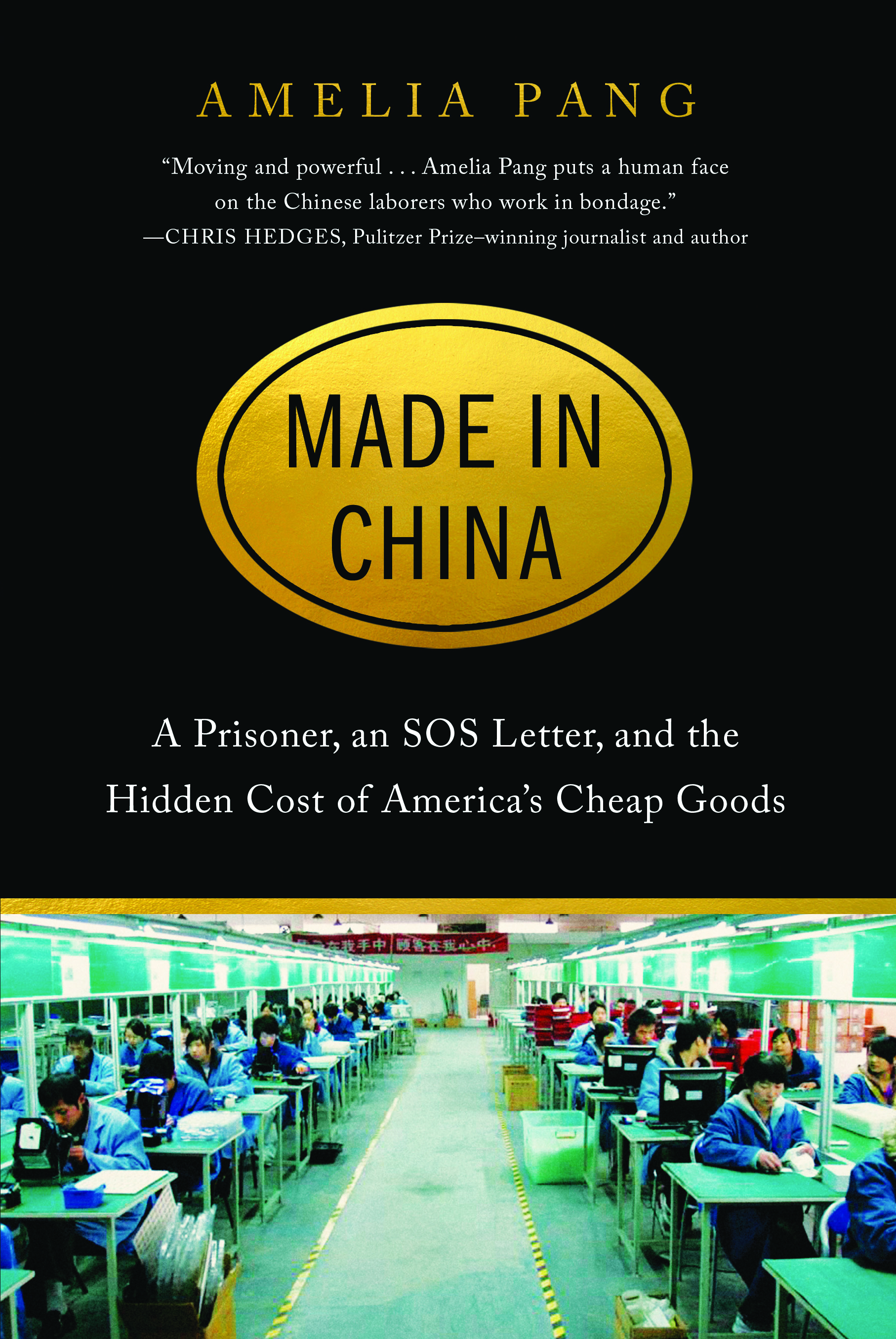
Written by Amelia Pang, “Made in China” will be released on Feb. 2.
Courtesy Photo
WWD: Let’s say the new policies from the U.S. and U.K. do help stamp out the issue with exports using forced labor. However, China’s domestic economy is growing strongly, do you not anticipate that these forced labor programs will just pivot for products that are going to stay within China then?
A.P.: I don’t think Uighurs are going to have a very nice life in China one way or the other. But in this situation can improve a lot because I think trade actually is a big driver. Xinjiang happens to be the center of China’s Belt and Road initiative, which is a trillion dollar investment. It’s a big trade route that connects China 60-some odd countries. The Chinese Communist Party is very afraid of a Uighur uprising messing with that potentially. I don’t think there’s a real reason to be afraid of it. The Uighurs very much just want to live a quiet life and not get in trouble.But that’s the ultimate reason why they started cracking down the Uighurs in the first place in recent years, to protect the Belt and Road initiative.
WWD: What about companies that claim they operate in Xinjiang completely ethically? For instance, Esquel claimed so and that they can provide proof of it with independent audits. They said they were very upset that their facilities were included in a U.S. government list of bad actors. So, what about the impact on operators that insist they are doing right by their workers? And do you have a sense of the how prevalent forced labor is within Xinjiang versus legitimate and ethically-operated business?
A.P.: I’d say the issue is pretty prevalent. Maybe there was at one point in time Esquel could have auditors provide proof that these products are not made by forced laborers, but I read an article in the Wall Street Journal that said auditors very recently have had difficulty going to independently auditing the factories. The situation is changing rapidly, and it’s really hard, I would question whether Esquel could still get their auditors to go and independently audit their factories.
WWD: What about potential unintended ripple effects? Some would say that by shutting this industry, you could inadvertently end up damaging the people’s the livelihoods of people you are trying to help. For example on the issue of child labor, we can all agree that in an absolutely ideal world no 12-year-old should be working in sewing workshop. At the same time, if that child is breadwinning for their family and brands suddenly move away, what unintended impact on the local communities could there be and how can we mitigate that?
A.P.:That’s true. That’s a very good point. I think that with every legislation that gets passed regarding what’s happening in another country there’s different cultural nuances and effects that we don’t expect. There’s going to be good manufacturers with actual, real workers who are paid properly in Xinjiang and it’s very unfortunate that they would also get dragged into this and get hurt. But I don’t see any other solution since a lot of Chinese policy advocates and human rights advocates truly believe that it’s trade that caused the crackdown–change on the Belt and Road initiative primarily–that it’s going to take trade to push a rethinking of policies. In the short term, it could hurt a lot of workers that are being paid properly, and that’s very unfortunate. But when you have millions that are undergoing a genocide, unfortunately, you do have to take heavy actions.
WWD: You say you were unhappy with the recent U.S. legislation banning Xinjiang cotton in that it was not exactly what you’re hoping for.
A.P.: A lot of activists were hoping to see the Uighur Forced Labor Prevention Act passed, which would have banned pretty much all products from Xinjiang from entering the U.S. but only cotton and tomatoes and several other products individually were banned. The U.S. government has a lot of red tape. It takes a long time for them to really gather enough hard evidence to legitimize the ban. And for an issue like Xinjiang where there’s very little access, its really hard to collect hard evidence and you’re relying on things like survivor accounts.
WWD: What are you hoping for next?
A.P.: Well, I would hope for the Biden administration and with the Democrats taking over the U.S. Senate that the Uighur Forced Labor Prevention Act could be seriously considered in the Senate as it was passed unanimously in the House already. Some believe the reason why it didn’t go through the Senate yet is because companies like Apple and Nike were lobbying to heavily revise it.
WWD: How about on a more individual level?
A.P.: I would say the next time you go shopping online at your favorite store, go look at their sustainability page or their corporate social responsibility page. Most companies these days either have one or both of those pages and see what information it reveals. See how little information those pages sometimes reveal. It’s actually not saying much to just list the factories or list an audit score but not actually specify what they are auditing. That’s not enough. And as consumers start asking companies on Facebook or Twitter to reveal more, and they start a movement like that, then companies will be forced to respond.
WWD: Can you elaborate on audits?
A.P.: You know, a lot of times when news comes out that the factory committed some kind of egregious Human Rights Act, the company will say ‘oh, we did an audit, and we found no evidence of a way that in our audit.’ But that statement actually doesn’t mean much because there’s many different kinds of kinds of audits.
For example, the average audit might cost a couple $100 and be a check for simple things like cleanliness of the factory, the quality of the merchandise, the quality of equipment, things like that. That kind of audit really can’t tell if forced labor is happening, they often don’t even interview the workers about their working conditions. Then you have some more comprehensive social compliance audits that might cost $1,000 or more. In those audits, the auditor will look at wage documents, employee timesheets and things like that. Those are still hard to tell if they are subcontracting to labor camps.
And then you have another audit level that cost $5,000 and take five days to do. The auditor cross analyzes the wage documents, and they look at the working timesheets of all the departments and analyze all the documents. So that kind of audit might be able to detect unauthorized subcontracting or forced labor. But how many companies are doing that kind of audits? Consumers can ask businesses to show what kind of audits are conducted. Ask them what do you actually look for and what follow-up actions you took to prevent forced labor in your supply chain.
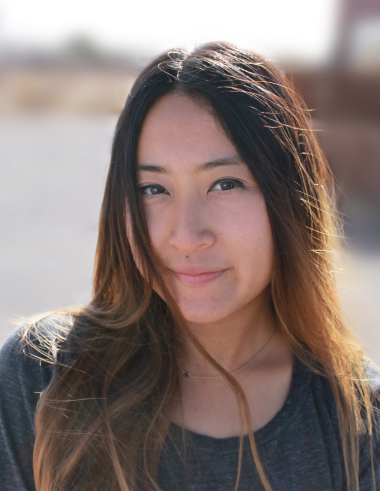
WWD: How has working on this book and researching this issue personally impacted you, particularly since you have some Uighur heritage?
A.P.: Yes. My family is Chinese and Uighur and most of them only identify as Chinese. When I was growing up in the U.S., I’ve always been told I’m just Chinese American. I never thought otherwise even though I actually look quite different from my Chinese American counterparts. You know I’ve got the Uighur nose, darker skin–I get tan really easily. I have big wavy hair and it’s really different texture from, you know, Chinese people. I always felt like an outsider.
Technically, I am only one-eighth Uighur so I figured that’s why it’s not a big part of my family’s culture and our day-to-day lives. But it was only, sadly, in very recent years that I realized, it’s not just the fact that we are one-eighth Uighur that we know nothing about Uighur culture and heritage and religion. It’s because of the policies in China that has made it difficult for people to celebrate Uighur culture without raising suspicions and getting in trouble and having a potentially difficult time getting jobs and things like that.
That’s one of the reasons why pretty much nobody in my family is in contact with any of our relatives that might be full-blooded Uighur. That is something I think about a lot, because there’s not much I can do to help them and my relatives may be in camps. So that’s a regret I will always have.
Related:
Recent Comments