

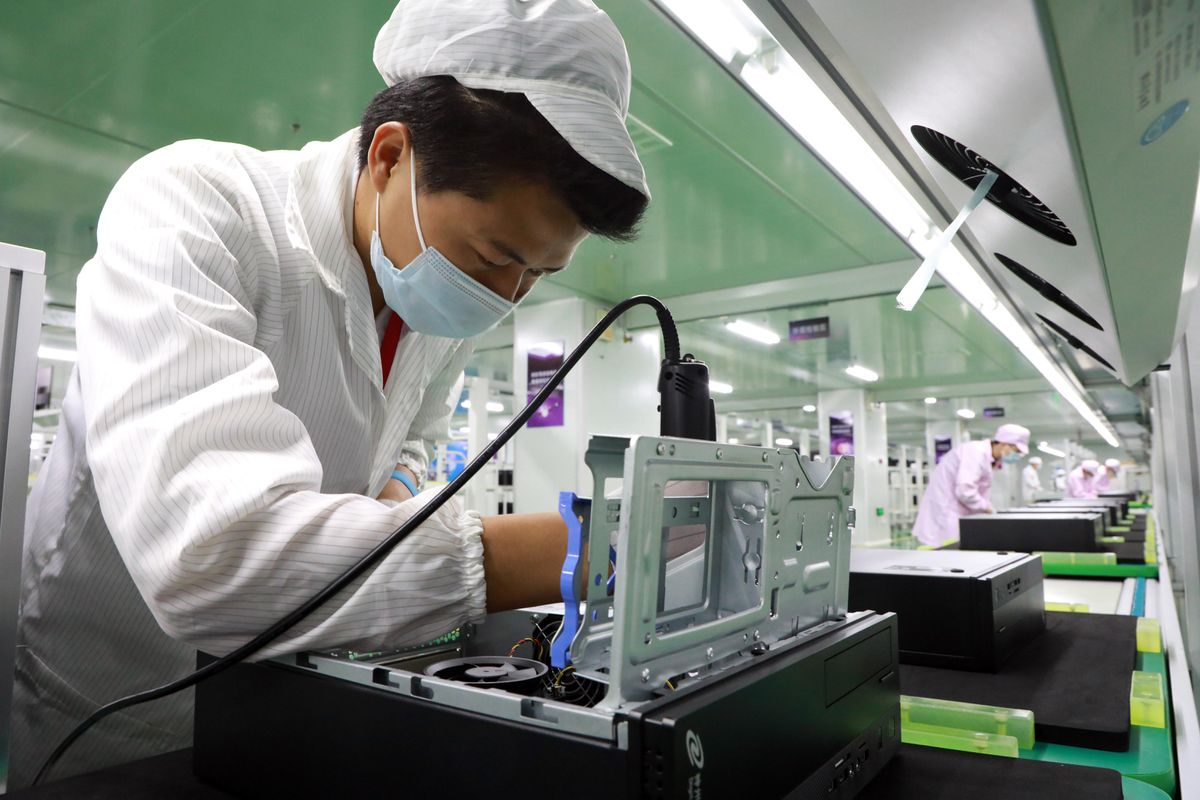

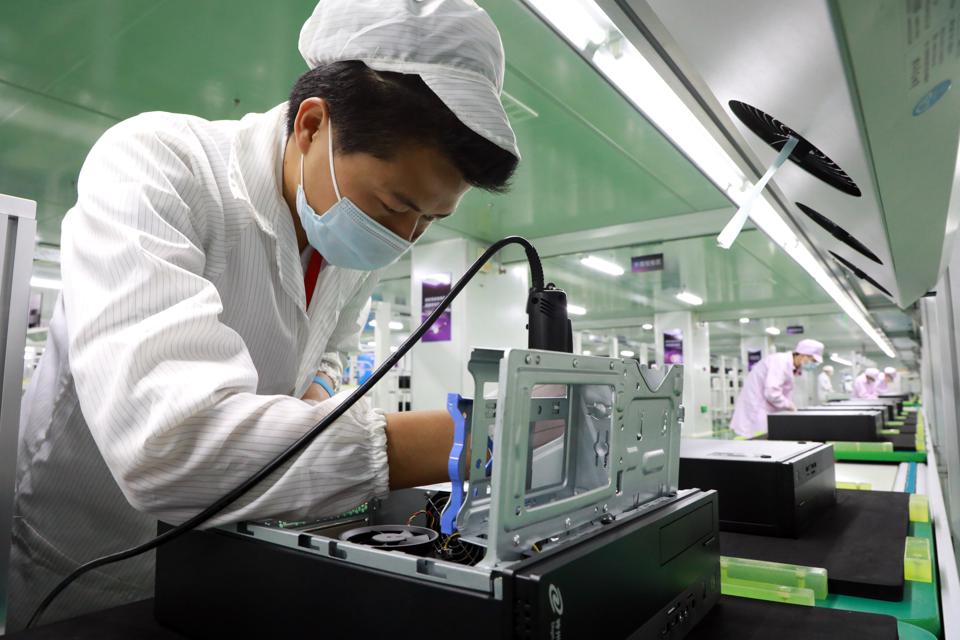
A line operator works on an electronics assembly line (Photo by VCG/VCG via Getty Images)
VCG via Getty Images
Electronics manufacturing loses billions of dollars every year due to misaligned incentives within the supply chain. These misalignments fester under the surface leading to suboptimal results: lower margins, late shipments, and lower trust relationships with suppliers.
But the most visionary supply chain and manufacturing leaders are realizing that Industry 4.0 and Smart Manufacturing technologies, traditionally billed as increasing productivity and increasing Overall Equipment Effectiveness (OEE) are a secret weapon they can use to drive cultural change that corrects these misalignments. They are pushing these technologies to do double-duty: driving both the core efficiency improvements and setting a new culture around them. By reevaluating the misaligned incentives that have developed in their supply chains over decades, these leaders are breaking the mold, empowering their employees, and driving results that are saving their companies tens of millions of dollars or more each year.
Here are the three key misalignments that electronics manufacturing leaders can realign as part of a digital transformation, saving billions of dollars of inefficiencies and revenue loss every year.
Misalignment between Brands and Manufacturing Partners
The most important relationship in electronics manufacturing is between the Brand – the company whose logo is on the product – and their Contract Manufacturing partner (CM). It’s only fitting that the most important misalignments happen here too.
The misalignment in this critical relationship stems from somewhat different goals: Brands want to ship the best possible product that will delight their customers, while maintaining a reasonable margin; CMs want to transform the product as cheaply as possible without causing returns. There’s a big gap between “delight” and “not get returned”.
But to win business in a highly commoditized field, CMs must bid as low as possible, with margins as low as 3% in some cases. This creates strong incentives to reduce costs wherever possible to remain profitable.
Most misalignments are cemented in the commercial negotiation of the partnership itself: what the cost of transformation will be and at what final yield, and who pays for rework, returns, headcount, automation, etc.
A common error is to establish the cost of transform as a “price per headcount” on the assembly line. Agreeing to this is a sure-fire way to end up with zero automation and lots of extra inspections or steps you might not need. Flat-fee rework terms can also dis-incentivize process improvement beyond a negotiated threshold.
Misaligned incentives create mistrust, data hoarding, and slows problem solving to everyone’s detriment. Better connected data tools, which Industry 4.0 technologies supply, help drive the cultural shift in relationships toward transparency by providing an objective, shareable record of what’s happening. This added transparency means both sides can quickly agree on the reality of a situation and move on to fixing them.
The best manufacturing leaders are leveraging better data and traceability to build a new paradigm of Brand-CM partnership that is collaborative and win-win.
Misalignment between Brands and Suppliers
One step upstream from the CMs are the component, sub-assembly, and part suppliers. While this relationship can be one that’s kept at arm’s length, some companies collaborate incredibly closely with their suppliers to develop new products and technologies together. Alignment across the supply chain is critical for producing competitive innovations on tight schedules.
Similar to CMs, suppliers also exist in crowded ecosystems, so in order to beat out competition, they are incentivized to bid low, and then try to make up additional margin with great execution. When pressed to cut costs, they may cherry pick parts in development builds to make their processes appear more stable. This leaves the burden of rejection during ramp and production on the downstream supplier or CM, often creating preventable downstream failures that can consume incredible time and energy to analyze and resolve.
The only way out of this problem is to build a culture of collaboration and transparency – and that responsibility lies squarely on the Brand – the only commonality between all parties and the ultimate owner of the final product. Perhaps counterintuitively because of their marketing, many Industry 4.0 tools also innately solve this problem. Again by enabling holistic, automated data aggregation not just within a factory but across multiple facilities in a supply chain, unified systems like manufacturing optimization platforms can create a “digital thread” of data representing a product’s supply chain journey, and consequently power collaboration between across many parties through real-time access to the same, actionable information.
I work with dozens of the world’s leading electronics brands and growth-stage hardware companies, and one thing is clear: today, few leaders realize that aggregating one common set of facts about each unit is the key to faster time to market and higher margins.
Misalignment within Electronics Brands
We often look outward for our problems, but some of the worst misalignments in the industry happen inside the brands themselves, between teams, even though everyone is wearing the same badge. The brands want to deliver high quality products that delight their customers, at profitable margins that will drive growth in their businesses. But most companies have different reporting chains for R&D and Operations and Manufacturing teams, and it’s in the translation of those efforts down that the misalignment is often created.
In many organizations the division of responsibility follows this pattern:
- The R&D team must deliver a product to spec, with a proven process, by a designated date.
- Operations and Manufacturing must improve margins by reducing the cost of transformation (typically by negotiating supplier costs down and removing headcount)
Do you see the problem? Most people don’t at first. Both incentives are “open-loop”: they influence each other and the business, but since neither side owns a KPI downstream of their part of the process, both can make decisions that result in great team outcomes, but poor business outcomes (like bad reviews from escapes resulting in fewer sales or recalls). By optimizing locally, the business actually often loses top-line revenue.
There are many misaligned incentives hiding within organizations that only leadership can untangle, but often don’t rise to their radars. This is usually because there is no end-to-end product ownership, and even when there is, most companies have no data to identify the direct relationships between decisions made upstream and downstream impacts. Most companies struggle to identify the return on investment for digital transformation technologies because they lack the basic data to even identify the scale and scope of their problems.
The core take-away is that all organizations have misalignments and inefficiencies where manufacturing technologies could have outsized impact – if you don’t think yours does, it’s probably because you aren’t measuring them, not because the problems don’t exist.
Digital transformation is driving the most visionary leaders are completely rethinking incentive structures within their organizations – tying in downstream KPIs like return rates, customer satisfaction, and Amazon
AMZN
.
2021: The Year of Realignment
2020 was a challenging year of broken supply chains, unexpected line downs, missed targets, and logistics headaches. Everything moved slower and cost more in 2020, and a lot of leaders scrambled just to keep up. While everyone learned a lot, those challenges aren’t over, and it’s clear the industry is shifting during the pandemic in ways that are unlikely to “go back to normal”. As leaders turn the corner into 2021, they have the opportunity to make proactive decisions to lean into the future — which is going to be more distributed, more instrumented, and more collaborative. Some challenges and misalignments in electronics manufacturing have been around for decades, and 2021 is the year to fix them.
Recent Comments