

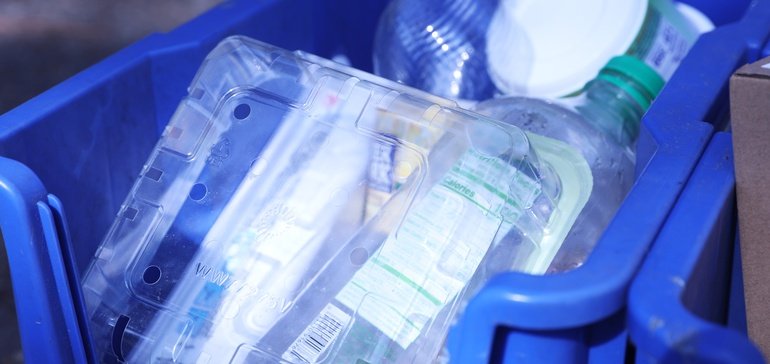

The U.S. EPA’s 2030 recycling goal was received at this week’s WASTECON as the latest of many laudable, albeit challenging, targets the industry is being asked to help achieve. Now, industry leaders and government officials say they just need to figure out how to measure it, where the material will come from, whether adequate end markets can be scaled up and who will pay for it.
Wednesday’s discussion at the Solid Waste Association of North America’s virtual conference comes two months after the agency announced aspirations for the nation to hit a 50% recycling rate. Core focus areas in the accompanying draft strategy include reducing contamination, improving processing efficiency and bolstering market demand. The Biden administration hasn’t indicated its plans on the concept one way or another, and key EPA officials have yet to be confirmed or announced, but it’s widely anticipated the general goal will stand.
This aspiration aligns with accelerating efforts by the public and private sectors to boost recycling activity, which are expected to continue regardless of federal decisions. As the recycling sector works out longstanding questions around access, demand, financing and material prioritization, they see many potential avenues to get there, with traditional curbside recycling infrastructure likely helping lead the way.
The EPA’s latest data saw the national recycling rate drop to 32.1% in 2018 (due in part to changes in food waste measurement methodology) and showed generally stagnant or declining progress for multiple common materials. Panelists agreed that detailed measurement standards for the 2030 plans will be a key next step, and while voluntary measurement standardization efforts have been underway for years, they was not highlighted as a top-line priority in the initial plan. As one example, making sure contaminants aren’t ultimately counted toward diversion rates is seen as an important step.
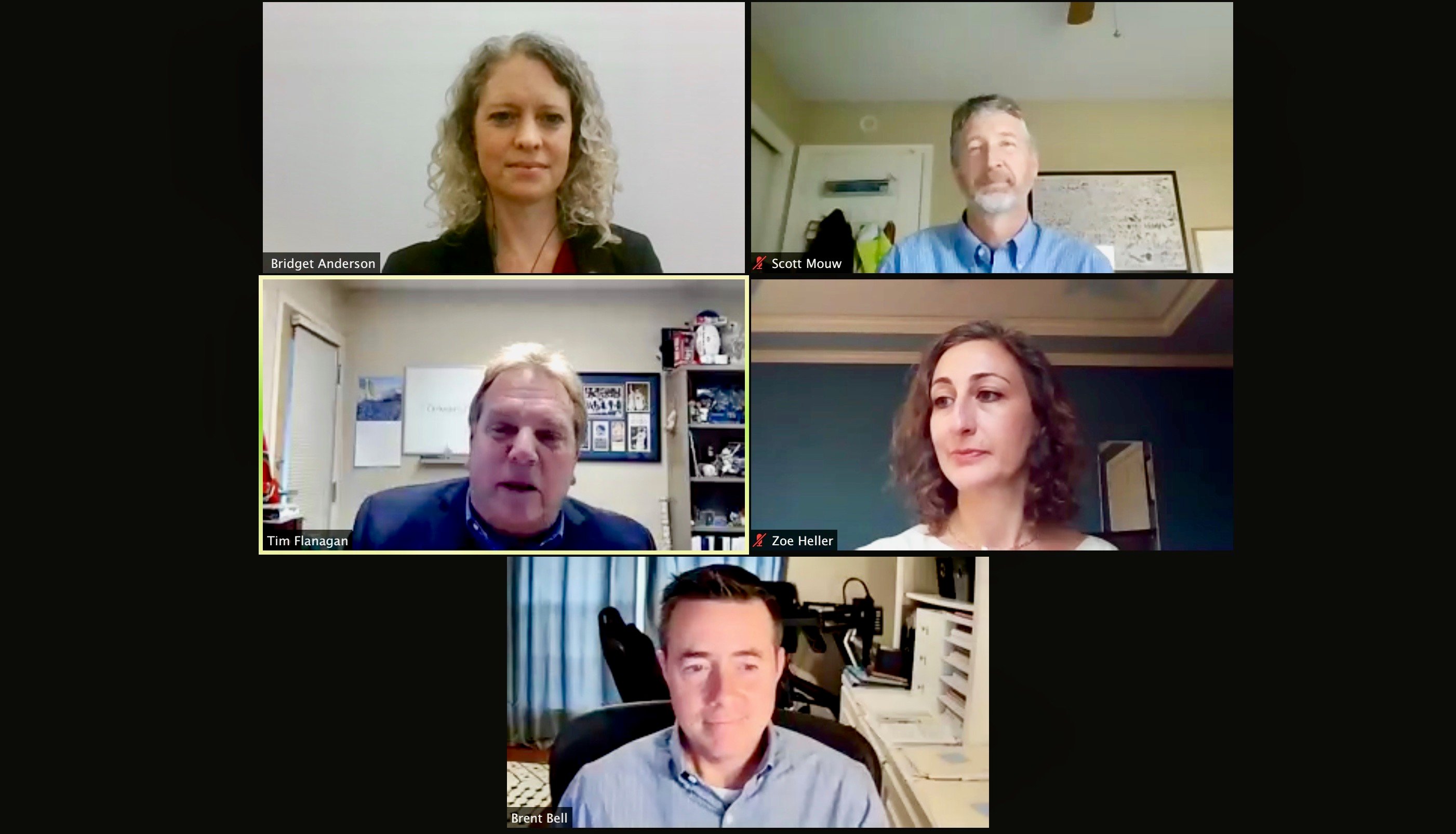
“To get to better recycling we have to go through that process which may result in a dip before an improvement. Because we’re taking out contamination it will take out weight, but it also means that we’re improving the potential to market the material,” said Bridget Anderson, deputy commissioner of recycling and sustainability at New York’s Department of Sanitation (DSNY).
Zoe Heller, deputy director for policy development at CalRecycle, agreed and also called for more discussion around whether exported material should always be counted as recycled. “There’s a lot of questions as to what actually happens to those materials,” she said, citing growing awareness in recent years of challenges with that process.
Figuring out measurement standards is considered key to deciding which materials to prioritize. Scott Mouw, senior director of strategy and research at The Recycling Partnership (TRP), said the goal will need to be applied “in a very nuanced and specific way.” This will also require looking beyond traditional curbside recyclables to durable goods as well as organics, because “food waste has a huge role to play.” Brent Bell, vice president of recycling at Waste Management, similarly described organics as an area with “big opportunity” in potentially hitting the target.
The group also agreed there is a need for more regional coordination on recycling priorities, as well as education.
Bell, for example, recognized the industry may not have sufficiently educated consumers amid the push to single-stream. This is seen as newly important amid a lingering uptick in residential volumes due to the pandemic. Panel moderator Tim Flanagan, general manager of the Monterey Regional Waste Management District in California, said his program saw contamination rates nearly double into the low 30% range last year.
Basic access is also seen as an ongoing issue. Mouw cited TRP estimates of 15 million multifamily households not having access to convenient recycling, and 17 million households with access to subscription service who don’t take advantage of it, as prime examples. The trend of some municipalities canceling or suspending their curbside programs due to budget pressures is also a challenge.
“We think that will take about a $4-6 billion investment to create what we call equitable access for all Americans. We’re having a lot of conversations in America right now about equity and equitable treatment, and recycling should be a part of that,” said Mouw.
Cole Rosengren/Waste Dive
Beyond securing more clean material, the group also recognized a need for greater investment in processing infrastructure. This may include MRF capacity in underserved areas, as well as new technology to help MRFs keep up with the evolving product stream. As an example, Mouw said his organization had received 27 applications so far to help with polypropylene recycling. Bell mentioned the oft-cited figure of Waste Management investing $300 million in recycling infrastructure over the past three years, and said he recently delivered a proposal to top leadership on “a plan to invest a lot more money in recycling assets over the next decade.”
These investment decisions rely in large part on market demand. Following years of turmoil initiated in part by China’s 2018 scrap import policies, multiple panelists reported certain markets are bouncing back. Mouw highlighted a stabilization in corrugated cardboard and mixed paper pricing, and Bell said HDPE natural prices have surpassed aluminum for the first time in recent memory.
A growing wave of voluntary commitments by brands to use more recycled content in their products, especially plastic, is considered a key factor. At the same time, it’s widely recognized that the current system is not generating an adequate supply to meet all of these targets. While brands have collectively contributed or pledged many millions of dollars to groups such as TRP, Closed Loop Partners and others that direct investments into the system, some see room for much more.
“I think the pooling of resources by the private sector in a focused way could actually do more than the individual efforts that are happening,” said Anderson.
“We’ve seen a number of voluntary efforts that are really impressive, but we’re not seeing them correlate with the kinds of changes that we need, the kinds of innovation we need to really get there,” said Heller.
California became the first state to set minimum recycled content requirements for certain plastic beverage containers last year, a move others are expected to follow, but supply remains an open question. Heller highlighted the need to also be looking upstream at product design, waste reduction and reusable systems to help drive progress. She also emphasized the importance of government procurement policies as another tool, saying that “without demand we’re just not going to see the infrastructure built.”
Given all of these factors, it was widely agreed that brands have a greater financial role to play. Yet when it came to the question of extended producer responsibility (EPR) policies, panelists diverged or stayed quiet. Waste Management and The Recycling Partnership have more recently come out in support of certain types of fee-based proposals that would maintain the existing system, but are not yet known to be supportive of specific EPR bills. DSNY is among the lead supporters of a new state EPR bill in New York. Heller also recognized a general need for more producer responsibility.
State legislation is expected to be the main playing field for recycling policy in 2021, as federal activity is possible though not considered an imminent priority. How that will unfold remains to be seen, but in the meantime all agreed that more focus, more funding and more action will be required to achieve the many targets coming up in the decade ahead.
“State and local governments have spent a lot of time, energy, effort and money to develop the infrastructure as we know it today,” said Mouw. “To take that leap to 50% is going to require another infusion of capital and I think we’re seeing brands understand that they have a strong role to play.”
Recent Comments