

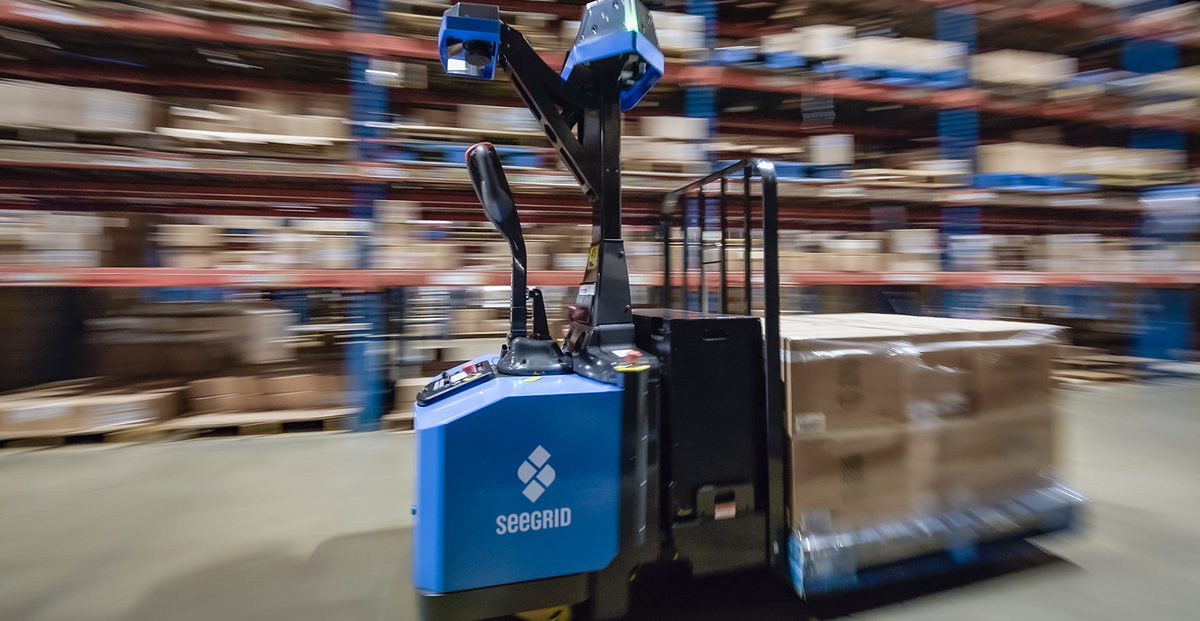

Social distancing, peak online shopping and supply-chain shakeups made 2020 a blow-the-roof-off year for materials-handling robot manufacturers that could scale up quickly. Case in point; Seegrid, the Pittsburgh-based builder of self-driving industrial vehicles, doubled its revenue in 2020, hired 125 new employees to increase its workforce to 325, acquired startup Box Robotics to expand its 3D Lidar data-interpretation capabilities and secured $52 million in additional financing.
But Seegrid was growing rapidly even before the pandemic year. In 2019, the AVG maker with roots in Carnegie Mellon University’s robotics program hit a milestone when it doubled its year-over-year revenue.
Momentum had been building since 2014, when Jim Rock, a veteran leader of technology startups acquired by Honeywell and Bosch, joined Seegrid as CEO after the privately owned company’s bankruptcy reorganization. Rock focused the organization by prioritizing big customers, bringing in sales staff with knowledge of the technology, expanding the engineering group and adding a “customer success” team that works closely with the clients on training, optimization, and overcoming roadblocks. 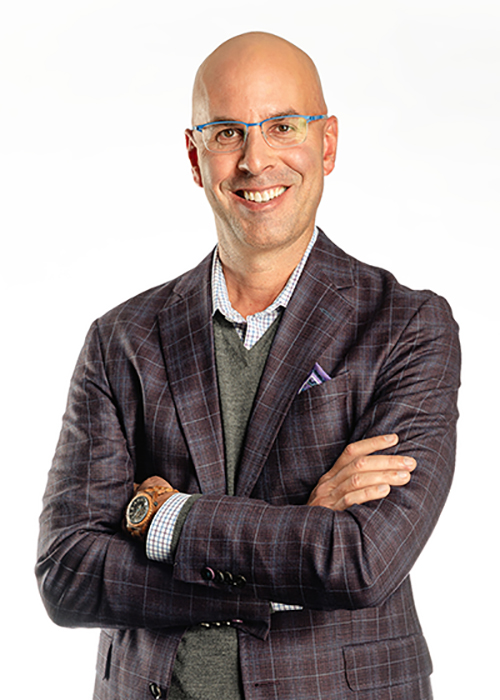
Seegrid CEO Jim Rock
Under Rock’s leadership, the company also crystallized its core values (safety, integrity, authenticity, passion, focus, growth mindset and teamwork) seeking them in candidates during its hiring process as well as its operations. Job listings emphasize “bright, energetic and friendly” team members, and a highly collaborative, high-growth organization. Visiting Seegrid’s headquarters pre-pandemic, you could feel the upbeat industriousness. Employees were self-directed, huddled as needed to problem-solve and spoke intelligently about the technology. The fact that Seegrid has racked up Top Workplace awards in Pittsburgh is further affirmation of the positive environment.
“We’re in aggressive growth mode,” Rock told IndustryWeek in a late-2020 interview. “The demand has grown year over year consistently, and COVID certainly accentuated that demand.”
Rock talked with IndustryWeek about what’s ahead for Seegrid and the importance of culture in its success.
How’s it going with the Box integration?
They’re already a big part of the team and up and running. We were very aligned culturally—we were both very focused on our culture and core values. We’ve actually known the team for quite some time. We’ve done projects with them in the past, and they’re well-respected in our industry. So the concept around acquiring them was already a fairly comfortable and exciting concept.
How have you been able to meet increased, pandemic-related demand for your vision-guided vehicles, software and analytics?
We were already anticipating significant increase in demand and therefore have ramped up our ability to supply from a capacity of manufacturing. We are a full-service company, so we not only just design robots, but we manufacture them, and we ship them and we install them and we support them. So across the board we manage employees and real estate and process and inventory. We were already hitting the Go button on that that plan prior to the pandemic, although like everyone the pandemic certainly caused caught us by surprise. Everyone’s March and April was a period of worry, and, reflection and contingency planning. But we were deemed an essential business by the government, based on some of the customers that we that we service. And so we kept running. And we pivoted like most companies, those that could, to a largely remote, but not fully remote, because we do actually manufacture in our facilities.
Where, exactly does the manufacturing and assembly of the vehicles happen?
We have several facilities now at our headquarters in Pittsburgh, in the same office park near the airport. And we assemble, we test, we engineer, we service, we do everything there. We have a number of suppliers that supply the base components. Two that you mentioned [Mitsubishi and Toyota] do supply the base components; we have several. One of them, Raymond Corp., which is the division of Toyota, they’re our customer. They actually resell our technology to their customers. So we go to market in two different ways. We go to market directly with a product, our house brand, if you will, that at least in large part but not exclusively, is based on a Mitsubishi platform. We’ve worked with most of the OEMs in terms of our base industrial vehicle. Raymond is a special strategic partner in the sense that we actually work with them closely as a partner and we ship them the core components of our solution for their vehicle, which they purchase and then resell into the marketplace. And so that’s more of a channel strategic partnership.
So those who can do their job from home are working from home right now. How has that affected innovation?
Most of us are actually not allowed to be there. In Pennsylvania they have the rule that if you can work your job at home, you have to work at home. There is a hit to some elements of innovation, but on the flip side, we’re more productive. There’s less commuting, there are less spontaneous interruptions. I feel like I’m three times more productive with the more structured nature of the Zoom work culture. But it’s also easy to overdo it and burn out.
Overall, I’m pleased. We put a deliberate project in place to help the company transition to this kind of remote work culture. Our culture is so important to us, our core value and our culture are something that we talk a lot about. And so this particular subject of making working from home work is something that there are 20 people at Seegrid working on right now. They’re part of a committee to share best practices and how other companies are doing it—what works, what doesn’t work and applying it to Seegrid.
Have you come to any conclusions yet on that?
The reports are very positive in that we’re keeping it together—we’re keeping the robots moving through the system and the customers up and running and happy, which is the main event here. There are some downsides that we’re helping each other out with, whether it be productivity issues, or loneliness, or communication challenges. But fortunately, we are making it through this pretty unscathed. We had a very successful year by all the financial, growth and customer success metrics. And we added 100 [now 125] people. Probably one of the strangest things for me is adding those employees remotely. It’s just an odd dynamic, not to be able to interact face to face.
What do you see as the future for industrial automation and how do you see humans and robots working together going forward?
The headline news is that the robotics technology and therefore robotics products and in our case specially, material handling, are getting better, faster and cheaper, and significantly more capable. And that’s due to a confluences of events; the sensors are getting better and cheaper, the math and the algorithms are becoming more sophisticated that we’re writing in-house; the customer appetite is certainly increasing. The world is going to see a significantly more capable set of robotics products over the next three, four years. As soon as the next two to three months, frankly.
Better, faster, cheaper—we are on the grid on this. We’re on this journey to build the industry’s best, largest independent end-to-end automation. And with the acquisitions that we just made, and future acquisitions that we’re working on, as well as just organic growth, you’re going to watch us build out this capability for the benefit of the marketplace.
It’s fun to see the various technologies that are available to us in this journey. We’ll stick to our knitting on autonomous mobile robots for material handling. But there’s so much more to come in terms of new products, hardware and software. Robotics are 90% software. And not just the software that guides the navigation, which is our core strength. But all of the enterprise software around fleet management and analytics and management systems—that’s very much a part of our product strategy.
You’ve led some tech companies and you’ve worked in manufacturing as well. How is Seegrid different from those companies? And are there any similarities in leading them?
I have had a long, strange career in technology and manufacturing, from startup to growth tech including VC-backed and private-equity-backed tech companies. Seegrid is similar and in many ways very similar, but I would place it at the top of the heap on the subject of culture and core values of safety focus and teamwork. I’m really proud of the culture that we’ve built, which is a consequence of everyone that we’ve hired and how they behave in the mission and the common goals. We care about culture, we communicate it, and we pay attention to it. We’ve got a great team in a wonderfully fast-growing market. We’ve been fortunate to avoid some mistakes and make some right moves to put us in a good position. So this is the most fun I’ve had in my career for sure.
What mistakes have you avoided?
I don’t want to go through the full list; we’d be here for hours. But if I had to cherry-pick a couple, I would say markets and products that we could have an almost decided to get into, that we decided not to. And so if you recall, one of the one of the core values that I just mentioned, was focus. And so one thing I’ve come to appreciate in my short little career is to stay focused on something. And so we use that focus in our objectives. We have a system that we that we like to stay true to around specific objectives and their key results. We don’t always do it very well, but when you do that well, you avoid making some decisions or investments in a market that looks attractive to get into or a product that looks attractive. As I mentioned, we’re pretty aggressive with about acquisitions right now. So would a company that we think we might like to buy be accretive to the value that we’re creating? If you if you stay focused on the data, coupled with some good judgment, you might avoid some mistakes.
You talked about hiring people that fit with your core values and mission. Are there things you’ve learned about recruiting along the way?
Hiring mistakes can be very very costly. So we respect that fact and the process. And we put a great deal of effort into being very careful. But by the same token, we aggressively recruit the best possible talent that we can find. One positive that’s come out of the pandemic, I guess, is we’ve really changed our attitude as to how far and wide and where people can live, which the short answer is anywhere they want, as long as there’s an internet connection. We’ve now recruited outside of Pittsburgh much more aggressively than we ever have. Of the hundred employees that we’ve recruited, I would say the vast majority are not in Pittsburgh, which is maybe a little different than we would have done (pre-pandemic). So it’s a nice outcome of what is otherwise a really, really tough year for the world.
Got a manufacturing C-Suite candidate for Profiles in Leadership? Email leadership editor Laura Putre.
Recent Comments